How do technologies help compensate for the shortage of doctors, overcome distances and reduce disparities in access to medical care across BRICS countries? Read in the TV BRICS article

Telemedicine as a tool for achieving equality
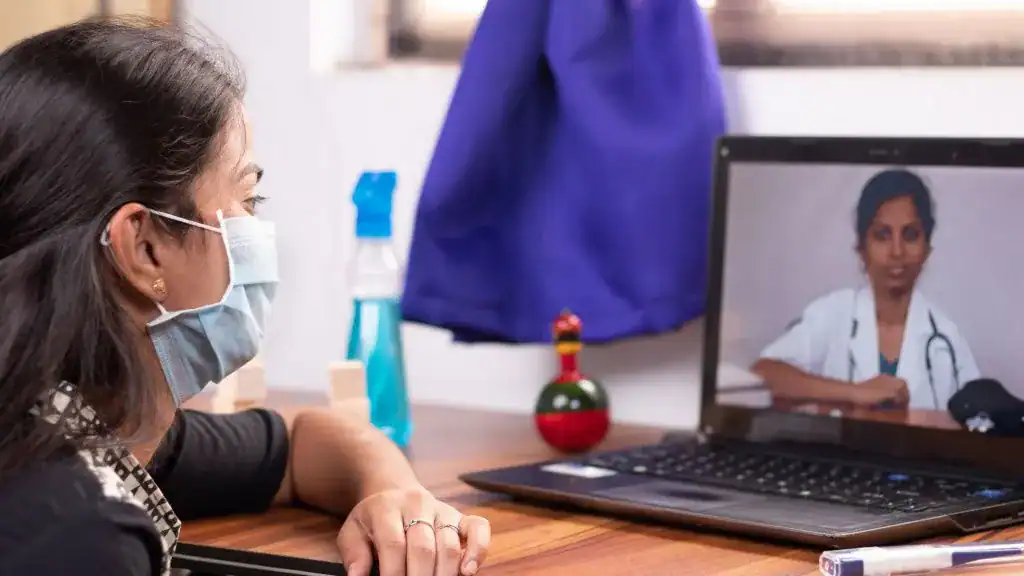
Today, according to WHO estimates, 40 per cent of countries worldwide have fewer than 10 doctors per 10,000 people. And this distribution is uneven. In many cases, patients are separated from qualified medical care by tens or even hundreds of kilometres. The possibility of remote diagnostics and the collection of data for predictive analytics using AI in such cases can save many lives. Having become widespread during the COVID-19 pandemic, telemedicine is becoming an increasingly important part of healthcare worldwide.
“Currently, telemedicine has evolved from an ‘additional option’ into an absolutely integral part of healthcare systems around the world. This is especially important for BRICS countries: vast distances often lead to an uneven distribution of doctors and a high burden on healthcare systems. Telemedicine is a tool that allows the gap in access to medical care to be quickly reduced,” notes in an interview with TV BRICS the Head of the International Department of the International Development Division of the Pirogov Russian National Research Medical University of the Ministry of Health of Russia, Margarita Isaakova.
At the BRICS level, says in an interview with TV BRICS a digital health researcher in the Unified Health System (SUS) of Brazil and Master of Nursing Management, Vitoria Davi Marzola, there is a shared recognition that telemedicine is a central element in achieving equality in healthcare. The level of development of this field varies across BRICS countries, but the trend is the same: rapid growth and a shift from pilot projects to large-scale implementation. At the same time, some projects are being developed jointly by member states. For example, Brazil and China are cooperating in the creation of so-called smart hospitals. One such project, based at the Clinical Hospital of the Faculty of Medicine of the University of Sao Paulo, involves the implementation of artificial intelligence systems for diagnostics, ambulances equipped with fast and high-quality 5G connectivity, and, of course, telemedicine technologies for online consultations. The Brazilian initiative is being implemented with technical support from China.

Telemedicine in BRICS countries
China is today a recognised global leader in the digitalisation of healthcare. Telemedicine in the PRC is a large-scale ecosystem covering thousands of hospitals and serving tens of millions of people. The system includes online consultations, AI kiosks, virtual hospitals and rapid medicine delivery. All these options were especially widely used during the COVID-19 outbreak.
At present, the country is implementing the Internet Plus Healthcare (IPHC) concept. It includes remote consultations. In parallel, commercial platforms operate. However, China has fairly strict restrictions on the use of telemedicine. For instance, telemedicine consultations are only permitted for follow-up appointments for patients who have already had an in-person visit. In addition, medical institutions and doctors must be licensed, the use of foreign platforms for telemedicine services is often prohibited, and all patient data is stored on special servers within the country. Prior to a teleconsultation, patient identification through national systems is required.
According to the 55th Statistical Report on China’s Internet Development, as of January 2025, telemedicine consultations were available to residents of all counties and cities. More than 70 per cent of national medical centres had experience of telemedicine consultations with colleagues from higher-level specialised medical institutions.
In India, since September 2021, the Ayushman Bharat Digital Mission (ABDM) has been implemented, aimed at the digitalisation of the healthcare system. It envisages the creation of a digital health ID and a unified system of electronic medical records accessible across the country. The implementation of the programme is also expected to ensure a secure exchange of medical data between institutions and access to telemedicine. As of the beginning of this year, more than 850 million patient IDs (Ayushman Bharat Health Accounts) had been created, more than 454,000 healthcare facilities had been registered in the database of medical institutions, and more than 767,000 professionals had been verified through the digital system.`In India, since September 2021, the Ayushman Bharat Digital Mission (ABDM) has been implemented, aimed at the digitalisation of the healthcare system. It envisages the creation of a digital health ID and a unified system of electronic medical records accessible across the country. The implementation of the programme is also expected to ensure a secure exchange of medical data between institutions and access to telemedicine. As of the beginning of this year, more than 850 million patient IDs (Ayushman Bharat Health Accounts) had been created, more than 454,000 healthcare facilities had been registered in the database of medical institutions, and more than 767,000 professionals had been verified through the digital system.
Another important telemedicine tool in India (especially in remote areas) is a state telemedicine platform for remote consultations in “doctor-to-doctor” and “doctor-to-patient” modes. It is easy to use and does not require installation of special software – a web browser is sufficient. The platform plays a key role in the digital transformation of India’s healthcare system, making medical services more accessible and efficient.
“India is more about scale and accessibility. Everything works even with limited infrastructure, often via mobile devices. It should not be forgotten that India is a leader in IT technologies, and telemedicine is just one aspect of this global leadership,” emphasises the Head of the International Department of the International Development Division of the Pirogov Russian National Research Medical University of the Ministry of Health of Russia, Margarita Isaakova.
South Africa is actively developing telemedicine under conditions of doctor shortages and uneven distribution of healthcare system resources. Government initiatives are implemented through the national e-Health strategy and the Health Normative Standards Framework (HNSF) platform. At the same time, pilot projects are being introduced to test telemedicine solutions for rural clinics, and commercial telemedicine services are also developing. The main focus is on teleconsultations, teleradiology (image exchange for diagnostics), telepsychiatry (which was especially relevant during COVID-19) and chronic disease monitoring. However, the main barrier to the widespread implementation of such technologies in South Africa remains limited access to broadband connectivity and its dependence on the electricity supply.
In Brazil, where telemedicine has been developing particularly actively since 2020, a key player is the state telemedicine programme SUS Digital, implemented within Brazil’s national healthcare system, SUS Brasil (Sistema Único de Saúde). Its main task is to implement telemedicine in remote regions such as the Amazon and the Northeast. There are also programmes supporting doctors in rural areas (Médicos pelo Brasil) and commercial teleconsultation projects. However, the law restricts teleconsultations and initial diagnosis (except in emergencies) without an in-person visit.
In Russia, digital technologies in medicine are developing through the national project “Healthcare” and a unified digital framework based on the Unified State Health Information System (UHISZ). Digital services include EMIAS (Moscow), Telemed (St. Petersburg), as well as private platforms. In addition, Russia, largely driven by the private sector, is actively introducing AI technologies for medical image analysis and remote monitoring and uses chatbots and virtual assistants for initial patient screening.
“Artificial intelligence plays a strategic role in improving telemedicine/telehealth in BRICS countries, especially when it comes to supporting clinical decision-making, automated patient triage, image analysis and the management of large volumes of data,” says digital health researcher in the Unified Health System (SUS) of Brazil and Master of Nursing Management, Vitoria Davi Marzola.
The introduction of AI and telemedicine at the state level is also taking place in Ethiopia; in Egypt there is 24/7 telemedicine for urgent access; and the telemedicine market in Saudi Arabia is growing at a record pace. However, experts identify China, India, Russia and Brazil as clear BRICS leaders in telehealth.
“These countries (China, India, Brazil and Russia) have made progress in expanding access to healthcare services and are diversifying the services provided, such as teleconsultations, telemonitoring and telediagnostics. This diversity of services has also created opportunities for the exchange of models within BRICS countries,” believes Vitoria Davi Marzola.
Prospects and challenges for the development of telemedicine in BRICS
The prospects for BRICS cooperation in telemedicine indeed have high potential, Margarita Isaakova says in an interview with TV BRICS. The fact is that the challenges faced by the countries are largely similar – large territories, uneven internet access, and the need to protect patient data. This creates a strong basis for the exchange of technologies, joint digital solutions and even the creation of common standards. Experts also note that joint platforms could be developed not only for internal markets but also for other developing countries.
In the BRICS context, cooperation can accelerate the development of shared solutions that take into account local specificities and the importance of technological sovereignty for each country, experts believe. Joint work and coordination can be carried out through multilateral networks and joint government projects, as is already happening, for example, between Brazil and China in the development of smart hospitals.
However, on the path to telemedicine development and full cooperation, BRICS countries still need to overcome key barriers. These are not technological issues but the conditions for their implementation: digital inequality, differing regulation, and issues of data confidentiality and security, Margarita Isaakova believes. “The solution lies in a comprehensive approach: infrastructure development, more flexible and harmonised regulation, training of doctors and patients, and, most importantly, integrating telemedicine into the healthcare system as a full-fledged component rather than a temporary solution,” she notes.

To overcome these and other challenges, BRICS countries can jointly invest in digital infrastructure, promote common standards, strengthen regulatory frameworks and share successful experiences with one another, agrees Vitoria Davi Marzola.
Consistent and coordinated action, according to experts, will help reduce asymmetry and elevate telemedicine in BRICS countries to the level of an important structural healthcare tool. However, experts also point to another less obvious but important factor for success – increasing public trust in telemedicine and especially in AI tools within it. Without this condition, specialists believe, telehealth systems will not be meaningful.
The article was prepared by Svetlana Khristoforova.
African Times published this article in partnership with International Media Network TV BRICS