In the quiet hours of a South African morning, the landscape is defined not by its natural beauty, but by its steel. From the electric fences of Sandton to the high-tensile mesh surrounding the mining shafts of the Northwest, South Africa has become a nation of fortifications. Recently, this “fortress” has taken on a more olive-drab hue. With the deployment of the South African National Defence Force (SANDF) to combat illegal mining and gang violence—at a cost exceeding R823 million—the state has signalled a desperate pivot. But as we lean into militarised policing and private protection, we must ask: is this process sustainable in a country defined by 60% youth unemployment and a fracturing socio-economic floor?
The answer, though uncomfortable, is that we are treating a systemic haemorrhage with a tactical tourniquet.
The Illusion of the “Green Wave”
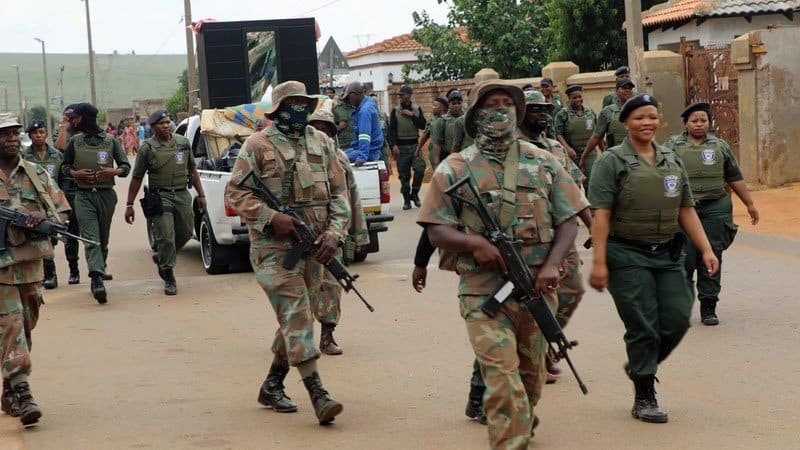
The deployment of over 2,000 soldiers under Operation Prosper is a testament to the failure of civilian law enforcement. When the South African Police Service (SAPS) can no longer guarantee the integrity of our borders or the safety of our streets, the army is the last line of defence. However, the SANDF is a blunt instrument designed for the battlefield, not the courtroom. A soldier is trained to neutralise an enemy, not to navigate the intricacies of the Criminal Procedure Act or dismantle the complex financial webs of organised crime syndicates.
Financially, the burden is becoming unbearable. The SANDF operates on a “shoestring” budget of roughly 0.7% of GDP—less than half the international benchmark. These internal deployments are rarely fully funded, forcing the Department of Defence to seek additional support from the National Treasury. We are eroding our conventional military capability—our ability to protect our sovereignty—to perform a job the police should be doing.
The Privatisation of Peace
While the state struggles to fund its soldiers, the private sector has stepped into the vacuum with startling efficiency. South Africa now boasts one of the largest private security industries in the world, with over 600,000 active officers. This creates a staggering 4-to-1 ratio against the SAPS.
The socio-economic implications of this are profound. Security has become a commodified luxury. If you live in a gated community in the Western Cape or a corporate hub in Gauteng, your “police force” is a private rapid-response team with better equipment and faster response times than the state could ever provide. But for the millions living in townships or informal settlements, the vacuum is filled by something far more sinister: vigilante groups and criminal gangs. This “security apartheid” reinforces the notion that safety is a privilege for the wealthy rather than a fundamental right for all.
The Youth Unemployment Nexus
At the heart of our security crisis lies the ticking time bomb of youth unemployment. In a country where six out of ten young people are without work, the “opportunity structures” for crime are far more compelling than the distant promise of a formal economy. For a young man in the Cape Flats or a mining town, joining a gang or a “Zama Zama” syndicate is often a survival strategy.
The military cannot “shoot” its way out of poverty. While the SANDF’s Military Skills Development System offers a glimmer of hope for some, the army is not a national employment scheme. Using the military to suppress crime without addressing the hunger and hopelessness that drive it is like trying to put out a fire with a fan.
The Cost of Inaction
The World Bank estimates that crime costs South Africa roughly 10% of its GDP annually—roughly R700 billion lost to theft, corruption, and the sheer cost of protection. If we redirected even a fraction of that “crime tax” into structural economic reform and the professionalisation of our detectives, the need for soldiers on our streets would vanish.
Sustainability in South Africa cannot be measured by how many armoured vehicles are on the road. True sustainability is measured by the strength of the social contract. Currently, that contract is being torn by a state that cannot protect its citizens and a private sector that only protects those who can pay.
The Way Forward
To move toward a sustainable future, we must stop the “militarisation of everything.” We must move the billions spent on VIP protection for politicians into the Hawks and specialised detective services. We need investigators, not just more boots on the ground. Most importantly, we must treat youth unemployment as the national security emergency it is. Security begins with a job, a stable home, and a belief in the future.
The “Fortress State” is a failing model. It is time we invested in a society that doesn’t need so many locks.
About the Author:
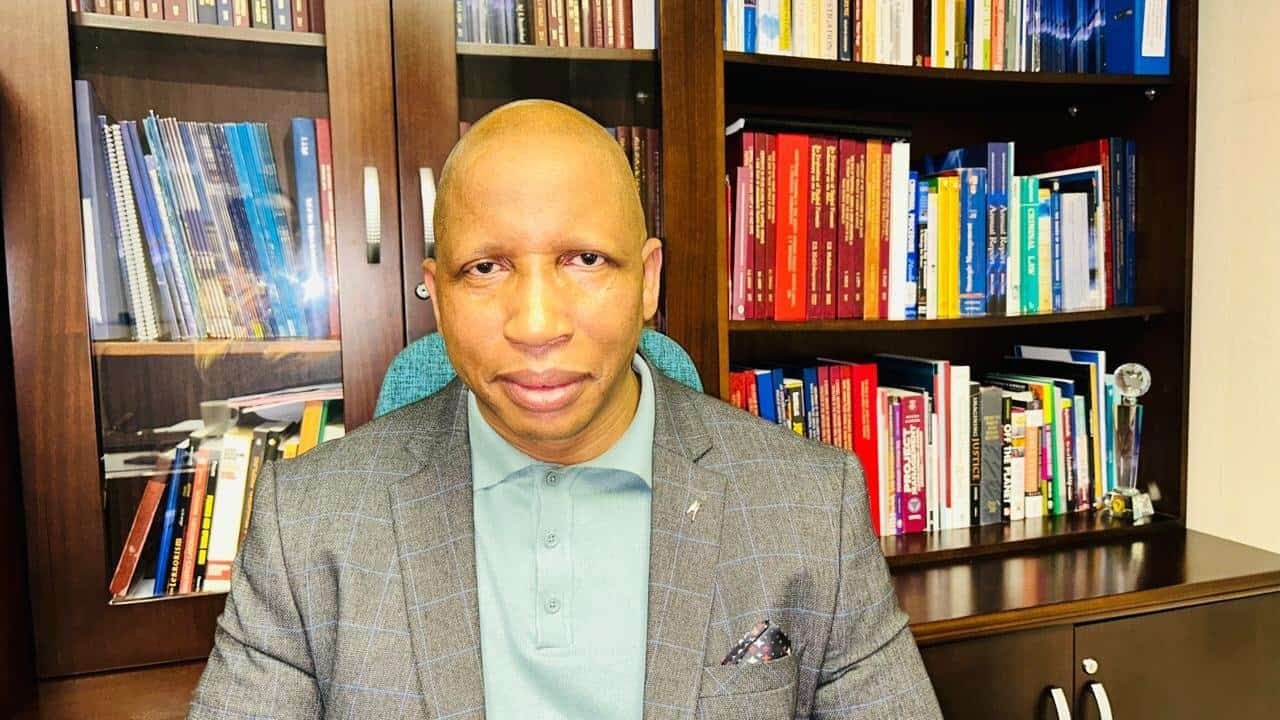
Jacob Tseko Mofokeng is a Professor of Criminology and a member of the Council of the Criminological and Victimological Society of Southern Africa (CRIMSA). A former Unit Commander within the SAPS Information and Systems Management component, his research focuses on organised crime, transnational human trafficking, and the strategic adoption of policing technologies. He is a frequent commentator on South African security issues for national media outlets, including eNCA, Newzroom Afrika and SABC News, and has published extensively on police capacity, detective attrition, and the socio-economic drivers of crime. He is an NRF rated researcher.
Disclaimer: The views expressed in this article are the author’s own and do not necessarily reflect the official policy or position of the University of South Africa (UNISA).