Three months ago, I published a paper documenting a gap almost nobody wanted to look at: South Africa’s IRP 2025 commits 6,000 MW of gas-to-power capacity to bridge a 9.5 GW electricity shortfall, and the plan tells you whether that capacity gets built on time — but says nothing about whether the fuel it depends on will be affordable, or how a fuel-cost shock would even be recovered [1]. I called it a compound vulnerability: two structural mechanisms — anticyclonic blocking events that suppress wind output and elevate South African net load, and a tight global LNG market — that are individually manageable but, activated together, become conditionally severe [1]. At the time, this was a scenario. It is no longer a scenario. It is the Strait of Hormuz, right now.
At Gastech 2026 in Bangkok this month, Shell’s President of Integrated Gas, Cederic Cremers, put a number on what nearly seven months of war in the Middle East has done to the global LNG market: roughly 36 million tonnes gone from Qatar and the UAE — supply the market had priced in and planned around [2]. Asian spot prices have jumped to $28.40 per MMBtu last week, up from near $10 before the war, and Europe is heading into winter with gas storage below 70% full — against 82% a year ago and a five-year average above 80% — meaning European and Asian buyers are now bidding directly against each other for the same non-Middle Eastern cargoes [2]. The IEA’s own tracking corroborates the scale independently: Qatar–UAE LNG loadings fell by roughly 35 billion cubic metres between March and June alone versus the year before — call it 26 million tonnes in four months [3]. Kpler’s ship-tracking tells the same story from a different angle: Qatar shipped 18 LNG cargoes in the first half of this year, against 509 in the same period last year — a 96% collapse [4]. Wood Mackenzie’s own chairman has warned that a cold winter could push prices to $40 per MMBtu — equivalent to roughly $240-a-barrel Brent — a level he associates with outright demand destruction [2].
This is what “flexible” gas-to-power supply looks like when the flexibility runs through a strait one country can close.
My paper’s core argument was never that gas-to-power is the wrong technology. It is that South Africa’s planning treats physical availability and price availability as the same question, when they are not — and that the recovery mechanism the fleet’s financing depends on has an expiry date the fuel contracts don’t share. LNG supply agreements at this scale run 15 to 20 years. The RCA/MYPD mechanism they lean on for cost recovery does not obviously survive that long, and NERSA’s own 2026 draft Trading Rules assign no non-bypassable-charge category to variable fuel cost under whatever regime comes next [1]. That is not a modelling assumption. That is a fleet-defining contract signed against a recovery pathway with no confirmed successor. Hormuz didn’t create that gap. It is simply the first live demonstration of what falls into it.
My transmission analysis, grounded in NERSA and Reserve Bank evidence, found that even moderate LNG price stress produces an administered-price step-change trailing the original shock by 18 to 24 months — a channel monetary policy cannot quickly resolve, because by the time it shows up in the tariff, the shock itself is old news and the response looks like it’s chasing a car that’s already left the intersection [1]. Run that lag forward from March 2026, when the Hormuz disruption began compounding, and you land squarely in South Africa’s 2027–2028 tariff cycle. If any material share of the eventual 6,000 MW gas-to-power fleet is under contract by then, the country will not be debating whether this transmission channel exists. It will be living inside it, with a regulatory framework that — on the evidence of NERSA’s own draft rules — still has no confirmed mechanism to recover the shock cleanly.
I want to be precise about what the Gulf disruption does and doesn’t prove. It doesn’t prove South Africa will suffer this exact shock at this exact magnitude, and non-Gulf supply has already offset a meaningful share of the loss [5]. But that caveat cuts less than it did a week ago: flows through Hormuz are not expected to recover materially before year-end, and the market is now bracing for a cold winter to be the real stress test [2]. What the disruption proves is that the mechanism is real, that it activates on a timescale of months rather than decades, and that when it activates, the losses are not evenly distributed — Qatar alone is estimated to have lost around $24 billion in gas sales during the disruption, and importing countries absorbed the rest through price [4]. A country with no domestic gas production and a 15–20 year import commitment does not get to opt out of that distribution. It signs up for whichever side of it the geopolitics hands it.
This is the “complex tragedy” I keep returning to: nobody planning South Africa’s gas-to-power strategy is being dishonest. IRP 2025 is coherent within its own mandated frame — security of supply, decarbonisation commitments, bankable projects. NERSA’s Trading Rules process is coherent within its frame — updating the regulatory architecture for a changing generation mix. What neither frame captures, because neither was built to, is the vulnerability compounding in the space between them: a physically-adequate plan riding on a financially-unaddressed fuel contract, in a market that has just shown the world how fast and how far that fuel’s price can move.
South Africa needs to stop treating fuel-price and fuel-recovery risk as somebody else’s problem to have already solved before the Gas-To-Power contracts are signed. That means NERSA closing the non-bypassable-charge gap for variable fuel cost before, not after, 6,000 MW of capacity is committed. It means treating price availability as its own scenario category in the IRP, not a footnote to physical availability. And it means the Reserve Bank must model in advance how an 18-to-24-month administered-price lag feeds through to inflation expectations — because the tariff clock starts running long before a Hormuz-style shock becomes South Africa’s problem rather than Asia’s.
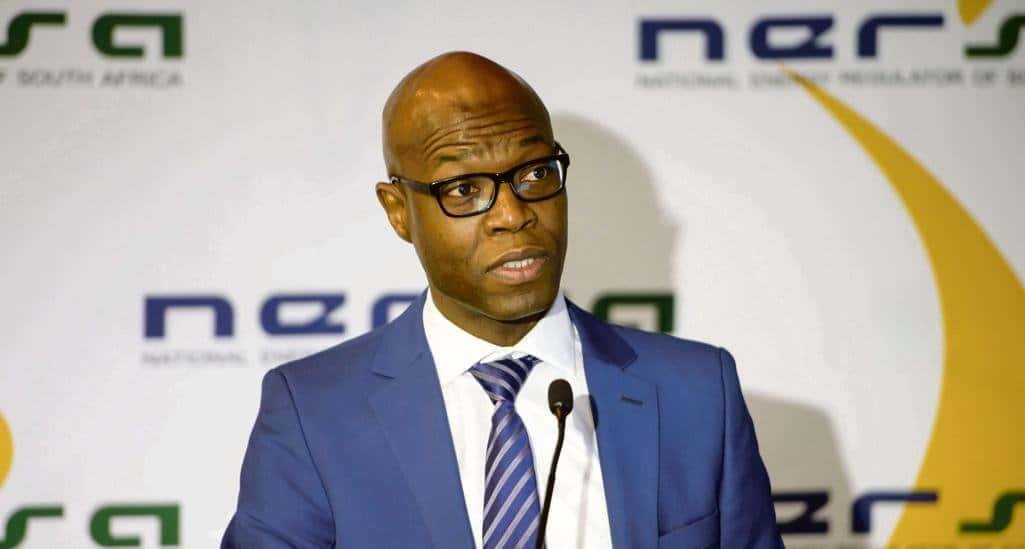
Matshela Koko is a former Chief Executive of Eskom (2016-2017) and Managing Director of Matshela Energy. He is a doctoral candidate at the Graduate School of Business Leadership, University of South Africa. The focus of his research is on the Compound Vulnerability and the Macroeconomic Transmission of Gas Price Shocks: Implications of South Africa’s LNG-Dependent Flexibility Strategy for the Post-2030 Electricity Transition. Available at SSRN: https://ssrn.com/abstract=6997259 or http://dx.doi.org/10.2139/ssrn.6997259
References
[1] Koko, M. (2026). Compound Vulnerability and the Macroeconomic Transmission of Gas Price Shocks: Implications of South Africa’s LNG-Dependent Flexibility Strategy for the Post-2030 Electricity Transition. SSRN preprint, posted 16 July 2026, last revised 10 August 2026. Available at: https://ssrn.com/abstract=6997259. Currently under peer review at Energy Conversion and Management: X (Manuscript No. ECMX-D-26-02066).
[2] Paraskova, T. (2026). “LNG Prices Could Jump Further as Hormuz Supply Crunch Persists.” Oilprice.com, 17 September 2026. Citing remarks by Cederic Cremers, President of Integrated Gas, Shell, and Simon Flowers, Chairman, Wood Mackenzie, at the Gastech conference, Bangkok, September 2026, as reported by Reuters.
[3] International Energy Agency, cited in “Six months into Hormuz blockade, Qatar and UAE test ways to keep LNG moving,” Euronews, 8 September 2026, and Cyprus Shipping News, 14 September 2026.
[4] Kpler/Vortexa ship-tracking data, cited in “Six months into Hormuz blockade, Qatar and UAE test ways to keep LNG moving,” Cyprus Shipping News, 14 September 2026.
[5] International Energy Agency non-Gulf supply data and Kpler/Reuters data on US LNG offset, cited in “U.S. LNG Faces Limits Replacing Lost Qatari Supply,” OilPrice.com, referencing Reuters columnist Gavin Maguire’s analysis of Kpler shipping data.