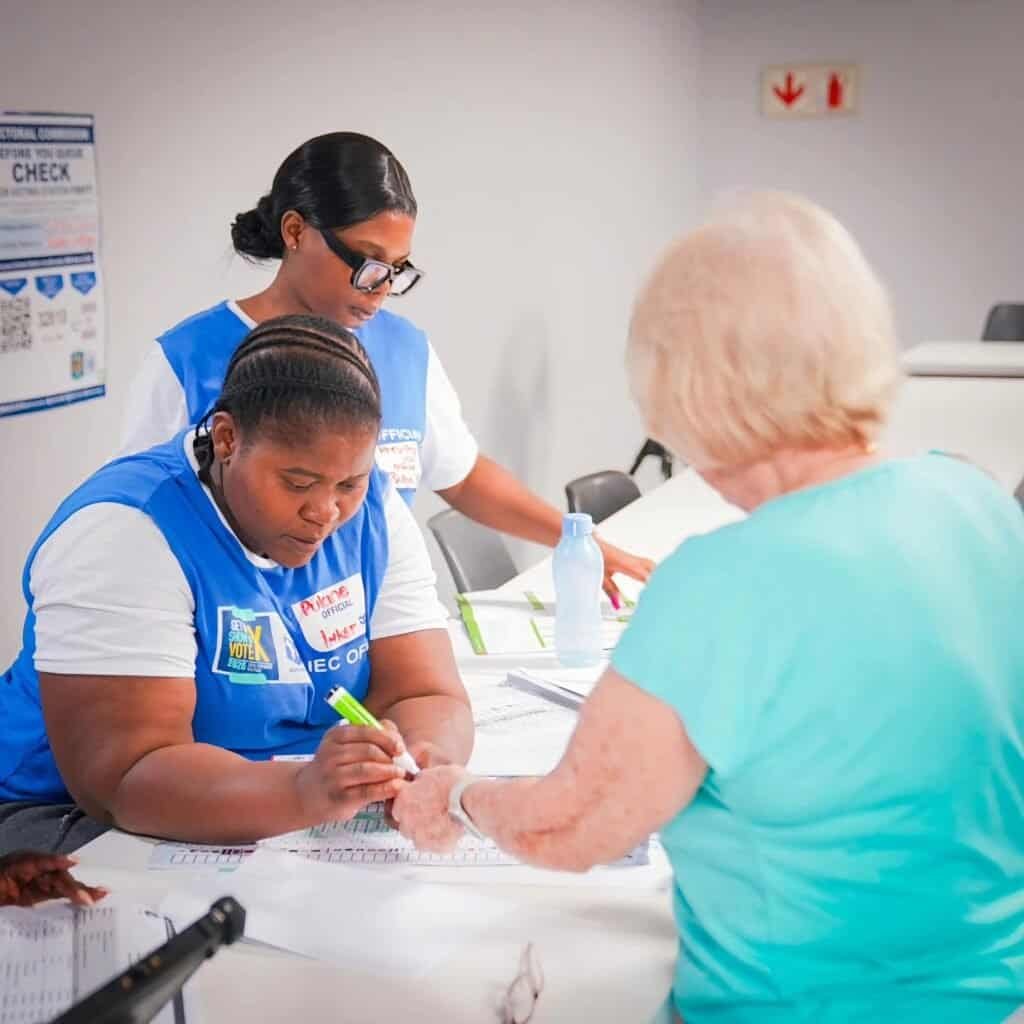
Millions of South Africans are heading to voting stations on Wednesday as the country holds its 2026 Local Government Elections, with the Electoral Commission of South Africa (IEC) urging eligible voters to turn out in large numbers and exercise their democratic right.
Voting officially opened at 7am, with long queues already forming at several voting stations across the country before the doors opened, signalling an early start to what is expected to be a closely watched electoral contest.
IEC chairperson Mosotho Moepya addressed the media at the National Results Operation Centre (ROC) in Midrand shortly after voting got underway, saying initial indications were that the process was running smoothly.
“We have not had glitches this morning to our knowledge. All indications are that all is up and running. I am not saying every little place does not have a problem,” Moepya said.
He cautioned political parties and their supporters against campaigning within the boundaries of voting stations, warning that anyone found violating electoral laws could face prosecution.
Moepya said campaigning, including displaying or distributing political placards and pamphlets, was prohibited within voting station boundaries.
He also warned against attempting to persuade voters to support a particular political party or candidate, or discouraging them from voting.
Those found guilty of violating the provisions could face a fine or imprisonment for a period not exceeding five years.
The IEC has urged voters to respect the electoral process, follow instructions from election officials and ensure that they cast their ballots without intimidation or interference.
In Johannesburg, some residents were already lining up before sunrise.
At Bryanston High School, voters began arriving shortly before 6am, with several residents saying they were voting in the hope of bringing change to the City of Johannesburg.
In Seshego, Polokwane, queues had also formed at Masedibu High School shortly before 6am. The voting station falls within Ward 17, an area traditionally regarded as an African National Congress (ANC) stronghold, although the Economic Freedom Fighters (EFF) has also established a presence.
However, the start of voting was not without challenges.
At a voting station in Johannesburg’s central business district, the process reportedly got off to a rocky start, with voters complaining about disorganisation and what they described as a lack of preparedness by local IEC officials.
Meanwhile, in Germiston, concerns about crime and community safety came into focus when a man accused of attempted theft was surrounded and assaulted by people believed to be members of the Community Policing Forum. The incident raised questions about vigilantism and public safety on a day when authorities have called for peaceful participation.
The IEC is monitoring the process from the National ROC in Midrand, where political parties, election observers and members of the media have gathered to follow developments and assess the delivery of the elections.
In Cape Town, religious organisations held a prayer meeting at the Provincial Results Operation Centre ahead of the opening of voting stations. The gathering was intended to pray for a peaceful electoral process and the work of the IEC and the Electoral Code of Conduct Observer Commission.
The elections are taking place against a backdrop of persistent service delivery complaints, unemployment, crime and infrastructure challenges in many communities.
For millions of voters, the ballot represents an opportunity to decide who should manage their municipalities and oversee the delivery of essential services, including water, electricity, sanitation, refuse removal and road maintenance.
Thirty-two years into democracy, many impoverished communities continue to live under difficult conditions, with some residents still struggling to access basic services. The elections offer voters an opportunity to hold political representatives accountable and choose leaders they believe can improve their circumstances.
Ahead of voting day, the National Joint Operational and Intelligence Structure (NATJOINTS) assured South Africans that security arrangements were in place to protect voters, election officials and electoral infrastructure.
During a security briefing on Tuesday night, the structure confirmed that 21 case dockets had been opened since the start of special voting. The cases included murder, theft of election material, arson, intimidation, destruction of campaign material and other election-related offences.
Six suspects had been arrested, while five of the cases had already been processed to court.
Among the arrests were two suspects accused of impersonating IEC officials in Ngcobo, Eastern Cape, and a suspect arrested for allegedly photographing a ballot paper in Christiana, North West.
NATJOINTS also confirmed that investigations were under way following the killing of an uMkhonto weSizwe Party regional leader in KwaZulu-Natal during the special voting period.
The security structure said additional personnel and resources had been deployed across the country, with heightened attention given to areas identified through intelligence assessments as requiring intervention.
It appealed to political parties and their supporters to exercise tolerance and avoid violence, intimidation and the spread of misinformation.
As voting continues, the IEC has reminded voters not to take photographs of their completed ballot papers, to mark only one cross per ballot and not to panic if they make a mistake.
With voting stations open until 9pm, the commission is urging eligible South Africans not to miss the opportunity to participate in deciding the future leadership of their municipalities.