French energy giant TotalEnergies has firmly rejected accusations from the European Center for Constitutional and Human Rights (ECCHR), which alleges the company was complicit in human rights violations committed in northern Mozambique at the height of the Cabo Delgado conflict.
The claims, filed before the French National Anti-Terrorism Prosecutor’s Office (PNAT), accuse Total of “directly financing and materially supporting” a Mozambican Joint Task Force that supposedly detained, tortured, and killed civilians near the Mozambique LNG project between July and September 2021.
In a statement, TotalEnergies said it “strongly rejects all these accusations”, stressing that it has not been formally notified of the complaint and that the allegations are grounded in a POLITICO article whose timeline “does not correspond to the operational realities” of the project. The company recalls that all staff had been evacuated from the Afungi site in early April 2021, months before the alleged abuses.
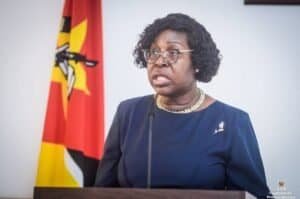
The Mozambican government has also criticised the complaint, urging caution and insisting that accusations of this gravity must be anchored in verifiable evidence. Speaking after a Council of Ministers session, government spokesperson Inocêncio Impissa stressed: “We understand that we need very concrete data to make a critical decision regarding any entity that cooperates with our state.”
This position echoes previous clarifications by Defence Minister Cristóvão Chume, who said publicly that no Mozambican forces were involved in the alleged incidents. Chume noted that there were no facts, no evidence, no videos, no independent reports, and no verified testimonies supporting the claims.
Within the region’s media landscape, respected voices have also cast doubt on the credibility of the allegations. Veteran journalist Marcelo Mosse, writing in Canal de Moçambique, dismissed the complaint as an “accusation without factual support, constructed without fieldwork and without validation from independent sources by POLITICO.”
Mosse points out that these allegations “resurface, coincidentally,” at a moment when Total has reactivated the force majeure clause in Mozambique”.
A similar editorial position emerged in Savana, another influential independent Mozambican outlet. In its analysis, the newspaper noted that the saga reflects a recurring pattern in which claims originating from European advocacy groups or media outlets gain international traction despite lacking local grounding.
“There are cases that never actually happen on the ground,” Savana wrote. “The accusation that the Mozambican Armed Forces detained and mistreated civilians in containers in the Mozambique LNG project area is one such case: it arose without evidence, grew without verification, and even after being denied by the government in 2024, it has now resurfaced as a criminal complaint filed in Paris by a German NGO.”
For Mozambique, the complaint arrives at a sensitive moment. TotalEnergies has resumed construction work on its US$20-billion liquefied natural gas megaproject in Cabo Delgado, one of the largest private investments under way anywhere in Africa. The project is expected to significantly transform Mozambique’s economic trajectory, but its timeline remains vulnerable to international political pressures and shifting global energy dynamics.