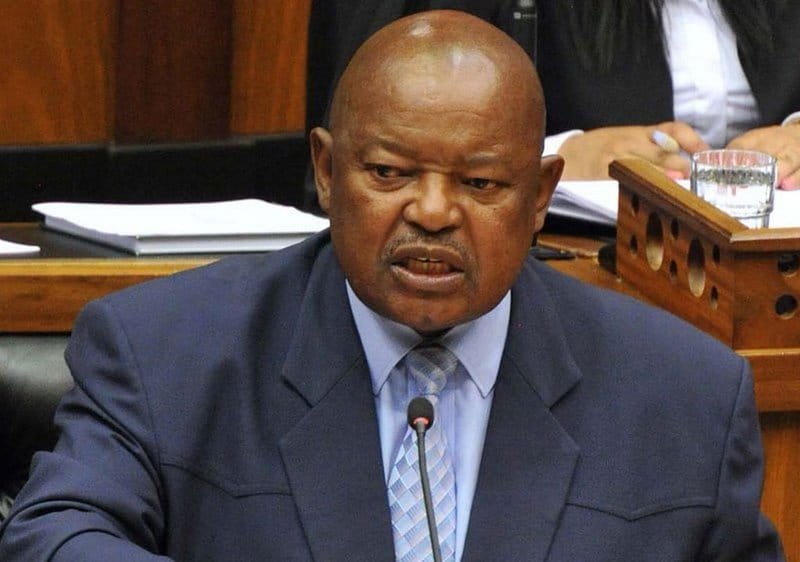
Tributes are continuing to pour in from across South Africa’s political spectrum following the death of veteran politician and anti-apartheid activist Mosiuoa Lekota, who passed away at the age of 77.
President Cyril Ramaphosa led the nation in mourning, describing Lekota as a patriot whose life was closely intertwined with South Africa’s journey to freedom and democracy. Lekota, affectionately known as “Terror”, died in a Johannesburg hospital in the early hours of Wednesday after a period of ill health.
“South Africa has lost a patriot, a freedom fighter, and a servant of the people whose life story is closely intertwined with our journey of struggle and the realisation of democracy,” Ramaphosa said.
He praised Lekota’s resilience and unwavering commitment to justice, adding: “His life was one of courage and steadfast belief in non-racialism… We will remember him for his patriotism, intellect and personable nature.”
Born in Kroonstad in 1948, Lekota became politically active through the South African Students Organisation, aligning himself with Black Consciousness activism at a young age. His political activities led to his imprisonment on Robben Island in 1974, where he spent eight years alongside struggle icons including Nelson Mandela.
Following his release, Lekota emerged as a leading figure in the United Democratic Front, helping to mobilise resistance against apartheid structures. His activism saw him charged in the Delmas Treason Trial, one of the apartheid government’s major prosecutions against anti-apartheid leaders. Although he was sentenced to 12 years, the conviction was later overturned.
In the democratic era, Lekota rose through the ranks of the African National Congress, serving as the first Premier of the Free State and later as Minister of Defence between 1999 and 2008. He also served as Chairperson of the National Council of Provinces, playing a key role in shaping Parliament’s post-apartheid structure.
In 2008, amid political tensions within the ANC, Lekota co-founded the Congress of the People, positioning himself within opposition politics and contributing to the country’s evolving democratic landscape.
Political parties from across the divide paid tribute to Lekota’s legacy, reflecting on both his role in the liberation struggle and his contributions in government and opposition.
The Economic Freedom Fighters (EFF) described Lekota as a significant figure in South Africa’s political history. “His political life reflected both the unity forged in the struggle against apartheid and the divisions that emerged in the democratic era,” said EFF national spokesperson Sinawo Thambo.
The party added: “We extend our condolences to his family, friends, former comrades and the country at large. May his soul rest in revolutionary peace.”
GOOD Party leader and Minister of Tourism Patricia de Lille said the party stood with Lekota’s family and colleagues in mourning.
“The GOOD Party extends its heartfelt condolences to the family, friends, and colleagues of Mosiuoa ‘Terror’ Lekota… May his soul rest in peace,” she said.
RISE Mzansi leader Songezo Zibi paid tribute to Lekota’s principled leadership, saying he would be remembered not only for the positions he held but for the values he stood for.
“We should most prominently remember him for his principled positions, even in the face of criticism and humiliation,” Zibi said. He also recalled Lekota’s own words: “We seek to restore the dignity of our people and the integrity of our politics.”
COPE confirmed the passing of its founding leader, with party leader Teboho Loate extending condolences to the Lekota family and supporters across the country. The party said the family has requested privacy and that details of memorial arrangements will be announced in due course.
Lekota had stepped back from active politics in 2025 due to declining health, bringing to a close a decades-long career that spanned student activism, imprisonment, governance and opposition politics.
As South Africa reflects on his life, many have pointed to Lekota’s enduring commitment to non-racialism, democratic accountability and public service — values that defined both his role in the liberation struggle and his contributions in the years that followed.