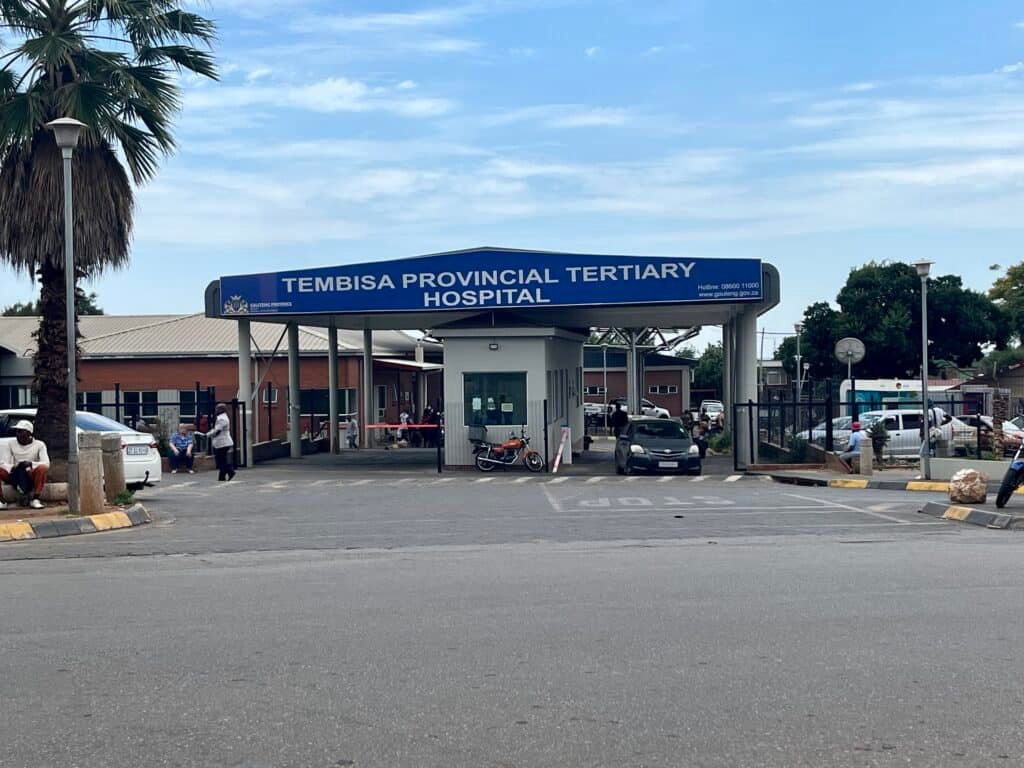
Two more suspects linked to the alleged R635 million Tembisa Hospital corruption scandal have been arrested, bringing renewed attention to one of Gauteng’s biggest procurement corruption investigations, which was exposed by a whistleblower who paid with her life.
The suspects handed themselves over to police at the Tembisa Police Station on Tuesday morning, where they were arrested and processed ahead of their court appearance.
According to the Directorate for Priority Crime Investigation (Hawks), the arrests form part of an ongoing investigation into alleged multimillion-rand tender fraud involving the hospital’s procurement processes.
Hawks spokesperson Colonel Katlego Mogale said the Serious Corruption Investigation team was intensifying efforts to ensure that everyone implicated in the scandal was brought to justice.
“The Hawks’ Serious Corruption Investigation team continues to intensify efforts to bring those implicated in the alleged R635 million Tembisa Hospital corruption scandal to justice,” Mogale said.
The two suspects are expected to appear before the Palm Ridge Specialised Commercial Crimes Court, sitting at the Palm Ridge Magistrate’s Court, where they will face charges relating to fraud, corruption and money laundering.
The investigation involves allegations of fraud, corruption, forgery and uttering, contravention of the Public Finance Management Act (PFMA) and money laundering.
It is alleged that hospital officials colluded with service providers to manipulate the Request for Quotations (RFQs) procurement system by deliberately splitting procurement transactions to keep them below the R500 000 threshold, thereby avoiding the prescribed formal tender processes.
But behind the latest arrests lies a much bigger story of alleged institutional corruption, questionable procurement practices and the murder of a woman whose efforts to expose wrongdoing placed her life in danger.
A whistleblower who refused to look away
The Tembisa Hospital scandal gained national attention following the work of Babita Deokaran, the former chief director of financial accounting at the Gauteng Department of Health.
Deokaran raised the alarm about suspicious payments and procurement irregularities involving companies doing business with Tembisa Hospital.
In a report dated August 4, 2021, she flagged approximately R850 million in suspicious transactions.
Among the worrying patterns she identified was the unusually high number of purchase orders between R400 000 and R500 000.
The SIU subsequently established that 63% of purchase orders within that range during the period under review were linked to Tembisa Hospital.
Before the investigation could fully unfold, Deokaran was assassinated outside her home in Johannesburg on August 23, 2021.
Her murder sent shockwaves through the country and raised serious questions about the safety of public servants who expose corruption.
Six men were subsequently convicted in connection with her murder.
Her death remains a painful reminder of the dangers faced by whistleblowers and the urgent need to protect those who expose wrongdoing.
SIU uncovers alleged syndicates
The Special Investigating Unit’s investigation subsequently uncovered extensive alleged procurement fraud involving multiple business networks and hospital officials.
Its September 2025 interim report identified several syndicates allegedly involved in extracting more than R2 billion from the hospital.
One of the networks was linked to businessman Hangwani Morgan Maumela, whose associated companies allegedly received more than R816 million through 1 728 purchase orders. Maumela is the alleged nephew of President Cyril Ramaphosa, though Presidency has denied it.
Another network, linked to Rudolph Mazibuko, allegedly benefited from contracts worth approximately R283 million.
A third network, identified as Syndicate X and linked to businessman Stefan Joel Govindraju, allegedly received approximately R596 million through 1 237 contracts.
The SIU also identified alleged kickback payments to officials involved in procurement processes.
In July 2026, the High Court granted a final forfeiture order allowing the state to seize assets worth approximately R326 million linked to the Maumela network.
Govindraju was arrested in August and appeared in court facing charges linked to alleged procurement fraud involving more than R583 million. He was granted R200 000 bail.
In September, the SIU also secured preservation orders over approximately R42.4 million in cash, properties, pensions and investments linked to alleged bribes paid to Tembisa Hospital officials.
The investigation remains ongoing.
Calls for whistleblowers to be protected
While the arrests represent another development in the fight against corruption, questions remain about accountability and whether those who expose wrongdoing are adequately protected.
Deokaran’s death should not become another tragic chapter in South Africa’s long history of corruption investigations.
Whistleblowers must be encouraged to report suspicious activities without fearing intimidation, victimisation or assassination.
The SIU has previously acknowledged the importance of information supplied by whistleblowers and committed itself to taking steps to protect them.
The latest arrests may bring investigators closer to establishing the full extent of the alleged looting, but for the families of those who have lost loved ones while fighting corruption, justice remains more than just the arrest of suspects.
It is also about ensuring that public money intended for patients, medicines, medical equipment and healthcare services reaches those who desperately need it.
For Deokaran, that was the fight.