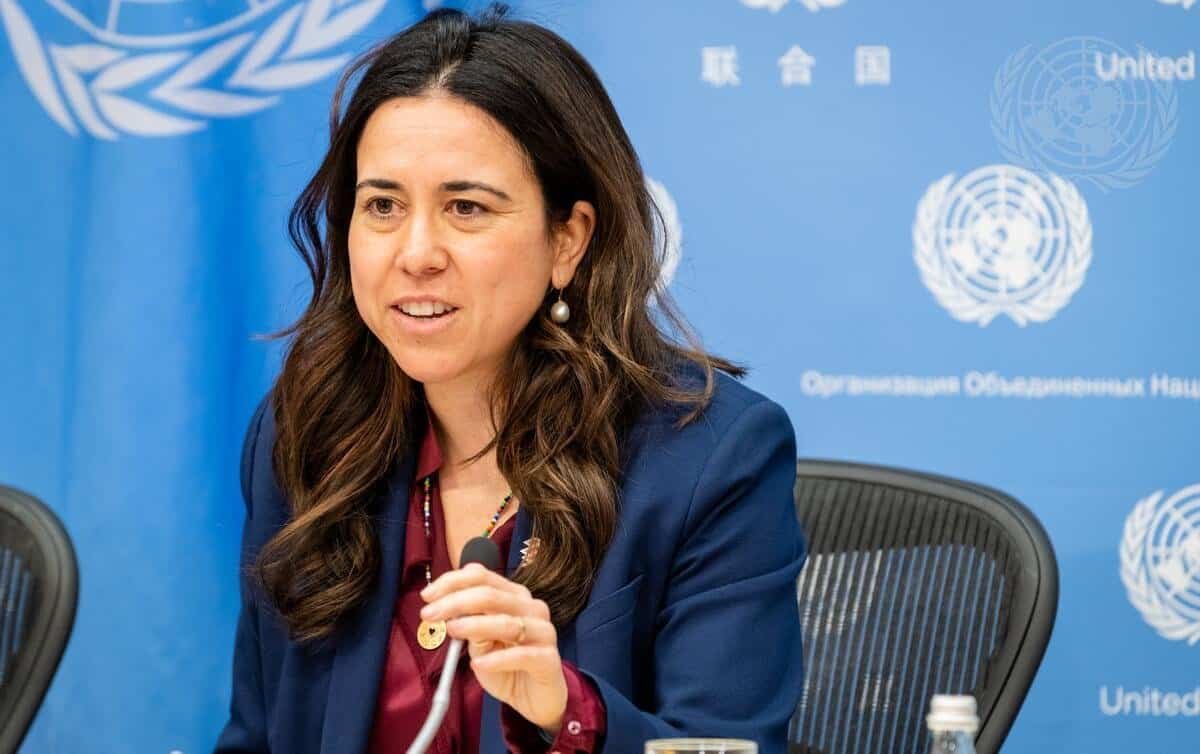
A press statement by the United Arab Emirates (UAE) warning Israel against annexing parts of the occupied West Bank is circulating on global media platforms — and in South Africa, it has struck a familiar chord.
For many South Africans, the message from the UAE carries deeper meaning than just Middle Eastern diplomacy. It touches on questions of justice, liberation, and the right of a people to self-determination — themes central to South Africa’s own history of resistance against apartheid.
The UAE’s ambassador to the United Nations, Her Excellency Lana Nusseibeh, said the Abraham Accords — the 2020 peace deal brokered by the U.S. — were intended to open a new path for peace. They were built, she argued, on the promise of “prosperity, coexistence, and tolerance.”
She reminded the world that Israel’s then Prime Minister, Benjamin Netanyahu, agreed to halt annexation of Palestinian land in order for the accords to move forward. That pause created hope that the Middle East might finally shift away from decades of war.
“From the very beginning, we viewed the accords as a way to enable our continued support for the Palestinian people and their legitimate aspiration for an independent state. That was our position in 2020, and it remains our position today,” Nusseibeh said.
But reports now suggest the Israeli government is again considering annexing parts of the West Bank — a move that, in the words of one Israeli minister, would “bury the idea of a Palestinian state.”
For the UAE, that crosses a red line. “Annexation of the West Bank would constitute a red line for the UAE,” Nusseibeh warned, saying it would not only undermine the spirit of the accords but also block the vision of regional integration.
In South Africa, the warning resonates because it mirrors what the country lived through. For decades, black South Africans were confined to “homelands” under apartheid, denied political rights in their own country, and governed by laws that enforced segregation and control.
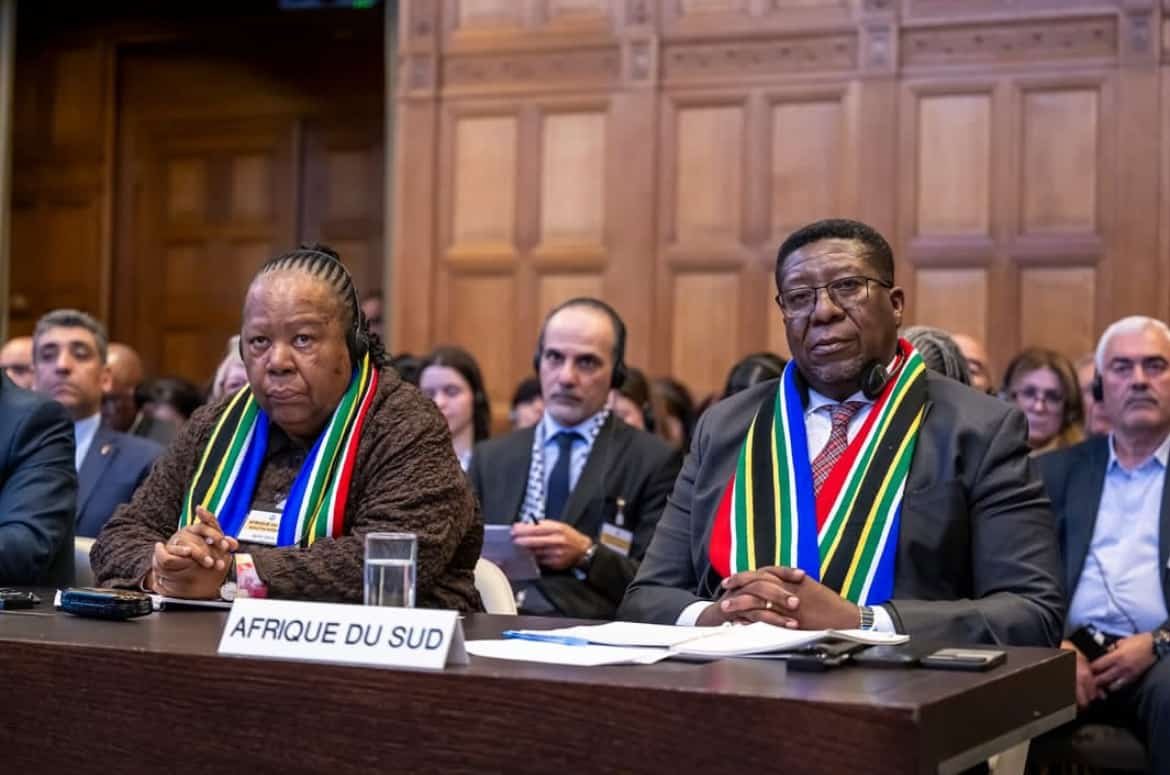
Former International Relations Minister Naledi Pandor once drew a sharp comparison: “Any attempt to annex the West Bank will be a grave violation of international law. South Africa stands firmly with the Palestinian people in their struggle for self-determination.”
Similarly, ANC Secretary-General Fikile Mbalula linked Palestine’s experience directly to South Africa’s past: “We know what it means to live under occupation and apartheid. Palestinians deserve their freedom, and the world must not allow Israel to bury the two-state solution.”
Nusseibeh stressed that peace cannot be achieved without ending the war in Gaza, freeing hostages, and disarming Hamas. But she went further: “What follows must change the trajectory of this conflict and deliver a genuine horizon to two states.”
This includes credible Palestinian governance and reunifying Gaza with the West Bank — a goal that many argue is slipping further out of reach.
For South Africa, the UAE’s stand is a reminder that solidarity cannot just be rhetorical. Pretoria has already taken Israel to the International Court of Justice over the Gaza war, but voices within the country’s ruling party and civil society are pushing for stronger action.
The echoes are clear: just as apartheid South Africa was confronted with global isolation, Israel now faces a moment where allies are drawing “red lines.” The question is whether the international community has the will to enforce them — or whether, like so many times before, Palestinians will be left with promises of freedom but no path to achieve it.