The United Democratic Movement (UDM) says it has been vindicated after the Public Service Commission (PSC) issued an advisory note warning public servants against participating in political party study groups and other informal political engagements linked to government business.
The advisory note, issued on 5 June 2026, follows complaints and requests for investigation submitted to the PSC regarding the involvement of public servants in study groups associated with political party caucuses and parliamentary programmes.
The PSC’s findings have now reignited debate about the relationship between government departments, public servants and political parties, particularly the governing ANC.
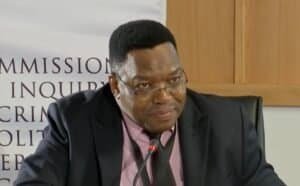
In a statement on Monday, UDM president and Deputy Minister of Defence and Military Veterans, Bantu Holomisa, welcomed the advisory note, saying it confirmed concerns his party had raised with both the PSC and the Speaker of the National Assembly.
“The PSC’s findings affirm what the UDM has consistently maintained: that no constitutional or legislative provision authorises public servants to participate in political party study groups outside lawful governmental or parliamentary structures,” Holomisa said.
The controversy centres on so-called “study groups”, informal structures often used by political parties to discuss legislation, government programmes and parliamentary matters before official debates and committee meetings.
While political parties are entitled to establish internal caucus and study group mechanisms, the PSC cautioned that the involvement of public servants in such forums raises significant constitutional, governance and ethical concerns.
According to Holomisa, some senior ANC leaders and Cabinet ministers had previously sought to dismiss concerns about these engagements.
“For some time, senior members of the ANC and several Cabinet Ministers sought to dismiss these concerns, insisting that such study groups either did not exist or that they were benign administrative engagements,” he said.
However, Holomisa argued that official ministerial diaries, parliamentary schedules and departmental records demonstrated that such study groups were not only real but had become a regular feature of interactions between government departments and the ANC’s parliamentary caucus.
The PSC stopped short of declaring such engagements unlawful in all circumstances, but warned that public servants who participate in political party forums outside authorised government or parliamentary processes risk compromising the constitutional principles that govern the public service.
The commission noted that public administration in South Africa is required to remain impartial, accountable, transparent and professionally independent.
It further stated that participation in political party study groups could create both actual and perceived conflicts of interest, undermine public confidence and blur the separation between politics and administration.
“The PSC is clear that no constitutional or legislative provision exists authorising public servants to participate in political party study groups outside of lawful governmental or parliamentary structures,” the advisory note stated.
The commission warned that such participation could result in unequal access to state information, weaken parliamentary oversight processes, expose public servants to improper political influence and potentially lead to breaches of confidentiality obligations.
The advisory note also highlighted provisions contained in the Public Service Regulations of 2016, which require public servants to remain politically neutral and avoid conduct that creates a conflict between their official duties and political interests.
To address the issue, the PSC advised public servants to continue participating only in lawful and authorised engagements such as parliamentary committee processes, executive briefings, intergovernmental forums and officially sanctioned institutional meetings.
However, officials were advised not to participate in meetings that are not formally authorised, lack transparency or institutional accountability, involve political strategy discussions or could reasonably be perceived as compromising impartiality.
The commission also reminded Directors-General and Heads of Department of their responsibility to ensure that officials comply with constitutional and legislative obligations.
In addition, the PSC has issued a circular to guide public servants who may receive requests from ministers or executive authorities to attend political party study groups or similar engagements.
Perhaps most significantly, the commission has recommended that Parliament develop a formal framework regulating the participation of public servants in engagements involving political party structures.
According to the PSC, such a framework should establish clear boundaries between political and administrative functions, ensure transparency and equal access to information, and safeguard the constitutional requirement for a professional, impartial and ethical public service.
The advisory note forms part of broader public sector reform efforts aimed at strengthening professionalism, accountability and ethical governance within the state.
The PSC said maintaining clear boundaries between political parties and public administration was essential to preserving public confidence in democratic institutions.
“The PSC reiterates that maintaining clear boundaries between political party structures and public administration is essential to preserving public confidence in democratic governance and safeguarding the integrity, impartiality and professionalism of the public service,” the commission said.
The development is likely to place renewed scrutiny on the relationship between government departments and governing party structures, particularly as Parliament considers reforms aimed at strengthening state capacity and professionalising the public service.
For the UDM, however, the advisory note represents a significant victory in a battle it has been waging for months.
Holomisa said the PSC’s intervention had provided long-awaited clarity on an issue that strikes at the heart of constitutional governance and the principle that public servants must serve the state, rather than any political party.