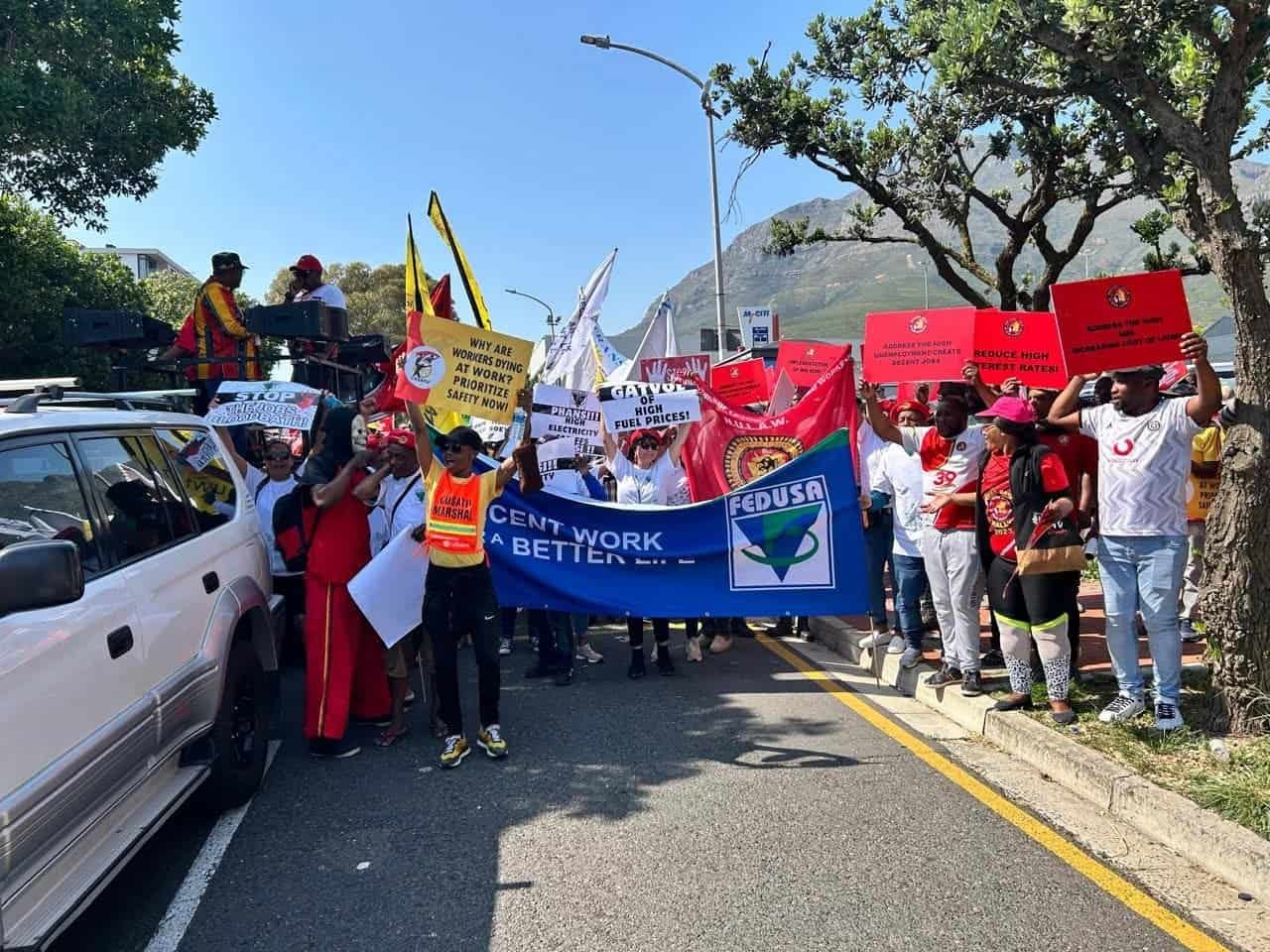
Government’s decision to introduce a temporary fuel levy reduction has brought a measure of relief to motorists and the transport sector, but it has also sparked concern from labour groups who say the intervention does not go far enough to protect the most vulnerable.
From 1 April 2026, South Africans are facing sharp fuel price increases driven by global oil market pressures linked to escalating conflict in the Middle East. Petrol prices are set to rise by over R3 per litre, while diesel will increase by more than R7 per litre.
In response, National Treasury announced a R3 per litre reduction in the general fuel levy for both petrol and diesel, effective for one month. The move is aimed at cushioning consumers from the full impact of the hikes and limiting knock-on effects on food and transport costs.
Government said the intervention seeks to strike a balance between protecting consumers and maintaining fiscal sustainability. The measure is expected to cost around R6 billion in foregone revenue and will be reviewed monthly.
Officials have also reassured the public that the country has sufficient fuel supply, noting that reports of shortages in some areas are due to panic buying and logistical challenges rather than a national crisis.
The relief has been cautiously welcomed by the South African National Taxi Council (SANTACO), which represents a sector heavily dependent on diesel.
SANTACO said the levy reduction is a necessary short-term intervention, but warned that the scale of the increases, particularly for diesel, continues to place strain on the industry.
“Given that the majority of minibus taxis operate on diesel, the significant increase of over R7 per litre means the industry will continue to absorb the greatest impact,” the organisation said.
Taxi associations are currently assessing the effect of the increases on operating costs, with any potential fare adjustments expected to be communicated directly to commuters.
SANTACO emphasised that any increases would be implemented with caution and transparency, while engagements with government are ongoing to explore further support for both operators and passengers.
At the same time, the Federation of Unions of South Africa (FEDUSA) has raised concerns about the broader equity of the relief measures, particularly the lack of targeted support for paraffin users.
In a statement, FEDUSA said the increase in the price of illuminating paraffin, R11.67 per litre at wholesale level and R15.60 per litre at retail, will hit low-income households hardest.
“For many working-class and poor households, paraffin is used for cooking, heating and lighting. There are no viable alternatives,” the federation said.
FEDUSA argued that while the fuel levy reduction will help motorists and ease transport-related costs, households that rely on paraffin remain fully exposed to price increases.
“This raises a fundamental question of equity. If relief is possible for motorists, it should also be possible for households who depend on paraffin for basic energy needs,” the organisation said.
However, some analysts note that the government’s approach is partly aimed at limiting broader economic fallout. By reducing the fuel levy on petrol and diesel, authorities are seeking to contain transport costs, which have a direct impact on food prices and inflation.
This, in turn, could indirectly benefit low-income households, even if they do not use petrol or diesel directly.
Still, the absence of direct relief on paraffin has highlighted gaps in the current response, particularly as colder months approach and demand for heating fuel increases.
Energy experts say the situation underscores the complexity of balancing immediate consumer relief with long-term fiscal and policy considerations.
Government has indicated that this initial intervention forms part of a two-phase approach. A broader package of measures is being developed to support households and key sectors of the economy, including a review of the fuel pricing system.
Further details are expected to be announced in the coming weeks.
For now, the mixed reactions from labour and the transport sector reflect the uneven impact of rising energy costs across society.
While motorists and parts of the economy will benefit from short-term relief, many low-income households remain under pressure, particularly those reliant on paraffin.
As discussions continue, stakeholders are calling for a more inclusive approach that balances economic stability with the need to protect the most vulnerable.
The challenge for policymakers will be to ensure that future interventions not only address inflation and economic pressures, but also close the gaps that leave some households more exposed than others.