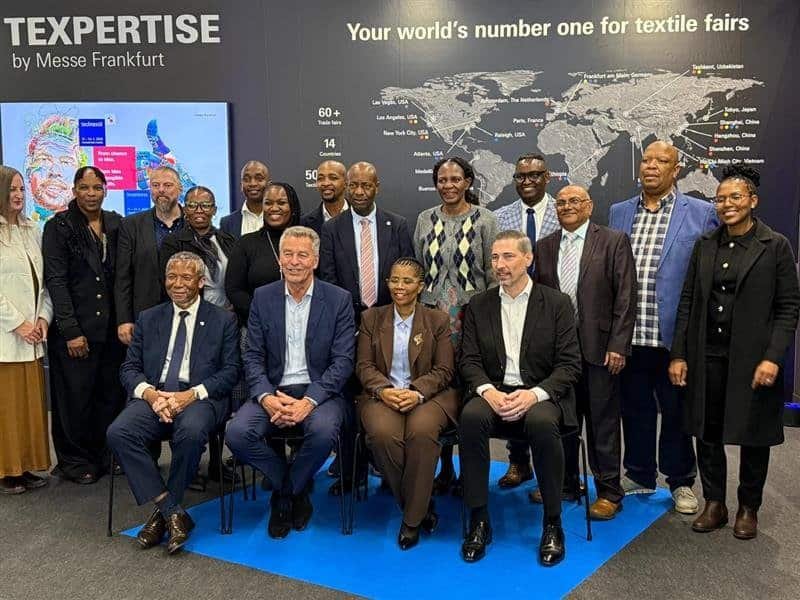
The University of South Africa (Unisa) has reached a significant milestone in its research and innovation journey, reinforcing its position as one of Africa’s most globally connected and impactful universities.
Through a landmark partnership with Messe Frankfurt, signed in Germany during the internationally renowned Techtextil and Texprocess trade fairs, Unisa became the first African university to formally partner with one of the world’s most influential trade exhibition platforms.
Sources and observers say this achievement represents far more than collaboration; it signals the strategic integration of African scholarship, global industry and applied research at scale.
Concluded on 22 April 2026 in Frankfurt, Germany, the agreement links Unisa’s expansive research capability with Messe Frankfurt’s Texpertise network, spanning the full clothing, textile, leather and footwear (CTLF) value chain. As South Africa works towards creating 330,000 jobs in the sector by 2030, Unisa’s participation positions academic research as a key driver of industrial development, innovation and skills development. It reflects a deliberate effort to move research beyond the academy and into real production and market environments.
Unisa’s participation in Techtextil, where it was the only South African higher education institution represented, underscores the university’s commitment to engaging international industry platforms, they said.
The partnership formalises an approach Unisa has long championed: integrating research, teaching, entrepreneurship and industry engagement. By embedding African scholarship within global platforms, Unisa ensures that locally generated knowledge contributes meaningfully to shaping global industrial futures.
Central to this partnership is Unisa’s growing research footprint in the CTLF sector. The university has played a leading role in textile manufacturing, materials science, sustainability and consumer research. A standout example from the College of Agriculture and Environmental Sciences is the development of standardised, customised clothing sizes for South African women of African descent. Using advanced 3D body-scanning technology, Unisa researchers addressed the limitations of Western-based sizing systems, producing solutions grounded in African bodies, contexts and markets. This work illustrates how scientific research can deliver socially relevant and market-responsive innovation.

Speaking at the Techtextil Process Forum, Unisa Principal and Vice-Chancellor Professor Puleng LenkaBula emphasised that Africa’s textile sector is not only an industrial opportunity but a cultural and historical one. Textiles, she noted, embody narratives of identity, resistance and global exchange. Through research-led innovation, Unisa is reaffirming Africa’s place within global value chains, ensuring that economic development remains culturally rooted and inclusive.
The partnership also strengthens the bridge between academia and industry. Through Messe Frankfurt platforms such as Allfashion Sourcing Cape Town, Unisa students, researchers and emerging designers gain direct exposure to international buyers, suppliers and markets. These platforms function as living laboratories, where academic insight meets production standards, sourcing requirements and global trade realities. This engagement helps keep curricula responsive and ensures that research outputs are informed by industry needs.
Alignment with national and continental policy frameworks further strengthens the partnership’s significance. South Africa’s National Development Plan 2030 and the African Union’s Agenda 2063 both emphasise manufacturing, industrialisation and value addition as foundations for economic transformation. Unisa’s research agenda, particularly within the Colleges of Agriculture and Environmental Sciences and Science, Engineering and Technology, directly supports these goals through work in advanced materials and digital production processes, sustainability and manufacturing innovation.
Beyond textiles, the collaboration extends into other strategic research areas. At AERO South Africa, the continent’s leading general aviation trade show, Unisa will showcase its expanding aviation research capacity, bolstered by the recent acquisition of an airport site near Pretoria.
As Professor LenkaBula asserts, Unisa’s Catalytic Niche Areas, which span, amongst others, aviation, advanced manufacturing and textiles, digitalisation and the Fourth Industrial Revolution, are some of the key outputs the university is driving for an approach that is responsive, relevant and resolutely global.
What distinguishes Unisa’s approach is its scale and inclusivity. As one of the world’s largest Comprehensive, Open Distance and e-Learning institutions, Unisa leverages its national footprint and continental reach to deliver large-scale skills development. Through work-integrated learning, short learning programmes and interdisciplinary research, the university ensures that knowledge creation translates into enterprise development, job creation and innovation—particularly important in the labour-intensive CTLF sector.
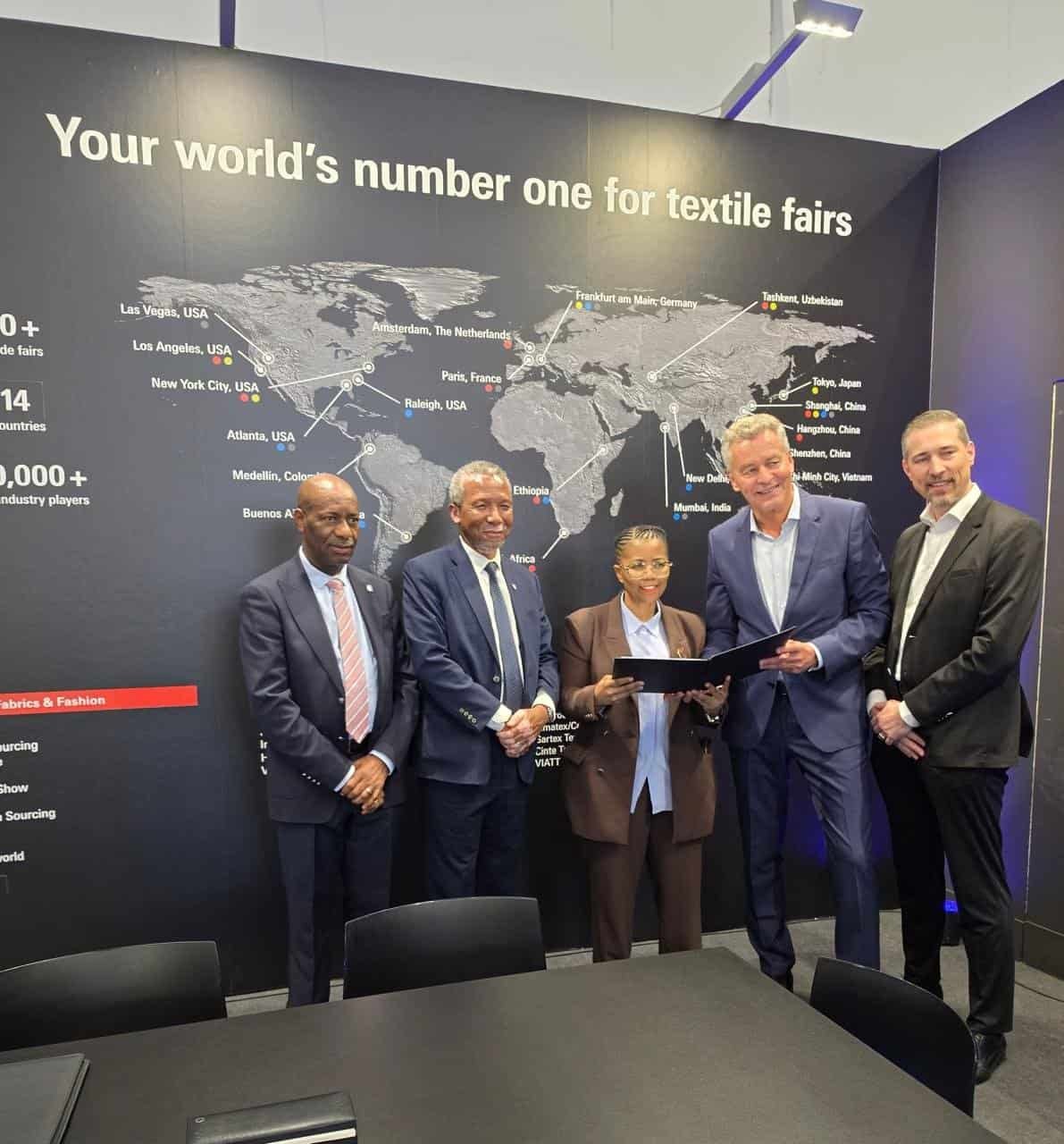
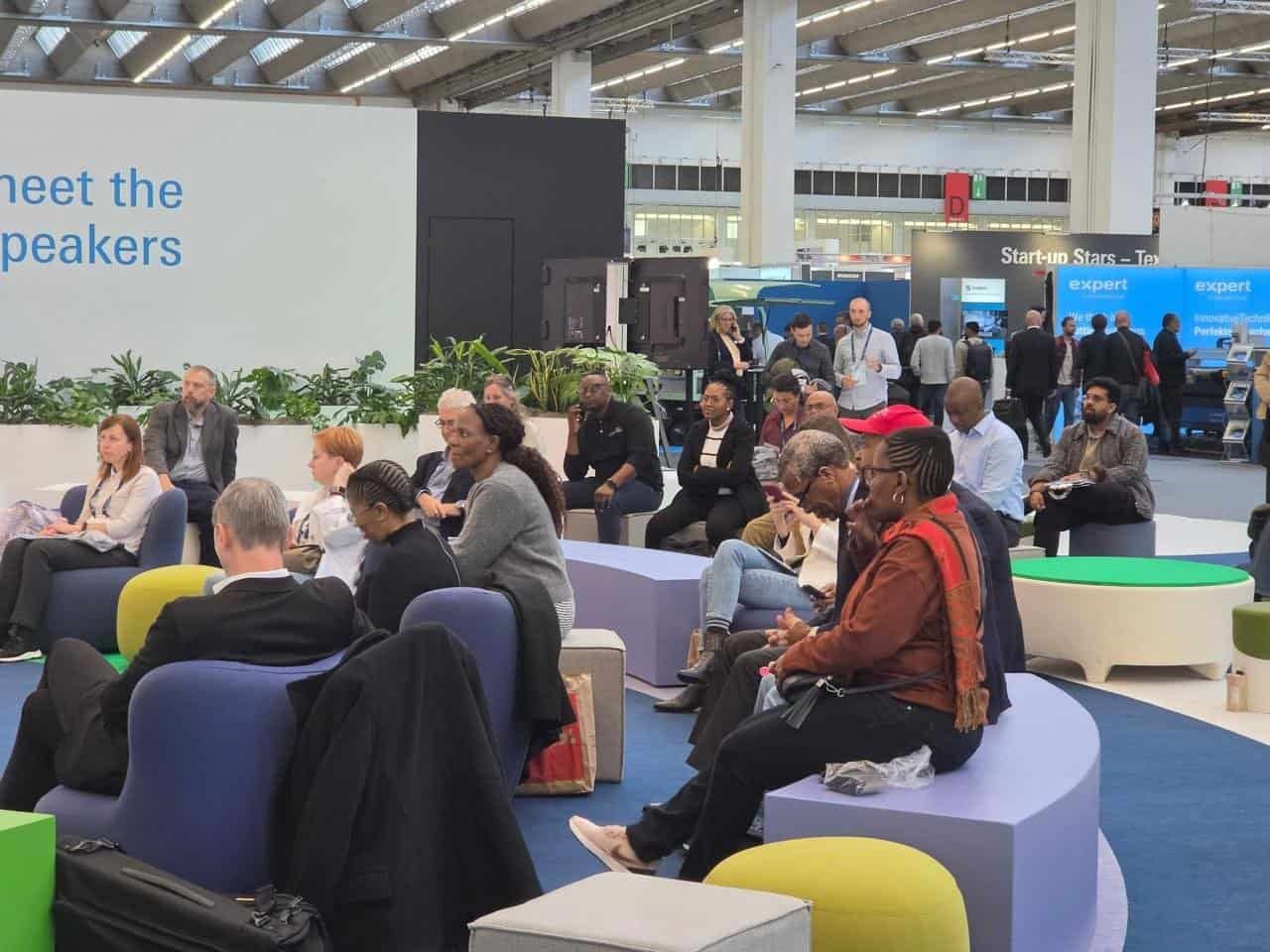
Industry leaders at Messe Frankfurt have welcomed the partnership as a meaningful contribution to global knowledge exchange. Trade fairs, they note, are spaces where ideas and perspectives influence future industries. Unisa’s presence affirms the growing influence of African research and expertise, while enhancing international visibility for South African scholarship.
Ultimately, the partnership marks a turning point in how universities engage with global industry. Unisa’s agreement with Messe Frankfurt demonstrates an integrated model in which research excellence, industry participation and policy alignment reinforce one another. It signals a future where African universities are central actors in global innovation ecosystems, shaping industries through knowledge that is globally connected and locally grounded.