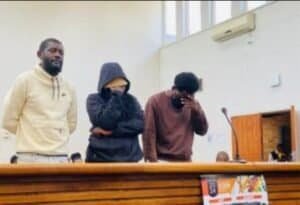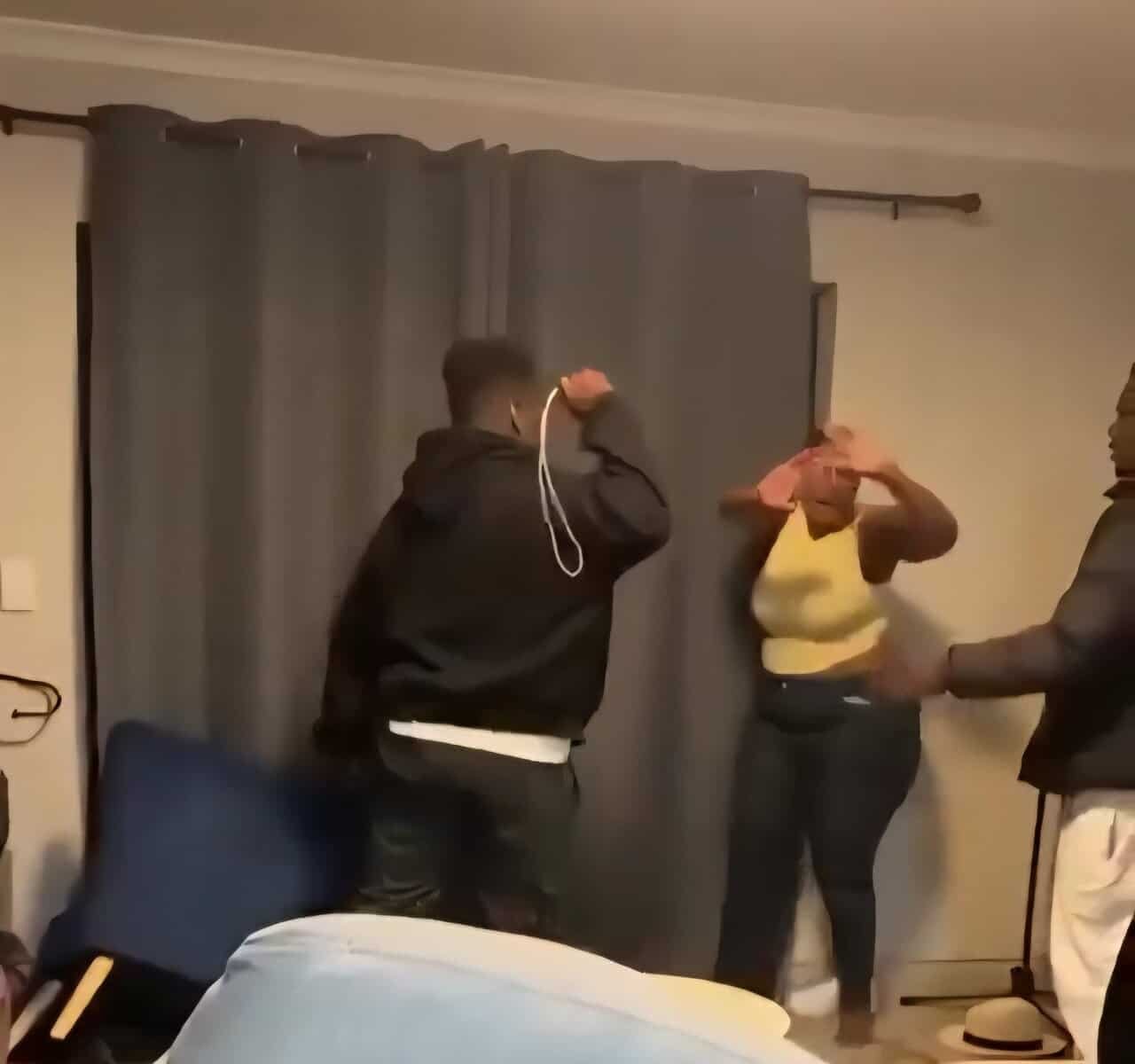
A disturbing video showing two women being brutally assaulted by men believed to be foreign nationals has ignited nationwide outrage and renewed calls for urgent action against gender-based violence (GBV).
The footage, widely circulated on social media over the past few days, shows two men (Nigerian accent) slapping, punching, and dragging the women while accusing them of theft. The victims can be heard crying out for help, their pleas ignored as bystanders record the scene.
According to community members who shared the clip online, the incident allegedly took place in a densely populated township where informal businesses run by foreign nationals are common. While the exact date and location remain unconfirmed, activists say the violence captured on camera is yet another reminder of the daily abuse women face in both private and public spaces.
The South African Police Service (SAPS) has so far remained tight-lipped about the incident. Despite the video going viral and public appeals for information, SAPS has not issued a formal statement or confirmed whether an investigation is under way. This silence has drawn sharp criticism from gender rights groups, who say it sends the wrong message to both survivors and perpetrators.
In a statement released on Wednesday, the Department of Women, Youth and Persons with Disabilities expressed “deep concern and unequivocal condemnation” over the incident. The department called on South Africans to assist police in locating the two men, urging government and law enforcement agencies to enforce laws “without fear or favour” and to provide survivors with swift justice and protection.
“The time for complacency is over. Women must be free to live without fear, to pursue their ambitions, and to enjoy equal rights in every sphere of life. Ending these violations is not only a women’s issue, it is a human rights imperative,” the department said.
It further appealed to civil society to continue raising awareness, holding perpetrators accountable, and supporting survivors, while urging the private sector to ensure safe workplaces and equal opportunities for women.
GBV activists say the attack is not an isolated incident but part of a broader, entrenched pattern of violence against women in South Africa, where femicide rates are among the highest in the world.
“Every time we see videos like this, it’s like a knife turning in the wound,” said Nokuthula Mthembu, spokesperson for the advocacy group Women Rise SA. “The violence has become so normalised that people can stand around filming instead of intervening. That speaks to a society that has become numb to women’s suffering.”
Mthembu also criticised the apparent inaction from police. “When SAPS keeps quiet on such a high-profile case, it sends a dangerous message — that perpetrators can get away with it. If they have leads, they must act. If they don’t, they must say so and appeal for information.”
Professor Amanda Gqola, a gender studies scholar, said the online spread of such videos can have a double-edged effect. “On one hand, it raises awareness and puts pressure on authorities. On the other, it can retraumatise survivors and reduce their dignity to viral content for public consumption.”
The fact that the alleged perpetrators are foreign nationals has fuelled heated debate on social media, with some voices calling for tighter immigration enforcement. Others caution against xenophobic scapegoating, pointing out that GBV is a pervasive problem across all communities and nationalities in South Africa.
“Violence against women is not imported — it is homegrown,” said Lebohang Mokoena from the Anti-GBV Network. “We must be careful not to turn this into a blame game that distracts from the core issue: patriarchy, misogyny, and impunity. Whether the abuser is South African or not, the problem is the same — our systems fail to protect women.”
Still, community safety forums in some areas say certain informal business spaces have become lawless zones where women, especially those in poverty, are vulnerable to abuse. “In some cases, victims are too afraid to report assaults for fear of retaliation or deportation if they are undocumented themselves,” said a local councillor who asked not to be named.
African Times sent multiple queries to SAPS national spokesperson regarding the viral video. By the time of publication, no response had been received. It remains unclear whether police have identified the men or if a case has been opened.
This lack of official communication has left many South Africans frustrated. “We see police holding press conferences for high-profile robberies, but when it’s about women’s lives, it’s silence,” said Mthembu. “We cannot keep treating violence against women as a lesser crime.”
Gender-based violence in South Africa has long been described as a “second pandemic,” with President Cyril Ramaphosa repeatedly declaring it a national crisis. Police crime statistics for 2024 showed that a woman is murdered every three hours, while thousands more suffer physical and sexual abuse.
While government has rolled out measures such as the National Strategic Plan on GBV and Femicide, activists say implementation remains inconsistent and underfunded. Cases often collapse due to poor investigations, lack of evidence, or survivors withdrawing complaints because of intimidation or loss of faith in the justice system.
For many South Africans, the latest viral video has become a rallying point. Community groups have begun sharing screenshots of the attackers online, urging people to help identify them. Women’s organisations are planning a march to police headquarters demanding answers.
“This is not just a women’s issue. It’s a human rights issue,” Mokoena said. “If we cannot guarantee the safety and dignity of half our population, we cannot call ourselves a free country.”
As the video continues to circulate, the women seen in it remain unidentified — a stark reminder that behind every clip and every statistic are real people whose lives are forever changed.
Whether those responsible will be brought to justice remains to be seen, or whether this will become yet another viral outrage that fades into silence.
On Wednesday, African Times contacted SAPS national spokesperson Brigadier Athlenda Mathe to ask whether a case had been opened or any investigations launched. By the time of going to print, no response had been received.
South Africans took to social media platform X, to express their views on the matter.
User Lerato Bonolo Pearl wrote: “That video of Nigerians beating South African women is cruel.. pure humiliation. Sisters, Instead of calling South African men “broke” or saying “apartheid messed with our minds,” LISTEN. They are here to degrade you, and the recordings are proof. Stop giving them the power to shame us all”.