The chant “Kill the Boer/Dubul’ibhunu,” which originated as a liberation struggle song during the anti‑apartheid era, has re‑emerged in South Africa’s public discourse in ways that far exceed its historical meaning.
Once embedded in a repertoire of symbolic resistance against colonial and apartheid domination, the chant has increasingly been appropriated and instrumentalised by extremist actors across the ideological spectrum. In this process, it has been transformed into a political weapon—one that fuels polarised narratives, distorts South Africa’s social realities, and undermines prospects for social cohesion. Extremists opportunistically adopt and weaponise the ‘Kill the Boer’ chant.
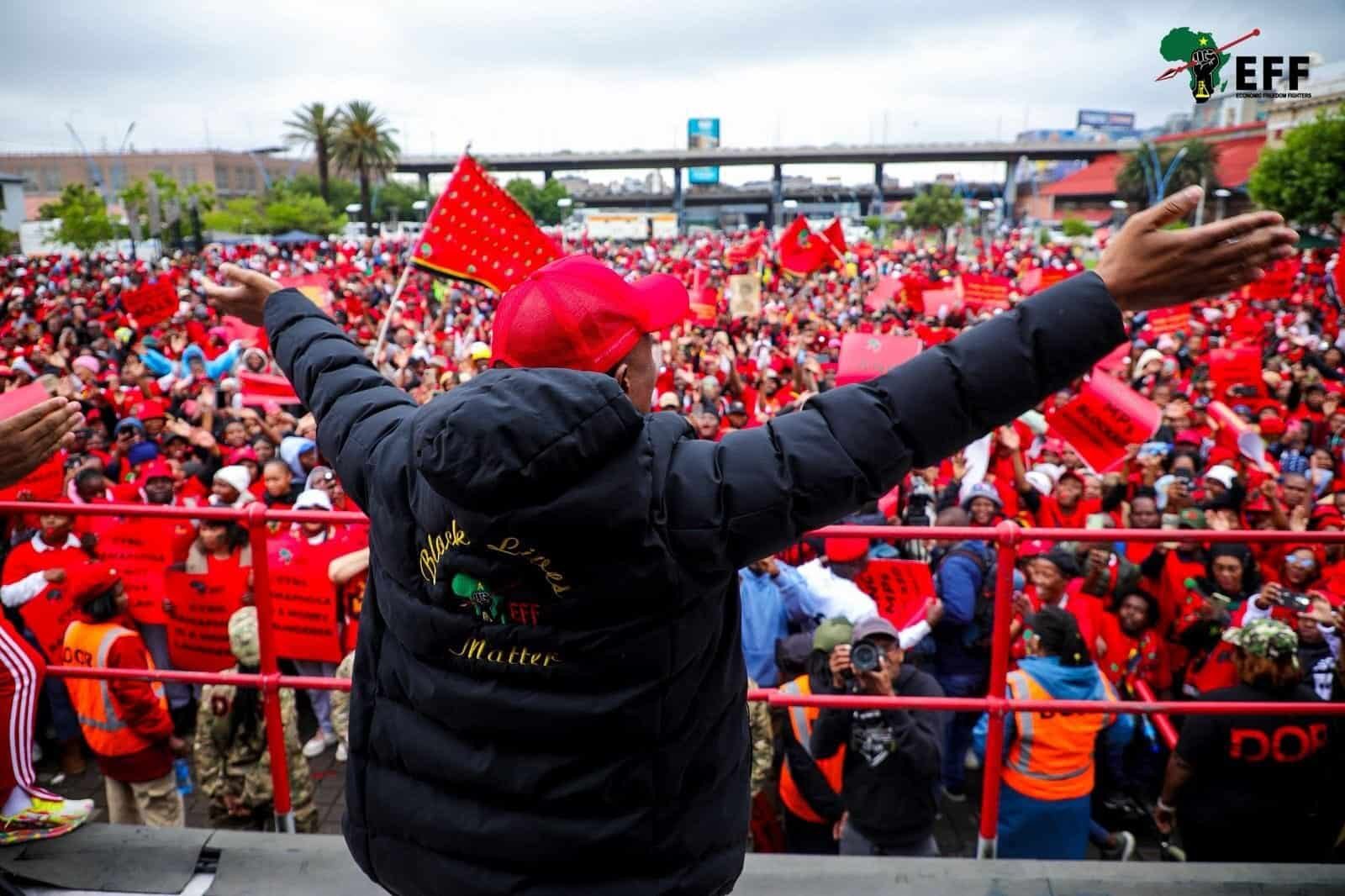
Recent episodes illustrate this dynamic vividly. In October 2025, Economic Freedom Fighters (EFF) leader Julius Malema led supporters in chanting “Kill the Boer” outside the East London Regional Court, following the postponement of proceedings related to his conviction for unlawful firearm discharge.
The invocation was not incidental. It occurred in a context of heightened legal and political scrutiny and functioned as a performative gesture—designed to provoke, mobilise, and signal defiance rather than to articulate a substantive programme for social transformation.
South African courts have long grappled with the chant’s meaning. While earlier Equality Court rulings found certain uses problematic, the Constitutional Court has emphasised the importance of historical and contextual interpretation, recognising the chant as symbolic speech rooted in resistance to apartheid rather than as a literal call for racial violence against white South Africans.
This judicial contextualisation reflects a constitutional commitment to balancing freedom of expression with protections against incitement, recognising that political meaning cannot be divorced from historical conditions.
Yet judicial reasoning has not prevented the chant’s renewed politicisation—particularly beyond South Africa’s borders. In March 2026, newly appointed United States Ambassador Leo Brent Bozell III publicly characterised the chant as hate speech during an address to business leaders, explicitly dismissing the Constitutional Court’s interpretation.
His remarks echoed long‑standing claims by lobby groups such as AfriForum that portray the chant as evidence of systemic anti‑white persecution or even “genocide.” The response from South Africa’s Department of International Relations and Cooperation was swift: Bozell was summoned, his comments described as undiplomatic and as an affront to judicial independence, and he subsequently issued a clarification expressing regret.
These episodes reveal what might be termed a dangerous symmetry in contemporary political discourse. Radical populist mobilisation on one side and supremacist alarmism on the other converge in their use of symbolic escalation, moral absolutism, and deliberate rejection of historical nuance.
This convergence aligns with a limited but useful insight from political science often associated with horseshoe theory. Extremes mirror each other in tactics—symbolic escalation, moral absolutism, and rejection of contextual complexity. Despite their ostensible opposition, both camps deploy the chant to provoke outrage, mobilise external allies, and extract political or reputational capital.
At first glance, radical left‑wing populists and advocates of white supremacist doctrines appear to share nothing in common. Yet both exhibit a strikingly similar disposition toward South Africa’s black majority. In different ways, each party marginalises, instrumentalises, or speaks over the lived realities of the majority.
Each camp advances sweeping visions for South Africa’s future while positioning itself as uniquely entitled to define the country’s moral and political trajectory. Both attempts to appeal to audiences beyond South Africa’s borders—international media, foreign governments, and transnational advocacy networks—while demonstrating limited engagement with the articulated priorities of ordinary South Africans.
Analytically, the “Kill the Boer” chant can be disaggregated into two distinct components. The first concerns its historical provenance: a form of resistance discourse directed at systems of colonial and apartheid oppression, articulated in a context where racial domination was codified in law and enforced through violence.
The second concerns its contemporary appropriation by opportunistic and extremist actors, including elements of both the far right and radical populist formations, who deploy the chant in ways that diverge sharply from—and often contradict—its original political meaning.
What unites these otherwise antagonistic actors is a persistent denigration of the black South African majority. Historically, the black majority has been cast as a convenient scapegoat for perceived dysfunctions within the polity. In contemporary discourse, the black majority is alternately portrayed as inherently violent, irrational, xenophobic, or politically immature. Simultaneously, the majority is mobilised rhetorically in service of narrow agendas advanced by failing political actors.
Crucially, the majority of South Africans remain largely detached from these symbolic spectacles. The chant rarely features in everyday discourse or lived experience. There is no empirical evidence to support claims that black South Africans are broadly preoccupied with racial violence against white people.
On the contrary, black South Africans remain the primary victims of the country’s severe violent crime epidemic. Farm attacks and murders—while tragic and often particularly brutal—affect individuals across racial lines and are overwhelmingly driven by general criminality rather than racial animus. Official crime statistics consistently show that farm murders constitute a minute fraction of total homicides, which exceed 25,000 annually. Victims include black farm workers, owners, and dwellers alike.
Narratives of a targeted “white genocide” have been repeatedly debunked by independent inquiries, official data, and court findings. Yet these narratives persist, drawing on a long lineage of racialised fear encapsulated in the apartheid‑era trope of ‘swart gevaar.’ Rebranded for a global audience as ‘white genocide’, this imagery of ‘swart gevaar’, has circulated through international media ecosystems and even entered political rhetoric far beyond South Africa’s borders. At the same time, populist rhetoric within South Africa risks eroding social cohesion in different ways.
During the recent State of the Nation Address debate, Julius Malema insinuated that black South Africans are inherently xenophobic and that political parties deliberately exploit such sentiment ahead of local government elections. Such narratives flatten complex social dynamics and risk legitimising collective blame, even as they claim to speak in the name of the marginalised.
These two seemingly opposing camps can weaponise “white genocide” and xenophobic discourse to demonise and dehumanise the native majority. Rather than ideological opposites, they are two sides of the same coin, united in their effort to weaken the demographic and political majority.
Electoral evidence further undermines the claim that racial extremism reflects mass sentiment. Black South Africans are, by and large, politically moderate, and law-abiding, channelling grievances through protests, civic participation, and elections. The ANC’s electoral setbacks—from losses in key metros in 2016 to losing its parliamentary majority in 2024—reflect demands for accountability on service delivery, unemployment, and inequality, not endorsement of racial extremism.
South Africa’s democratic transition was premised on the difficult work of holding historical memory together with constitutionalism, pluralism, and restraint. Reducing complex histories to tools of provocation undermines that project. Ordinary citizens are far more concerned with poverty, unemployment, inequality, and crime than with symbolic battles staged by political entrepreneurs at home or abroad.
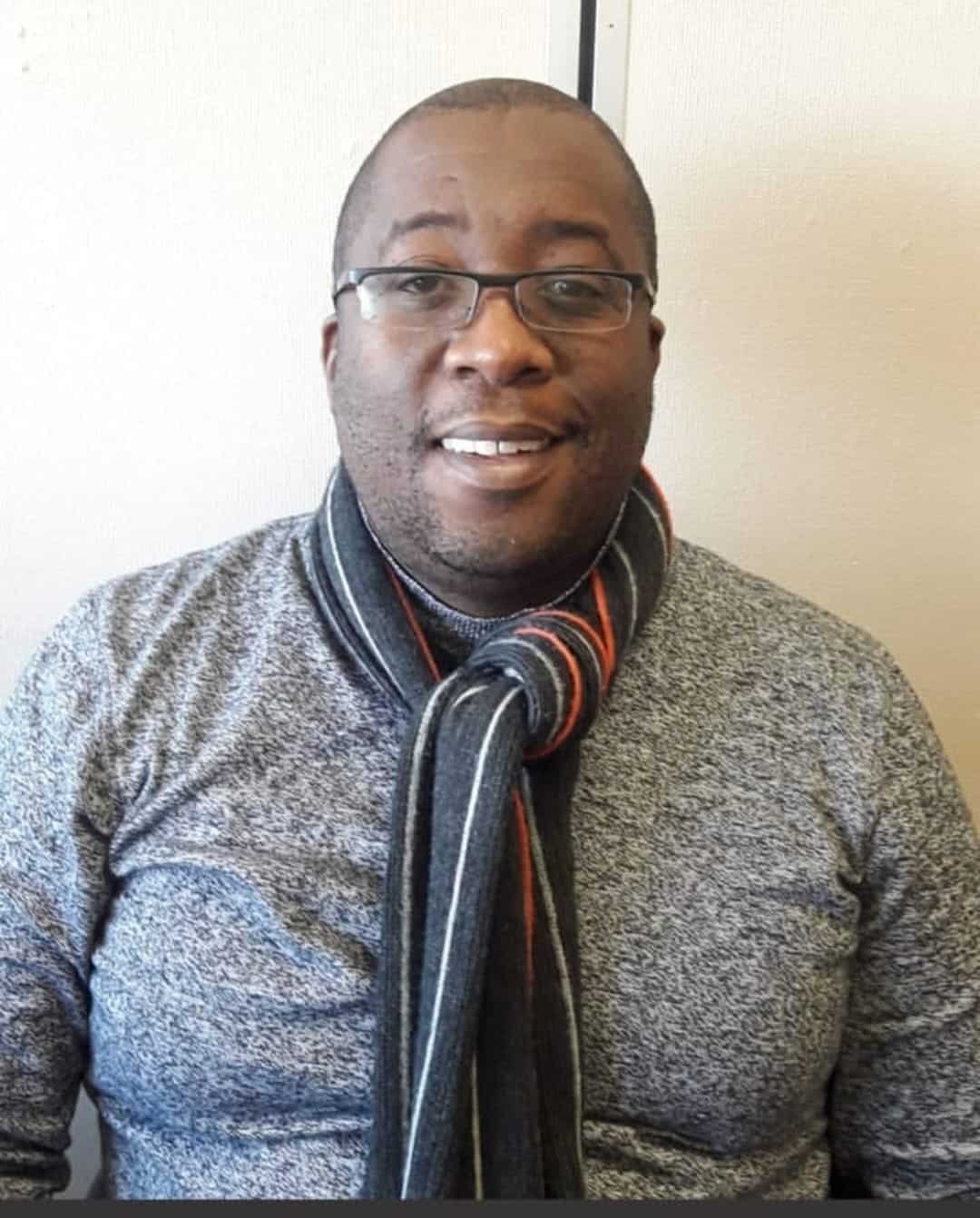
Dr Mabutho Shangase is a Senior Lecturer in Political Studies and International Relations at North-West University.