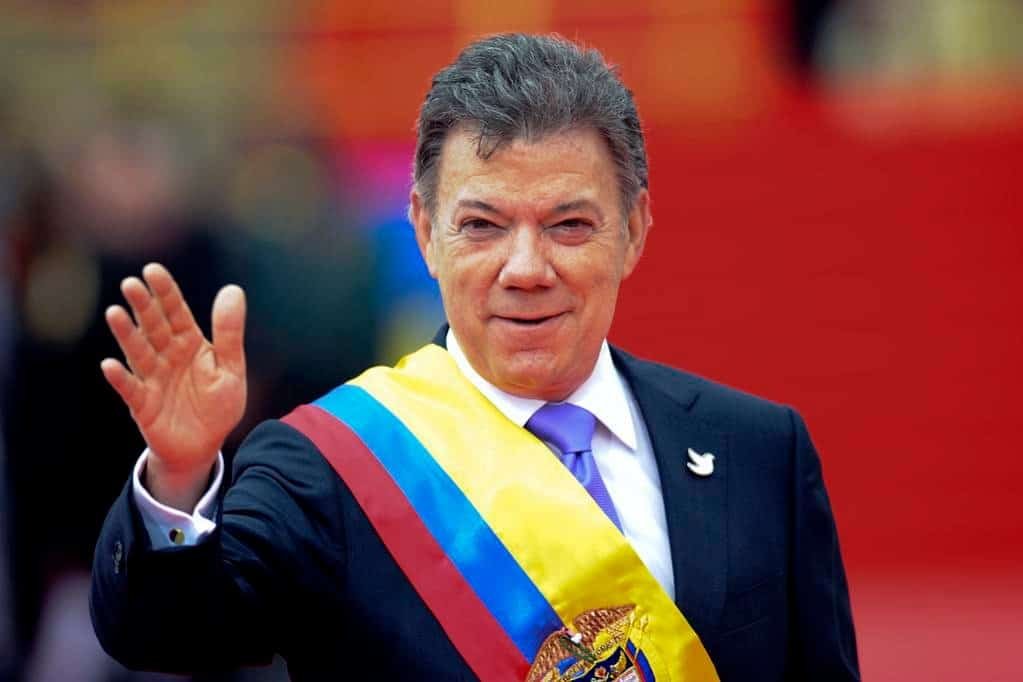
Former Colombian president and 2016 Nobel Peace Prize laureate Juan Manuel Santos is set to bring a difficult question about conflict, human rights and global responsibility to Cape Town when he delivers the 24th Nelson Mandela Annual Lecture in November.
Santos, who served as Colombia’s president from 2010 to 2018, has been announced as the keynote speaker for the lecture, which will take place on Friday, November 6, 2026, as part of the One Young World Summit.
The lecture will be held under the theme “When is silence complicity?”, a question that echoes one of Nelson Mandela’s own interventions on the tension between national sovereignty and the responsibility to respond to violence and oppression.
The event is expected to bring the debate directly to an international audience, with the One Young World Summit drawing more than 2,000 young leaders from more than 190 countries.
For the Nelson Mandela Foundation, the choice of Santos places a leader with direct experience of conflict and peace negotiations at the centre of a discussion about when non-interference ends and moral responsibility begins.
Santos was awarded the Nobel Peace Prize in 2016 for his efforts to end more than five decades of armed conflict in Colombia through a peace agreement with the Revolutionary Armed Forces of Colombia, known as the FARC.
He now serves as chair of The Elders, an independent group of global leaders founded by Mandela in 2007 to work for peace, justice and human rights.
The theme of this year’s lecture draws from an address Mandela delivered in Burkina Faso in 1998, in which he questioned whether sovereignty should prevent action when people are facing violence and oppression.
Almost three decades later, the Foundation says the question remains relevant amid armed conflicts, authoritarianism, human rights violations and increasing geopolitical instability.
But the debate is not presented as a straightforward argument for intervention.
The lecture will also examine the historical consequences of colonialism and neo-imperialism, as well as foreign interventions carried out in the name of justice that have themselves resulted in harm.
At its heart is a difficult question about responsibility: when does remaining silent amount to complicity, and when does intervention cross the line into interference?
The Foundation says these questions will be considered at both individual and international levels.
That includes how ordinary people respond to injustice in their communities, as well as the decisions taken by governments and international institutions over foreign policy, humanitarian intervention, sovereignty and global governance.
Dr Mbongiseni Buthelezi, chief executive of the Nelson Mandela Foundation, said Santos brought “a lived understanding of the difficult choices involved in conflict, peace and reconciliation”.
“At a time when the world is confronting violent conflict, authoritarianism and profound questions about our responsibility to one another, we believe the question ‘When is silence complicity?’ demands serious engagement,” Buthelezi said.
He said the partnership with One Young World would also allow the discussion to reach a global gathering of young leaders while retaining the Mandela Lecture’s tradition of engaging audiences beyond the venue.
For One Young World co-founder and chief executive Kate Robertson, the theme has a particular connection to Mandela’s legacy.
Robertson recalled growing up in South Africa under apartheid and witnessing Mandela’s leadership and refusal to remain silent in the face of injustice.
She said this experience inspired her to co-found One Young World.
“It is fitting that this year’s lecture returns to a question he wrestled with throughout his life: when does our silence make us complicit?” Robertson said.
She described Cape Town as a city carrying both the weight and hope of Mandela’s legacy and said the question would be particularly relevant for young leaders gathering to consider their role in shaping the future.
The Nelson Mandela Annual Lecture was established in 2003 and has become one of the Foundation’s major platforms for public dialogue.
Over more than two decades, the lecture has featured prominent international figures, including former United States president Barack Obama, United Nations Secretary-General António Guterres, Nobel Peace Prize laureate Malala Yousafzai, economist Thomas Piketty and Barbados Prime Minister Mia Mottley.
The annual event is designed to use Mandela’s legacy as a starting point for examining contemporary social, political and economic challenges rather than simply commemorating his life.
This year’s lecture therefore places Santos’ experience of negotiating an end to a long-running conflict alongside Mandela’s own arguments about the responsibilities of the international community.
It also places those questions before a new generation of leaders.
The 2026 One Young World Summit will be held in Cape Town, with the organisation saying its global ambassador community now includes more than 20,000 young leaders across 196 countries.
For the delegates attending the summit, the November lecture will offer a direct encounter with one of the most difficult questions facing governments, institutions and individuals confronting injustice: whether staying out of a crisis is genuinely neutral when lives and rights are at stake.