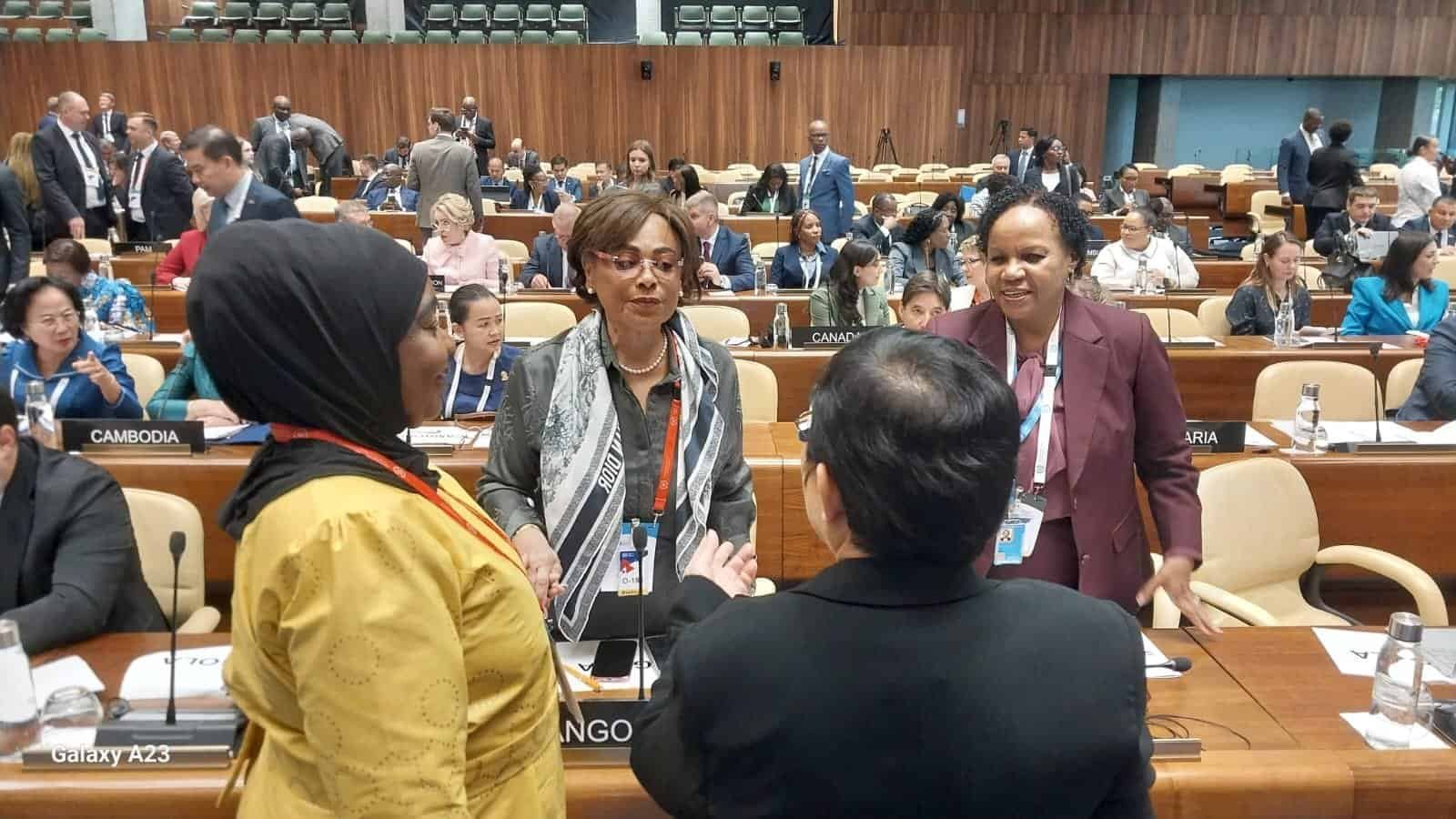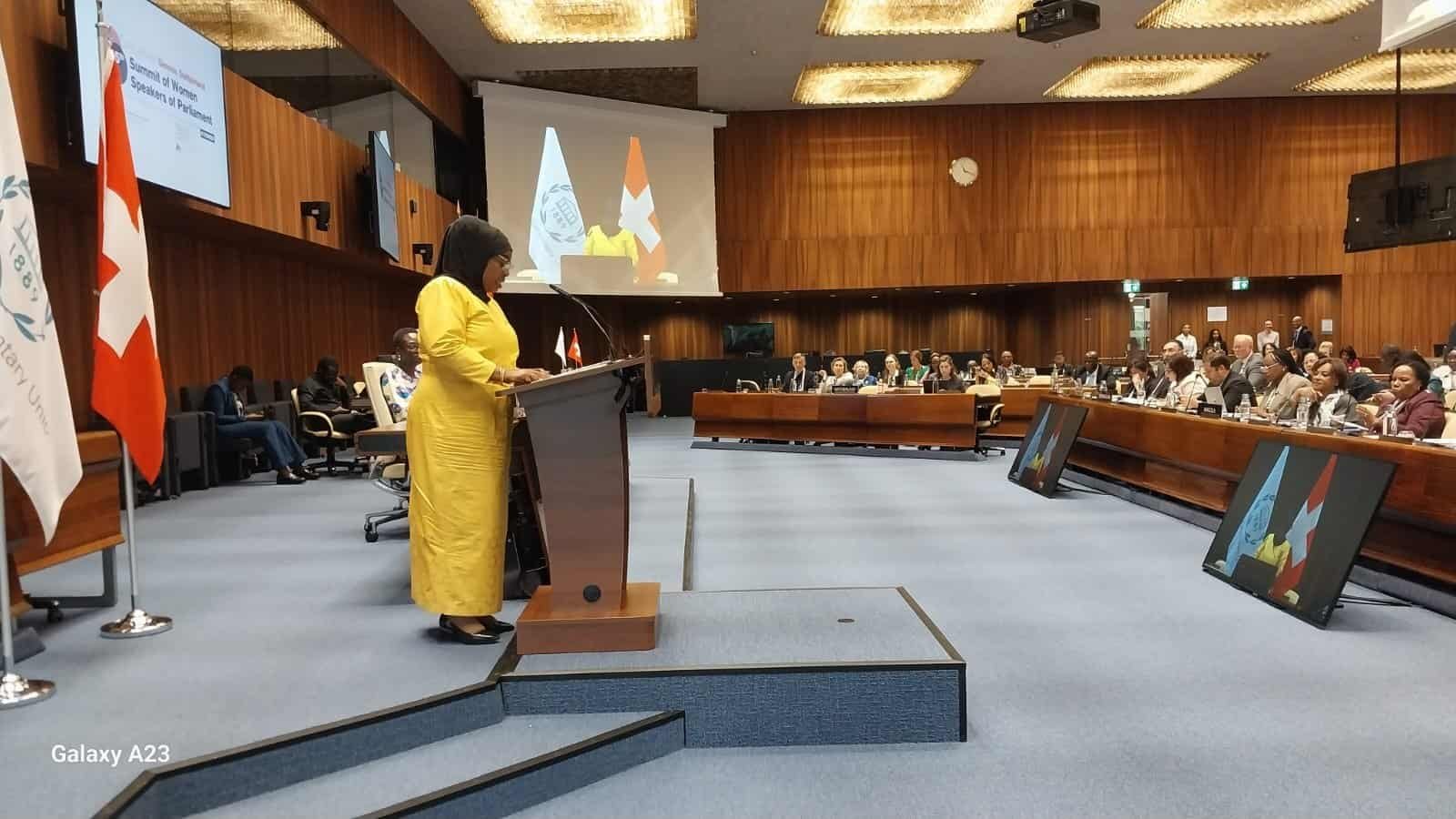
The President of Mozambique’s Parliament, Margarida Adamugi Talapa, has stressed that children, girls and women are disproportionately affected by the consequences of climate change. She made the remarks on Monday during a debate on the Motion on Climate Change at the Conference of Women Speakers of Parliament, held in Geneva, Switzerland.
Representing Mozambique, Talapa highlighted how diminishing resources increasingly force women to travel long distances in search of essentials, often exposing them to violence and human trafficking.
Drawing from her country’s recent experiences, Talapa pointed to Mozambique’s devastating 2023–2024 cyclone season, during which three tropical cyclones struck the country within just four months. These events led to loss of life, severe material damage, and set back national development efforts.
“We bring to this debate the voice of a country that lives, on a daily basis, the urgent and real impacts of climate change,” Talapa stated. “Our experience has taught us that the effects of climate change are not felt equally. Children, girls, and women bear the brunt more severely and disproportionately.”
She identified poverty, limited access to resources, and restricted access to information as the main socio-economic factors contributing to the heightened vulnerability of women and girls in the face of climate change.
“In many developing countries, including Mozambique, women bear the primary responsibility for securing basic household resources,” she added.
To address these challenges effectively, Talapa called for the adoption of gender-sensitive approaches that acknowledge the specific vulnerabilities and needs of women and girls.
“I urge all those present to use our voices and our influence to advocate in our respective parliaments for legislation and public policies that recognise these vulnerabilities and work to correct them,” she appealed.
Talapa concluded by inviting fellow women parliamentary leaders to join efforts in coordinated global action. “Together, we can make a difference.”
The Motion on Climate Change was adopted by acclamation and will be submitted to the upcoming United Nations General Assembly.