Participants discussed technological developments in newsrooms and ensuring the accuracy of information
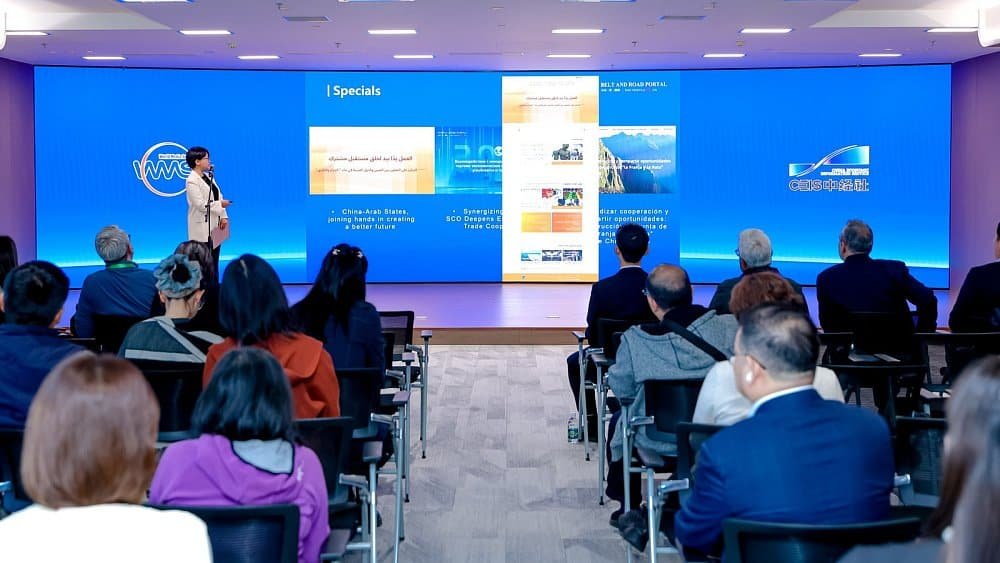
At the 7th World Media Summit in Beijing, calls were made for the development of standards governing the use of artificial intelligence (AI) in the media. This global media initiative aims to facilitate the exchange of technological solutions, develop journalists’ professional skills and expand newsrooms’ access to new tools.
Around 500 representatives from 112 countries took part in the events. The main programme of the summit took place at the Great Hall of the People in Beijing. The event was organised by the Xinhua News Agency – a partner of TV BRICS – and the Beijing Municipal Government. The meeting coincided with the 95th anniversary of Xinhua.
Evgeniya Tolstoguzova, Deputy Director of the International Cooperation Department at TV BRICS, took part in the summit.
One of the central themes of the meeting was the implementation of artificial intelligence in the collection and processing of information, as well as in the production and distribution of content. Participants also discussed access to new technologies for countries in the Global South, information security, copyright protection and the reliability of journalistic material.
Fu Hua, Director-General of the Xinhua News Agency, noted that AI helps to process large volumes of information more quickly, produce content in different languages and tailor content to the interests of the audience. To achieve this, editorial teams need to improve their workflows and train specialists who combine journalistic knowledge with technical skills.
“We must utilise artificial intelligence to enhance editorial capabilities, implement intelligent process management and expand the training of professionals with versatile skills based on human-machine interaction,” said Fu Hua.
He also highlighted the risks associated with the use of AI, including the generation of misinformation, algorithmic bias and deepfakes. According to him, technology cannot replace a journalist on the ground, so its implementation must be accompanied by adherence to professional standards and fact-checking.
Vu Viet Trang, Director-General of the Vietnam News Agency (VNA), emphasised that technological changes do not negate the professional responsibility of journalists. She proposed agreeing on common principles for the use of AI in the media, training staff to work with new tools, and developing cooperation between editorial teams in different countries to jointly verify facts and identify inaccurate information.
“Our correspondence remains on the front line, close to the people and stories that matter. Behind every new story are human knowledge, professional judgement, and responsibility,” noted Vu Viet Trang. Among the VNA head’s other proposals were the protection of copyright and the provision of fair remuneration for media content.
Wong Chun Wai, Chairman of Malaysia’s Bernama National News Agency, drew attention to the unequal opportunities news organisations face in adopting new technologies. To make full use of AI, he said, investment and modern infrastructure are essential. Furthermore, algorithms must take into account linguistic and cultural diversity, including that of countries in the Global South.
“Technology alone is not enough. We must invest in human capital development and equip journalists with the necessary knowledge and skills so that they can make effective use of the possibilities offered by artificial intelligence. […] Our countries must not limit themselves to merely implementing AI. We must not only master new technologies but also actively participate in shaping the future of AI, ensuring that our languages, experiences and perspectives are reflected in it,” said Wong Chun Wai.
Patricia Villlegas Marin, President of the Venezuelan television broadcaster teleSUR, linked the development of AI to information and technological sovereignty. She noted that countries of the Global South must participate in the creation of technologies, develop their own infrastructure and independently shape the information agenda.
“We create information content, but we use algorithms developed by others. The people of our countries generate data that holds immense value, yet they play virtually no part in its distribution. Thus, the digital divide between the North and the South is linked not only to access to artificial intelligence technologies but also to issues of technological sovereignty,” emphasised Villlegas Marin.
As one solution, she proposed strengthening partnerships between media organisations, exchanging content and developing networks for the dissemination of information amongst countries of the Global South.
Mohammad Mahdi Rahmati, CEO of the Iranian media group Mehr Media Group, put forward two practical proposals: to establish an international working group to share experience of applying AI in the media and to jointly develop an open system for managing editorial processes.
Such a platform could bring together tools for searching for and organising documents, speech recognition, translation, fact-checking and the preparation of content in various formats.
“I would like to put forward two proposals to strengthen the media capacity to use and provide AI. The first is the creation of a working group on cooperation and knowledge-sharing in this field. […] The second is joint investment in the design and development of an open-source AI-powered editorial management system,” said Rakhmaty.
He proposed involving media companies, universities and research centres in the development of a pilot project.
Pratyush Ranjan, Editor-in-Chief for Digital Services and Artificial Intelligence Implementation at the Indian news agency Press Trust of India, explained how new tools help to overcome language barriers and introduce an international audience to stories from different regions. In particular, AI is used to translate content, process data and visualise complex topics.
At the same time, he emphasised the need to combine technological tools with journalistic methods of fact-checking.
“Responsible journalism is impossible without thorough fact-checking. We combine traditional methods of investigative journalism with digital verification tools and artificial intelligence technologies. This enables us to analyse questionable images and video footage, establish their origin and verify the accuracy of claims based on confirmed data. It is precisely this thorough fact-checking that helps us maintain the trust of our audience,” Ranjan noted.
During the meeting, participants adopted the Beijing Consensus. The document calls for the development of responsible and accessible use of AI in the media sector, the strengthening of trust in journalism, and the expansion of cooperation between newsrooms in different countries.
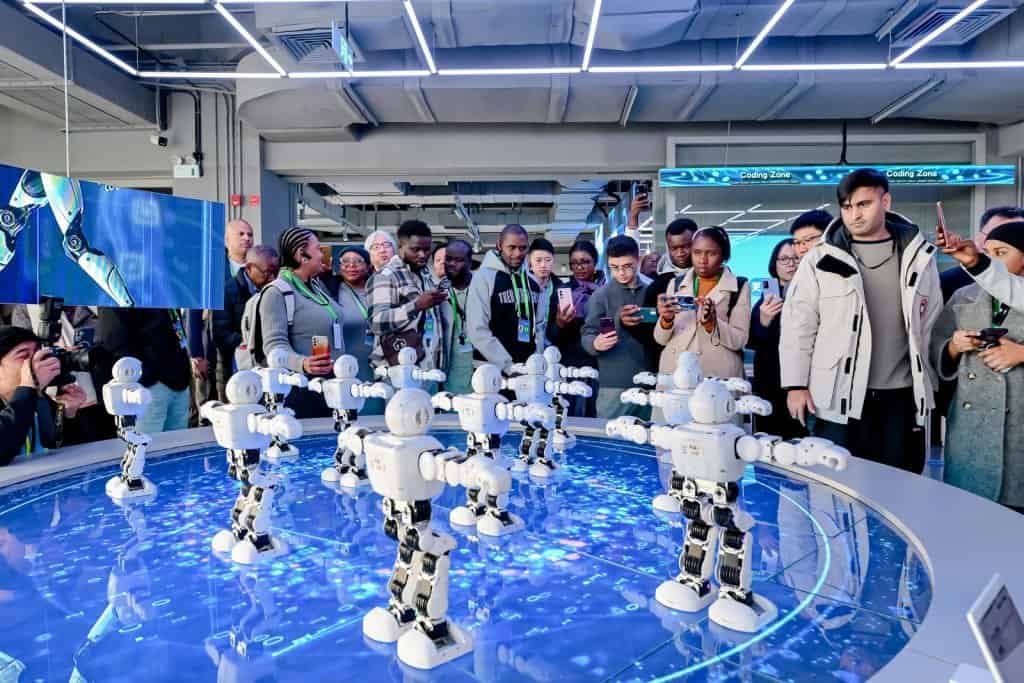
Other outcomes of the summit included the publication of the “AI Plus Media: Global Development Report 2026” and the unveiling of the world’s first biomimetic humanoid robot – a news presenter.
African Times published this article in partnership with International Media Network TV BRICS