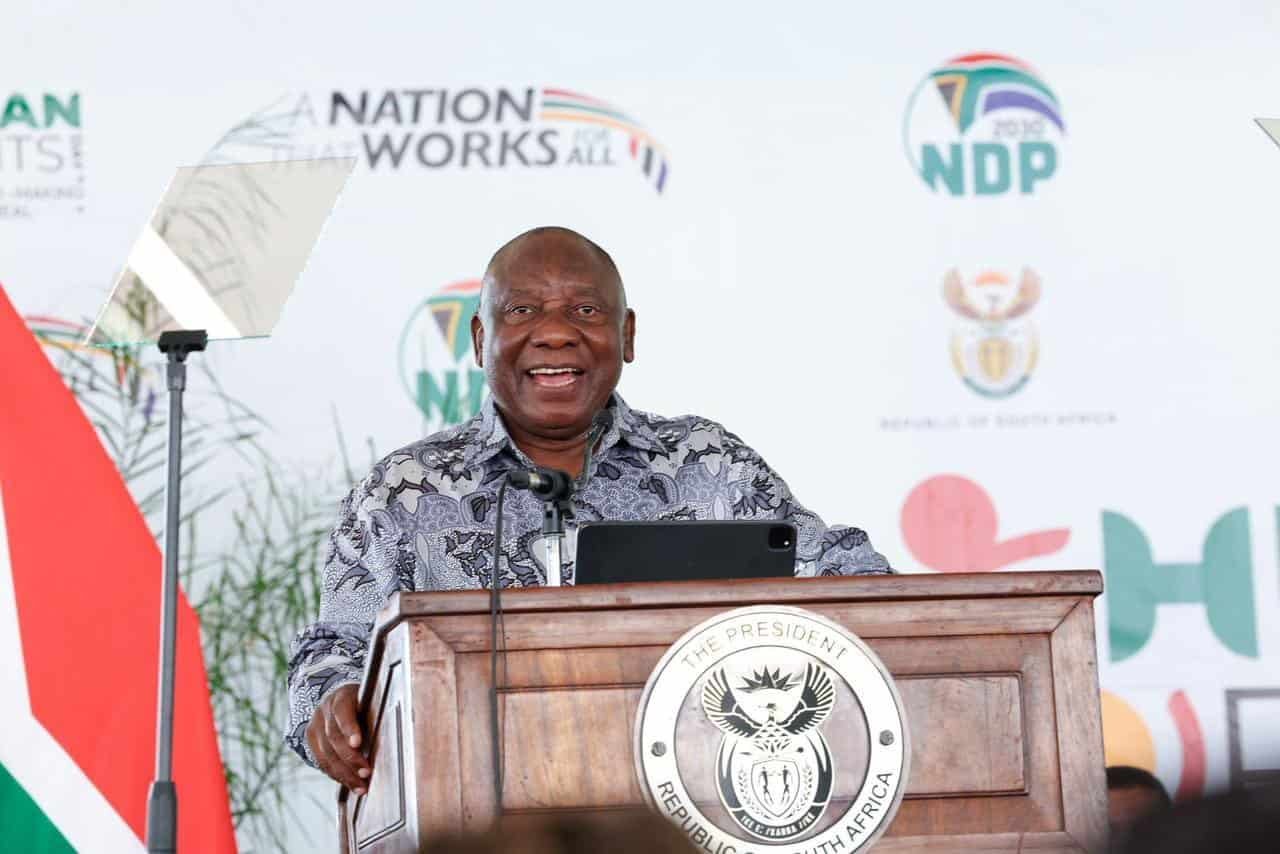
The brutal massacre of Sharpeville residents by racist, trigger-happy apartheid policemen on 21 March 1960 continues to be a part of societal discourse that highlights apartheid hegemony that was cemented and immensely reliant on extreme violence for its existence and unjustified longevity. The scars and remnants of the massacre are not only embedded in the commemoration, mourning, celebration, and remembrance of 21 March, but also in the ambience of place and in symbols of memory, which come alive to accompany speeches by state presidents and representatives of political parties in Sharpeville.
It is by far the testimonies of survivors and community members that reverberate the lived reality of the massacre and set the tone for the day. But 2025 was somewhat different: the presidential speech honouring the survivors of the commemoration took place in the township of Galeshewe, Kimberley, more than 400 kilometres from where the massacre took place. Equally so, geographically disconnected from George Thabe Stadium (Sharpeville), where the signing of the Constitution of the Republic of South Africa by former President Nelson Rolihlahla Mandela took place.
The geographical disconnection raises issues historically embedded in the politics of heritage ownership, the massacre, and the representation of space and locality in landmark commemorations. Essentially, the Sharpeville Massacre belongs, in spatial, contextual, and political senses, to the Pan-Africanist Congress of Azania (PAC) and the people of Sharpeville. In the context of broader politics and state-building, the massacre is a major contribution to the liberation of the Republic of South Africa from the stronghold grip of apartheid. It is within this framework, many may argue, that the location of the presidential address is relevant and justified.
To what extent is the sense of community pride and cohesion impacted by the absence of a presidential address in Sharpeville? Furthermore, to what extent did the hosting of the presidential address in Galeshewe enhance cohesion on a macro-level? These layered questions are onerous to address but worthy of consideration in our debates in social media posts, shebeens, street corners, and private spaces.
Whilst many people refer to the Sharpeville Massacre as Sharpeville Day, contemporary discourses, largely shaped by political reform since 1994, have conceptualised Sharpeville Day as Human Rights Day. This, according to social commentary, has devalued the political essence of the day by shifting the focus almost entirely to conversations on Human Rights. These shifts in dialogue may stem from a lack of tolerance for articulating black histories as histories of victimhood at the violence inflicted by apartheid. The discourse of violence in Sharpeville is no different.
Apartheid state violence has shaped the police station where the massacre occurred, the Sharpeville Memorial Precinct, the Phelindaba Cemetery, among others, where the heroes are buried, and the Dlomo dam. The latter is symbolic; it is believed that showers of rain washed away the blood of lifeless residents to the Dlomo Dam after the shooting. All these mentioned places symbolise loss of life and consistently articulate and position the township as a crime scene. The symbols that should ideally represent triumph tell stories of murder, dispossession, forced removals, unbelonging, and police brutality.
Most of the Sharpeville youth that I spoke to in my research on Sharpeville showed alarming disinterest and disregard for local museums and places of historical significance because of the violence-embedded narratives. Pointing to the Human Rights Precinct, the sentiment “Die plek e bua ka batho ba hlokahetseng ka nako ea apartheid” (this place speaks of people that died during apartheid) was expressed by a youth of Vuka. In the same vein, the President of the Government of National Unity, Mr Matamela Cyril Ramaphosa, emphasised that the constitution was made possible by the bloodshed during the struggle for freedom in South Africa.
To worsen matters, recent research by Nancy Clark and William Worger, amid counternarratives to the death statistics of the massacre, indicates that the death count of the massacre far exceeds the 69 purported by conventional discourse. The primary focus on traumatic histories, such as the Sharpeville Massacre, distorts the ‘total’ history of the location, its people, lifestyle, culture, and the making of home. Perhaps it is unsurprising that the organisation #Sharpevilleisnotamassacre, as the name suggests, advocates for a comprehensive articulation of Sharpeville that embodies the histories of its natural environments, people, resources, entertainment, musicians, artists, and economies, amongst others.
What does this mean?
Debatably, it is less traumatic and emotionally demanding to talk about Human Rights and the constitution of South Africa than about how bullets were indiscriminately sprayed on the backs of innocent lives. It is far easier to say “let us move on and forget about the past” than it is to reflect on the mass burials of innocent lives that were transported on the bins of trucks as if coal to be used in the industries of SASOL and Vereeniging. Let alone on how the burial processes contradicted burial rites within black communities and the intergenerational spiritual consequences thereof on generations to come, a conversation for another day.
What happens after Human Rights Day?
Human Rights Day raises awareness of myriad prevalent challenges in our communities. The day prompts us to evaluate fundamental rights, including access to adequate housing, healthcare, food, and water, education, and, amongst others, human dignity. It is disheartening, especially in the context of Sharpeville, where the massacre and signing of the Constitution of South Africa took place, human dignity seems questionable.
The presidential blue-light convoy would have resembled a wedding convoy as they passed the environmentally concerning illegal dumping site at the entrance to Sharpeville. Slithering like a snake, they would have attempted to avoid potholes on their way to George Thabe Stadium. Perhaps the everyday, nauseating and never-ending smell of squalor, sewerage, and decay that students at Vuyo Primary School are forced to endure would have penetrated the German machine’s air conditioning, unceremoniously reminding the President of the everyday experiences of Sharpeville residents.
Where would he have commemorated the brave heroes of Sharpeville? The Phelindaba cemetery, a heritage site, lacks the protection afforded to many others. The unfinished, now dilapidated building in the cemetery is an apparent unpleasant reminder of the region’s dying heritage sector. The PAC memorial stone is constantly vandalised, suggesting neglect and disregard for memory in the area.
Would this not have been an ideal location for a presidential address? What about George Thabe Stadium? The stadium echoes and symbolises nothingness, being home to the signing of the Constitution; its brick-and-mortar lack of testimony to its greatness stems from a lack of political will to transform it into a tourist destination that tells the story of the triumph of a proud people. The prevalent poverty, lack of development, inadequate service delivery, and an inefficient and problematic municipality have made the township difficult to access. These factors have also predominated in commemorative discourses, contributing to a veering away from the township’s history. For some, Sharpeville is a traumatic crime scene to be exited, but on the streets of this promising township, the black child plays.

Dr Lesiba Tumishang Ledwaba is a Deputy Director of the School of Social Sciences and a Senior Lecturer in History at the North-West University.