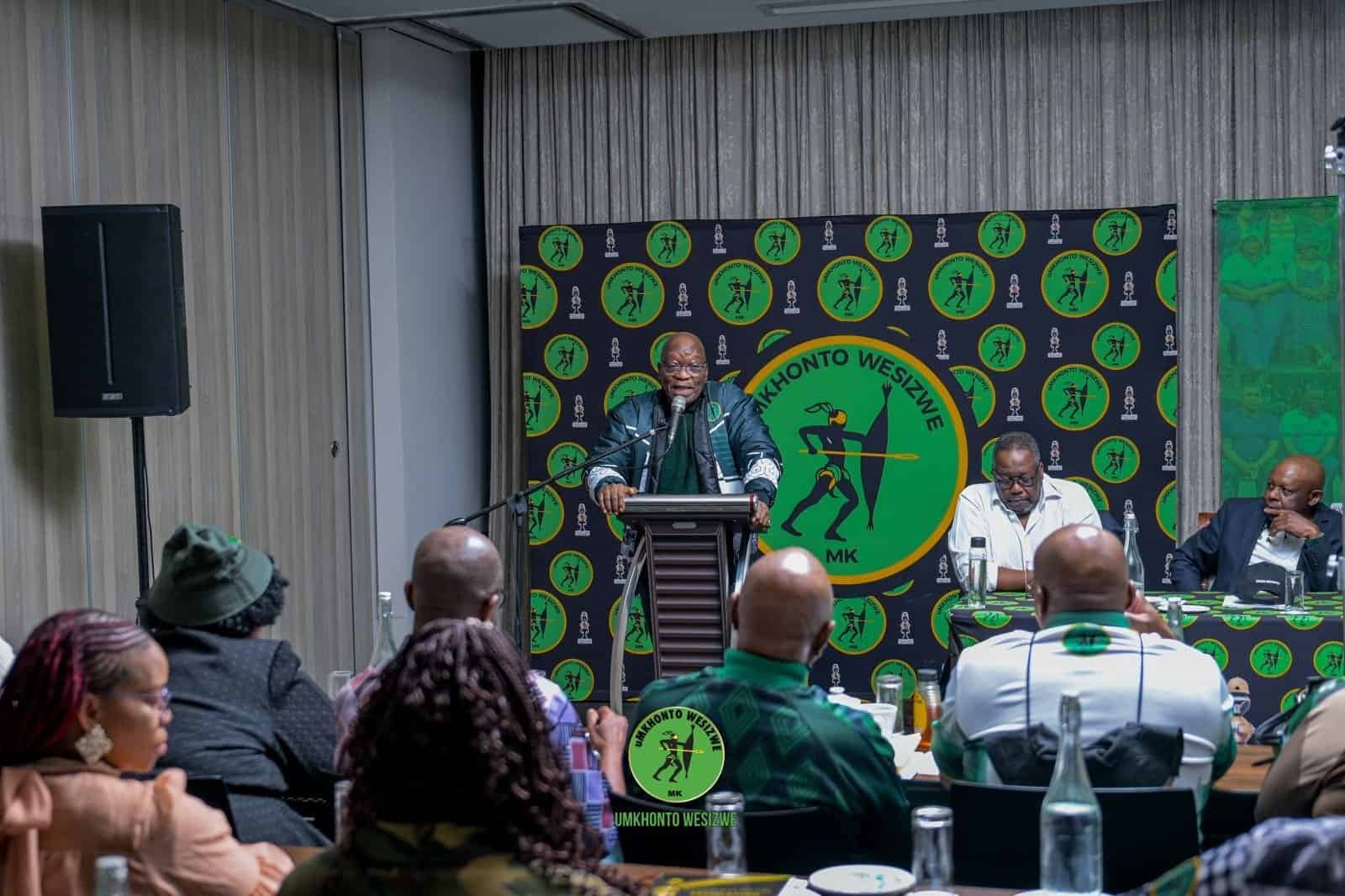
Former President Jacob Zuma has launched a scathing attack on the Government of National Unity (GNU), accusing it of betrayal, incompetence, and economic sabotage. Delivering a fiery media statement on Friday in Durban, Zuma, now leader of the uMkhonto weSizwe Party (MK Party), outlined an ambitious vision for what he calls “the final phase of South Africa’s liberation.”
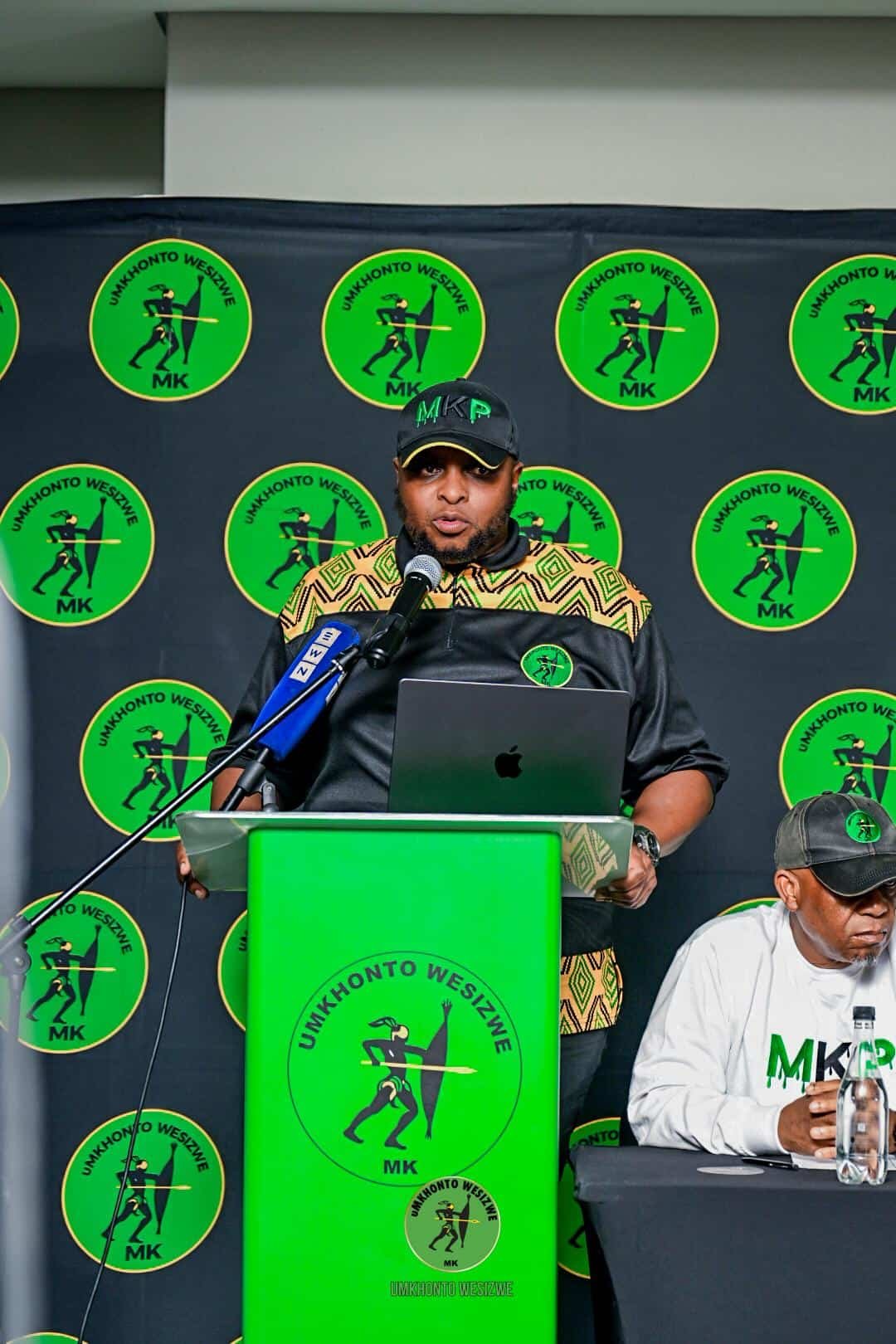
Zuma was addressing the nation following a two-day meeting of MK’s national officials, held between 28 and 29 July 2025. The statement, read on behalf of the party’s top leadership, positioned the MK Party as the revolutionary alternative to the current GNU, which Zuma says has “normalised poverty, entrenched inequality, and sold the people’s suffering as progress.”
“The MK Party is not just a political party. It is a spiritual, revolutionary vessel to complete the total liberation of our people,” said Zuma.
Zuma said the MK Party would mobilise its structures and grassroots allies to ensure a “decisive electoral victory” in the 2026 Local Government Elections. Key to this plan is the recently launched partnership with the African Transformation Movement (ATM), with both parties aiming to secure a two-thirds majority to take over government and “complete the revolution.”
The MK Party also confirmed the creation of a joint task team with ATM to work on a governance model that affirms African value systems, elevates traditional leadership, and restores the role of religious institutions in politics.
“Our motto is Sivota Sonke—We Vote Together. This is no longer about parties. It is about liberating the oppressed majority,” the statement reads.
Zuma painted a bleak picture of South Africa under the GNU, citing: economic stagnation: Official unemployment at 32.9% and youth unemployment at 46.1%, cost of living: He lambasted government’s failed attempt to raise VAT to 17%, calling it “class warfare.”, corruption and infrastructure decay: Zuma accused the GNU of continuing state capture through cadre deployment, while critical infrastructure such as Eskom and Transnet collapse, and foreign policy failures: He blamed recent US sanctions—a 30% tariff hike on SA exports—on the GNU’s “humiliating diplomacy,” including its missteps at the White House.
“This government has taken our people’s suffering, packaged it in rhetoric, and sold it as progress. But this is not leadership. It is betrayal,” Zuma thundered.

Ramaphosa Responds: “Democracy is not under threat”
President Cyril Ramaphosa responded to Zuma’s tirade during a Women’s Day build-up event in Soweto on Friday morning. Without naming Zuma directly, he defended the GNU as “a reflection of the people’s democratic choices” and rejected any notion that it was a colonial construct.
“Let us be clear. South Africa is governed by the will of its people. Not by populist rhetoric or nostalgia for a past that failed them,” Ramaphosa said.
He acknowledged the economic challenges facing the country but said the GNU was implementing structural reforms to tackle unemployment, fix state-owned entities, and reposition South Africa on the world stage.
“We are cleaning up what was broken. That takes time, commitment and unity—not threats and division,” Ramaphosa said.
Building International Alliances
Zuma also used the platform to showcase MKP’s foreign policy agenda. He revealed that he recently visited Morocco, where he met King Mohammed VI and Moroccan political leaders. The trip, he said, was about forging bilateral ties that could benefit unemployed South African graduates.
He said MKP is in talks with Morocco’s Tanger-Mediterranean Port to create maritime internships, and with Renault Group to absorb mechanical engineering graduates. The party is also exploring youth sports partnerships and alternative models of coalition governance.
“Our foreign policy will not be dictated by Western interests or DIRCO’s propaganda. It must serve national interests, and we will continue to raise the South African flag across the world,” Zuma said.
Zuma Slams Courts, Expels Former SG
Zuma criticised the Constitutional Court for its decision to refer a case against Ramaphosa to the High Court, calling it a “technical evasion” and “abdication of duty.” He demanded that Ramaphosa answer 15 questions related to alleged unconstitutional practices within the security cluster and threatened further legal action if no response was received by Friday.
Meanwhile, Zuma confirmed the expulsion of MK’s former Secretary General, who he said had “defined themselves outside the ranks of the party.” The party has refused to entertain any further dialogue on the matter.
Calls for Traditional Leadership in Governance
The MK Party also met with CONTRALESA to discuss the marginalisation of traditional leaders and the erosion of African governance systems.
Both parties agreed to mobilise traditional leaders for the 2026 elections and to advocate for the restoration of customary law as the foundation of South African jurisprudence.
“Our political system must reflect our identity—not borrowed laws from colonial masters,” the party said.
A Revolutionary March Toward 2026
Zuma ended the statement by declaring the MK Party’s readiness to lead.
“The Spear of the Nation has risen once more. Let those who have betrayed the revolution tremble. Let the oppressed rejoice,” he said.
He described the GNU as a “Trojan horse of recolonisation” and declared that the MK Party stands as “the last hope of the African child, the worker, the traditional leader, and the forgotten majority.”
With local elections looming, Zuma’s latest offensive signals that the road to 2026 will be fiercely contested—with MKP positioning itself not just as an opposition party, but as a revolutionary force to reclaim power.