COP31 ended without a deal on fossil fuels. Its most durable outcome came outside the negotiating text: a global push to electrify. For South Africa and the rest of the Global South, that push works only if the lights stay on.
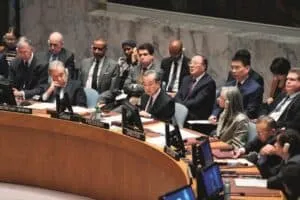
The Antalya climate conference closed on Sunday, 22 November, about 50 hours after its scheduled finish, without consensus on its two cover decisions, the proposed “Antalya Pact”. The European Union objected that the texts did not mention fossil fuels. The Marshall Islands and Vanuatu rejected their reliance on carbon capture as a false solution. COP31 President Murat Kurum closed the session, leaving “the deadlock of the negotiations to the judgement of the entire world and humanity”.
UN Secretary-General António Guterres put it plainly: “There may be no consensus in the negotiating room. There is no ambiguity in the science.” He reminded governments that they agreed at COP28 to transition away from fossil fuels, and said the task now is to accelerate and finance that shift.
The negotiating texts show how the talks lost their way. The Presidency’s first draft, dated 16 November, reaffirmed paragraph 28 of decision 1/CMA.5, the Dubai commitment to “transitioning away from fossil fuels in energy systems in a just, orderly and equitable manner”. It called for phasing out inefficient fossil fuel subsidies and for “accelerated action to phase out fossil fuels”. Three days later, the revised draft had shrunk from 144 paragraphs to 80, and the words “fossil fuels” did not appear in it once.
What stayed was carbon capture. Both drafts carried a target to accelerate carbon capture, utilisation and storage (CCUS) to at least 500 million tonnes of CO2 a year by 2035, working towards 1.3 to 2.5 billion tonnes. The second draft put that target in square brackets. Its language on carbon dioxide removal also softened. The first draft said removal “must complement, and not substitute for or delay, deep emission reductions”. The second said, “should”.
The scale of that ambition matters. The International Energy Agency counted just over 50 million tonnes of operating capture capacity worldwide in early 2025. The draft target’s floor was ten times that, and its ceiling fifty times, within a decade. A text that names carbon capture but not fossil fuels invites the reading that capture can stand in for cutting emissions. That is a large part of why it failed.
Yet Antalya did produce something durable, and it was not in the cover decision. Under the conference’s Action Agenda, countries representing around half of the global economy backed a goal of raising electricity’s share of final energy consumption to 35% by 2035, or said they would reach it sooner. The IEA estimates these pledges could lift the global share from 23% today to over 33% by 2035, and that reaching 35% could cut emissions by at least 8 billion tonnes a year. Parties also extended the just transition work programme for three years and agreed to operationalise a just transition mechanism in phases, with adoption expected at COP32.
The Global South has understood that electrification, not carbon capture, is the real route to decarbonisation. But it does not want “decarbonising in the dark” to be its legacy. The African Group made the point in Antalya. It supported adopting the cover decisions, yet objected that their approach to just transition did not reflect African realities.
South Africa is the clearest test of those realities. Our grid operator’s latest ten-year outlook still has about 8.7 GW of Eskom coal capacity retiring around the end of the decade. It now places the first supply shortfall in 2033 rather than 2030, mainly because the fleet is performing better and new gas has been delayed. The cliff has moved. It has not gone away. Electrify a growing share of the economy onto that system without firm replacement capacity, and the result is not lower emissions. It is load-shedding, and industry leaving.
Carbon capture is no rescue for that fleet. Fitting capture to ageing coal units with poor availability would produce some of the most expensive avoided tonnes anywhere. Where it may belong is in sectors with no electric substitute for their process emissions: synthetic fuels and chemicals, cement and steel.
COP32 will meet in Addis Ababa. An African COP should carry an African agenda, built on four points:
- Treat 35 by 35 as an energy-security target. Electrification must come with firm capacity, transmission and storage, or it is a promise of rationing.
- Make the just transition mechanism pay for the grid, not only the coal exit. Replacement capacity and transmission are where Africa’s transition stalls.
- Keep carbon capture in its lane. Count only stored, verified tonnes, reserve it for hard-to-abate industry, and restore “must”: capture and removals complement emission cuts and never replace them.
- Name fossil fuels. The Dubai consensus stands. A transition that cannot name what it is moving away from cannot be planned or financed.
The negotiators in Antalya could not agree. The engineering does not wait for consensus. Electricity’s share of final energy will rise, and fastest in the South. The question is whether it arrives on grids that can carry it.
The answer is guardrails and rigour, not panic and not a free pass.
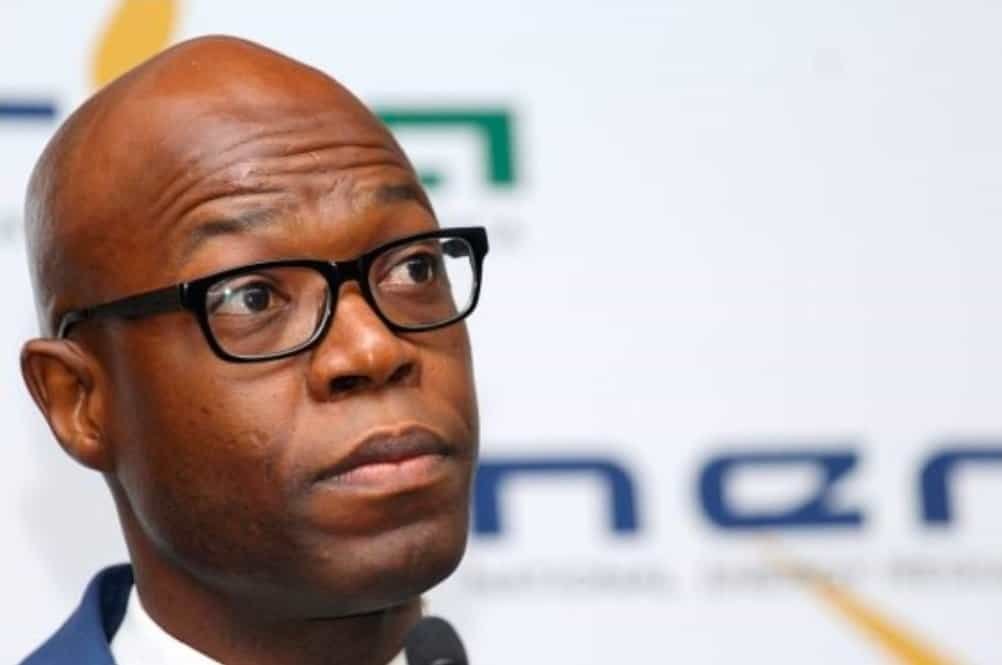
Matshela Koko is Managing Director of Matshela Energy, which holds a generation licence for a solar PV and battery storage facility in Gwanda, Zimbabwe. He is a former Interim Group Chief Executive of Eskom and a doctoral candidate at the UNISA Graduate School of Business Leadership.
Sources
- COP31 Presidency, draft cover decision, unedited version 16/11/2026 12:40 (paragraphs 50, 58–60, 65, 66; 144 paragraphs)
- COP31 Presidency, draft cover decision, unedited version 19/11/2026 14:10 (paragraphs 33, 34, 36(d), 36(h); 80 paragraphs; no occurrence of “fossil fuels”)
- UN Secretary-General, statement on the conclusion of COP31, 22 November 2026
- UN News, COP31 ends without climate pact, 22 November 2026
- UNFCCC, COP31 delivers important progress… but fails to agree Presidency-led decision, 23 November 2026 (35 by 35 pledges, IEA estimates, just transition decisions)
- Earth Negotiations Bulletin (IISD), highlights for 22 November 2026 (closing plenary record: objections by Parties and groups, Kurum’s closing words)
- IEA, CCUS projects around the world are reaching new milestones, 2025 (just over 50 Mt operating, Q1 2025)
- NTCSA, Medium-Term System Adequacy Outlook 2027–2036 (retirements and 2033 shortfall)