Residents across Gauteng and Mpumalanga are counting the cost of destructive thunderstorms that swept through several communities, flooding homes, washing away vehicles, damaging roads and leaving emergency services scrambling to respond to rescue calls.
In some of the hardest-hit areas, residents have begun cleaning up and salvaging whatever they can after Wednesday’s heavy downpours turned streets into rivers and left homes and vehicles submerged.
Alexandra, north of Johannesburg, was among the worst-affected communities, with flooding reported in several parts of the township, particularly around 15th Avenue between Alfred Nzo and Sam Buti streets.
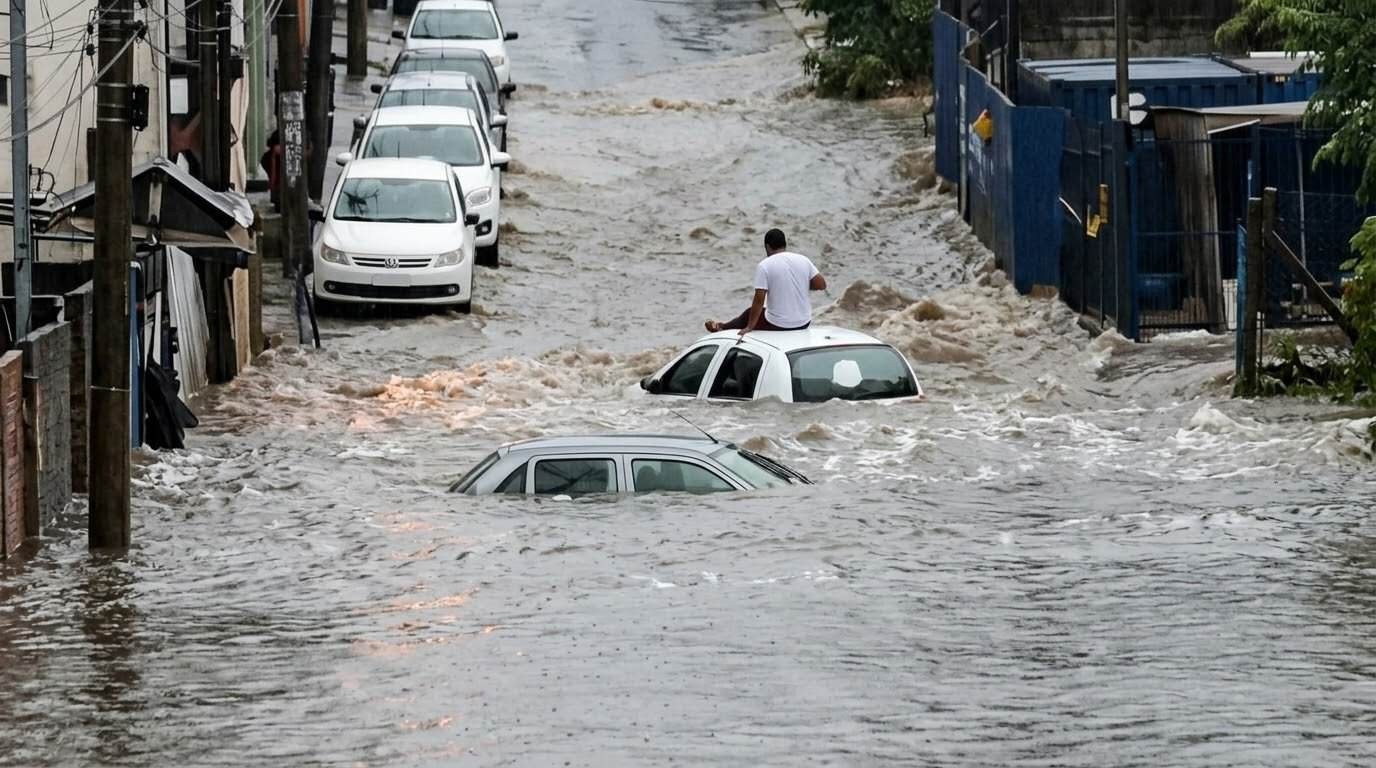
Pictures and videos circulating on social media showed vehicles almost completely submerged, while some were reportedly swept away by fast-moving floodwaters.
Some residents were forced to climb through their roofs to escape rising water after their homes were inundated. Others were left with soaked furniture, bedding and damaged belongings as they began assessing the destruction.
Residents have renewed calls for better housing and lasting solutions to recurring flooding, saying the problem continues whenever heavy rains hit the township.
The Johannesburg Roads Agency dispatched emergency teams to affected areas to clear blocked drains and respond to flooding along roads and near the Jukskei River.
The destruction was not confined to Alexandra.
Parts of Johannesburg, Ekurhuleni and Tshwane also experienced flooding, with motorists stranded on submerged roads and bridges.
In Fourways, one person was rescued after their vehicle was swept away on Witkoppen Road. The motorist reportedly managed to cling to a tree before emergency personnel reached them.
In Ekurhuleni, emergency services responded to 15 water-rescue incidents and five incidents involving fallen trees.
The Gugulethu informal settlement was also severely affected, with reports that structures had been washed away by floodwaters.
Mpumalanga was equally affected by the storms, with flooding and infrastructure damage reported in several communities.
Two teenagers, aged 15 and 17, died in separate drowning incidents in Bethal. Police said the 17-year-old had gone missing while fishing on Tuesday, while the 15-year-old was believed to have been swept away while attempting to cross a river on Wednesday.
The South African Weather Service had issued a Yellow Level 4 warning for severe thunderstorms, warning of heavy downpours that could cause flooding, infrastructure damage, damaging winds, hail and excessive lightning in Gauteng and parts of other provinces.
On Thursday morning, the Johannesburg Metropolitan Police Department reported that water levels had receded across most parts of the city, allowing major roads and crossings to reopen.
However, JMPD spokesperson Superintendent Xolani Fihla warned motorists that conditions remained dangerous because of mud, rocks, fallen branches and other debris left behind by the storms.
He said some traffic signals could also remain out of order.
Although traffic was flowing across most of the metro, motorists were urged to exercise caution, particularly around previously submerged crossings.
These include Witkoppen Road Bridge, Belgrave Street Bridge, Bryanston Drive Bridge, the Allandale Road on-ramp to the N1 in Midrand, Vincent Tshabalala Road in Alexandra and Marlboro Drive in Kelvin.
Fihla also warned that more showers and thundershowers were expected, raising concerns about further localised flooding because the ground was already saturated.
Motorists have been advised to avoid flooded bridges, underpasses and overflowing streams, keep their headlights on and treat malfunctioning traffic lights as four-way stops.
Those needing emergency assistance can contact the City of Johannesburg on 011 375 5911, 10177 or 112.
The Johannesburg Roads Agency can be contacted on 0860 562 874 to report flooded roads, fallen trees, damaged traffic signals and blocked stormwater drains.
As affected communities begin clearing the mud and assessing their losses, the prospect of further rainfall remains a concern for residents whose homes and livelihoods have already been affected.