When we speak about apartheid history, we often turn to legislation, political speeches, court records, and the biographies of prominent leaders. Yet some of the most revealing histories and herstories exist elsewhere, in memory, in lived experience, and in the observations of ordinary people who stood at the intersections of power and everyday life. Oftentimes, we do not even speak of the cultural workers who helped in liberating this country from the clutches of the most brutal regime, apartheid. Their stories, told through memory and exhibition, transform abstract personal histories and herstories into tangible, communal experiences. They bridge individual reflection and collective heritage, using art, artefacts, and interactive displays to preserve the past, foster dialogue, and challenge us to reconsider how history is documented.
This is why the work of Elias Ditaba Sewape matters, as well as the Sepedi adage ‘Mahlaku a maswa a ema ka a matala, le a matala a ithekga ka a maswa.’ This proverb, that draws attention to balance, reciprocity, and reversal is especially effective in expressing intergenerational ethics, social responsibility, and moral accountability. The reciprocal obligation in this chiastic parallelism reckons that the older ones also lean on the younger ones. This rings true as the young decided to bring the old man and his work to the city of firsts, Kimberley, for his first museum exhibition at a national museum.
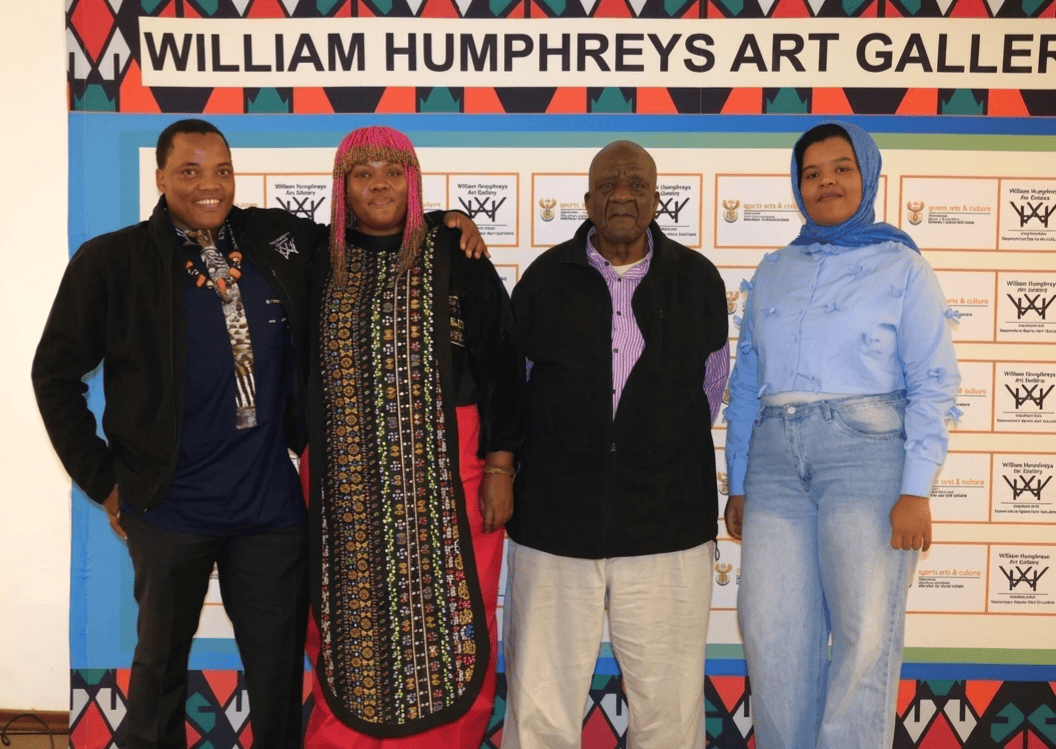
At nearly eighty years of age, Elias Ditaba Sewape is presenting his first museum solo exhibition, Ditaba – 80 Albert Street, at the William Humphreys Art Gallery. The exhibition revisits his experiences at the Commissioners’ Office at 80 Albert Street in Marshalltown, Johannesburg, where he worked as a Blackjack police officer during apartheid. Through painting and printmaking, Sewape reconstructs a world of queues, permits, uniforms, waiting rooms, administrative rituals, and the countless Black South Africans whose lives were regulated through the machinery of influx control. What makes this exhibition remarkable is not merely its historical subject matter. It is the fact that Sewape occupies a rare position within South Africa’s historical landscape. He is both witness and participant, observer and recorder. His works emerge from lived proximity to a system that shaped the lives of millions.
The history of apartheid bureaucracy remains one of the least visually documented aspects of South Africa’s past. We know the laws. We know the dates. We know the political milestones. What is less frequently documented is the atmosphere of these institutions, the emotional weight of waiting in line, the anxiety of carrying documentation, the fear of rejection, and the humiliation embedded in everyday encounters with state authority. Official archives rarely record such things.
The archive tells us what apartheid did. It is often less capable of telling us what apartheid felt like. This is where Sewape’s work becomes invaluable. His paintings function as a counter-archive, not because they replace historical records, but because they augment them with lived knowledge. They reveal dimensions of experience that formal documentation cannot fully capture. Through colour, gesture, composition, and memory, Sewape records the human consequences of administrative power.
The significance of Ditaba – 80 Albert Street extends beyond history. It arrives at a moment when questions of belonging, migration, documentation, and access to urban opportunity remain deeply contested in South Africa. Contemporary movements such as Operation Dudula and various anti-immigration mobilisations have brought renewed attention to who is perceived to belong in South African cities and who does not. While these contemporary realities differ fundamentally from apartheid influx control, they nevertheless remind us that questions of mobility, labour, and urban belonging remain unresolved.
Sewape’s paintings encourage us to reflect on these continuities without collapsing one historical moment into another. They ask difficult questions about access, exclusion, and the social anxieties that emerge when economic opportunity becomes scarce.
One of the most striking works in the exhibition depicts a doorway marked “Staff Only,” guarded by Blackjack officers saluting white officials entering the building. It is a simple image, yet profoundly unsettling. Apartheid is not represented through scenes of spectacular violence. Instead, it appears through posture, architecture, signage, and routine. The work reminds us that systems of domination are often sustained through ordinary gestures that become normalised over time. The painting also forces us to confront uncomfortable complexities. Sewape does not present history in simplistic terms of heroes and villains. The Blackjack officers are neither celebrated nor condemned. They appear as figures navigating impossible contradictions, enforcing rules created by a system that simultaneously oppressed them. This nuance is perhaps one of the exhibition’s greatest strengths. It refuses the comfort of easy narratives.
Museums have a responsibility to create space for such complexity. Too often, artistic recognition arrives late for practitioners whose contributions have developed outside dominant institutional networks. Sewape’s first museum solo exhibition is therefore not only a celebration of an artist’s career spanning more than three decades; it is also an act of institutional redress. It asks us to reconsider who is granted authority within the archive. For too long, authority has been associated primarily with official records, academic publications, and state documentation. Yet there are other forms of knowledge. There are memories carried across decades. There are stories preserved through observation. There are histories embedded in visual practice.
Born in Bolobedu, Limpopo, in 1948 and beginning his artistic journey in the early 1980s, Elias Ditaba Sewape has spent years quietly building a body of work rooted in observation and recollection. His paintings remind us that memory itself can be a form of historical evidence. Oral history is indeed a form of indigenous archive. The importance of Ditaba – 80 Albert Street lies precisely in this proposition. The exhibition argues that history is not only stored in archives. It is also carried in people. As museums continue to grapple with questions of representation, Africanisation, decolonisation, and public memory, exhibitions such as this offer an important lesson. Sometimes the most valuable archives are not hidden in vaults or filing cabinets. Sometimes they are found in the memories of those who were there, who watched, who endured, and who chose, decades later, to tell the story. Elias Ditaba Sewape is one such archive, storyteller, and South Africa is richer for finally listening. His exhibition is offering a practicum and praxis for Africanisation.
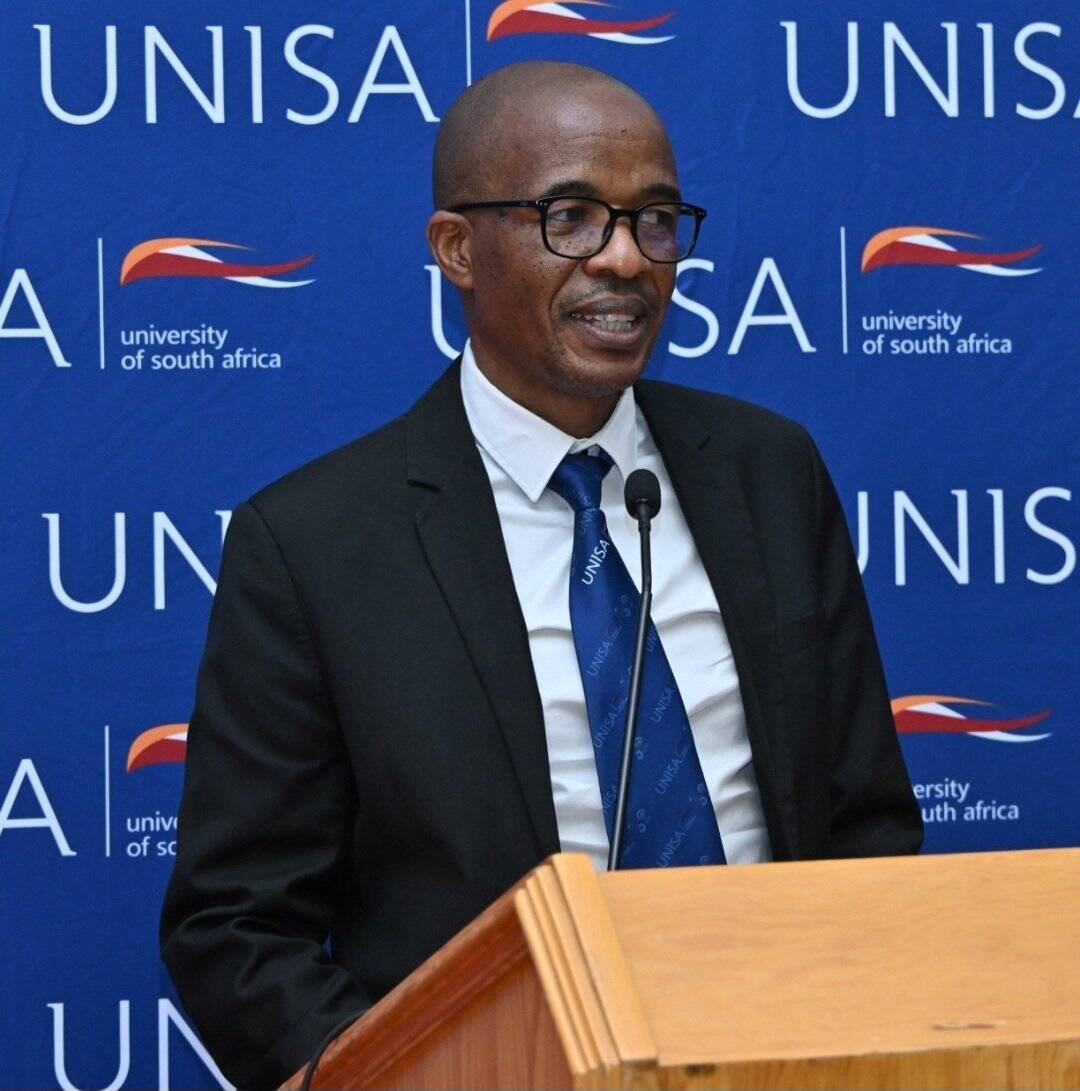
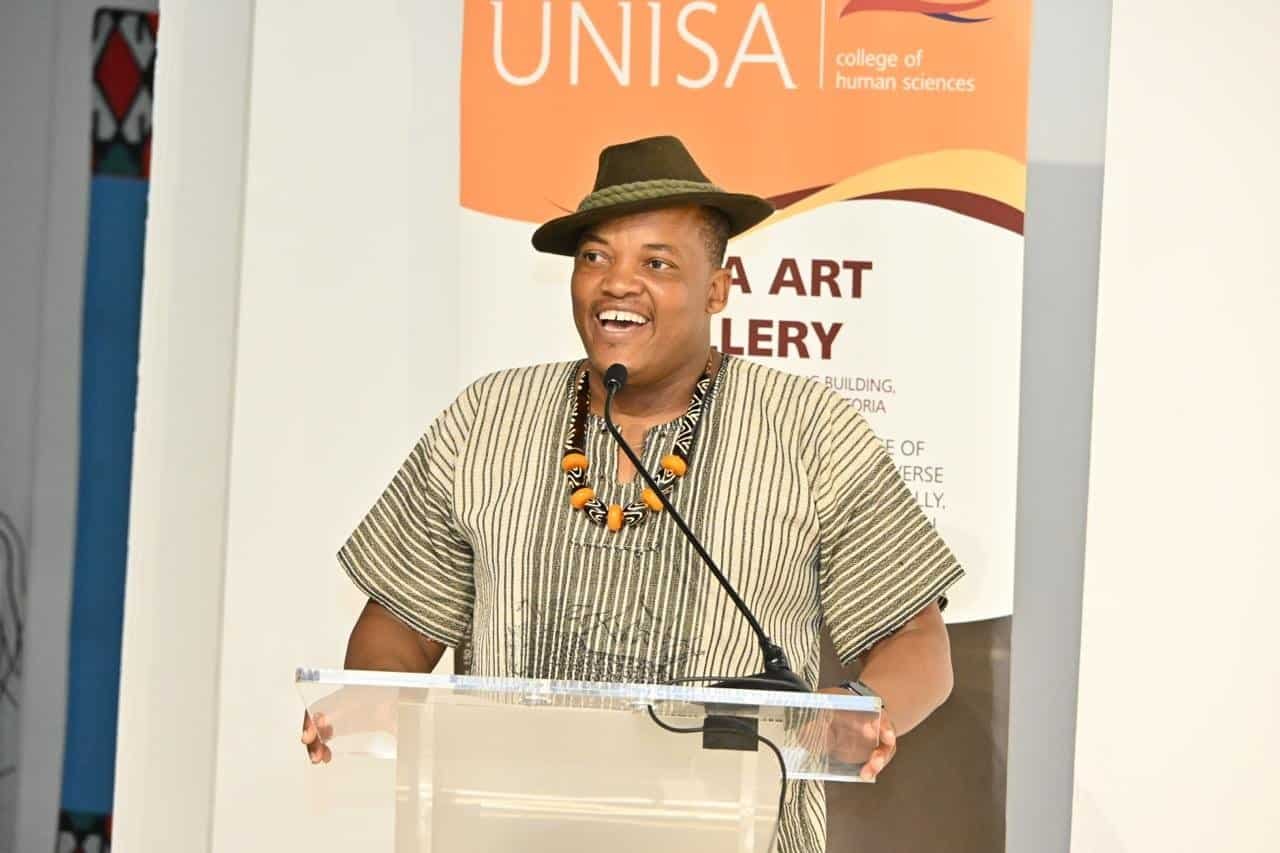
Ngoepe is Acting Vice-Principal: Research, Postgraduate Studies, Innovation and Commercialisation at Unisa and Makgato is Chief Curator of the WHAG and a PhD candidate at Unisa.