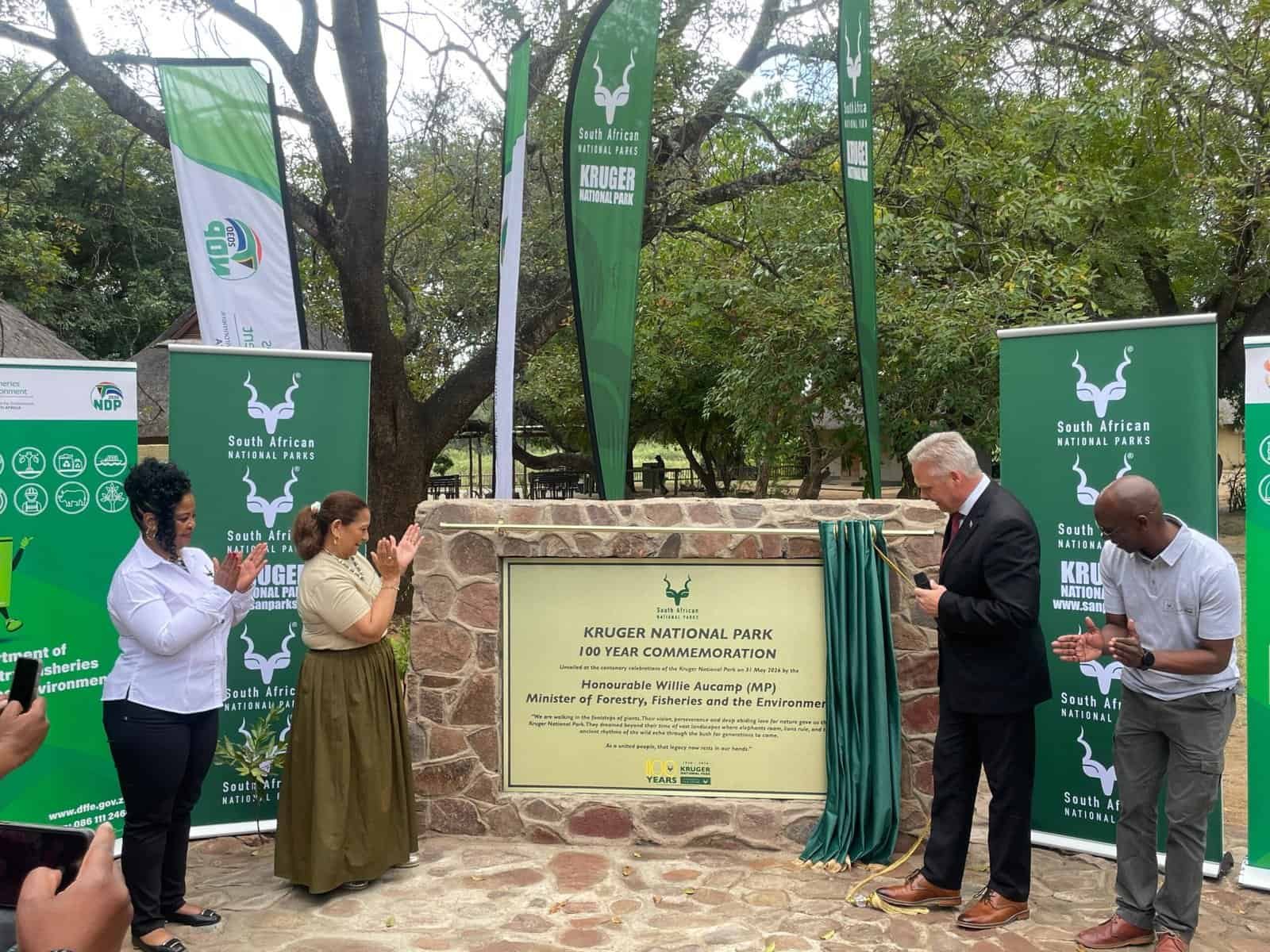
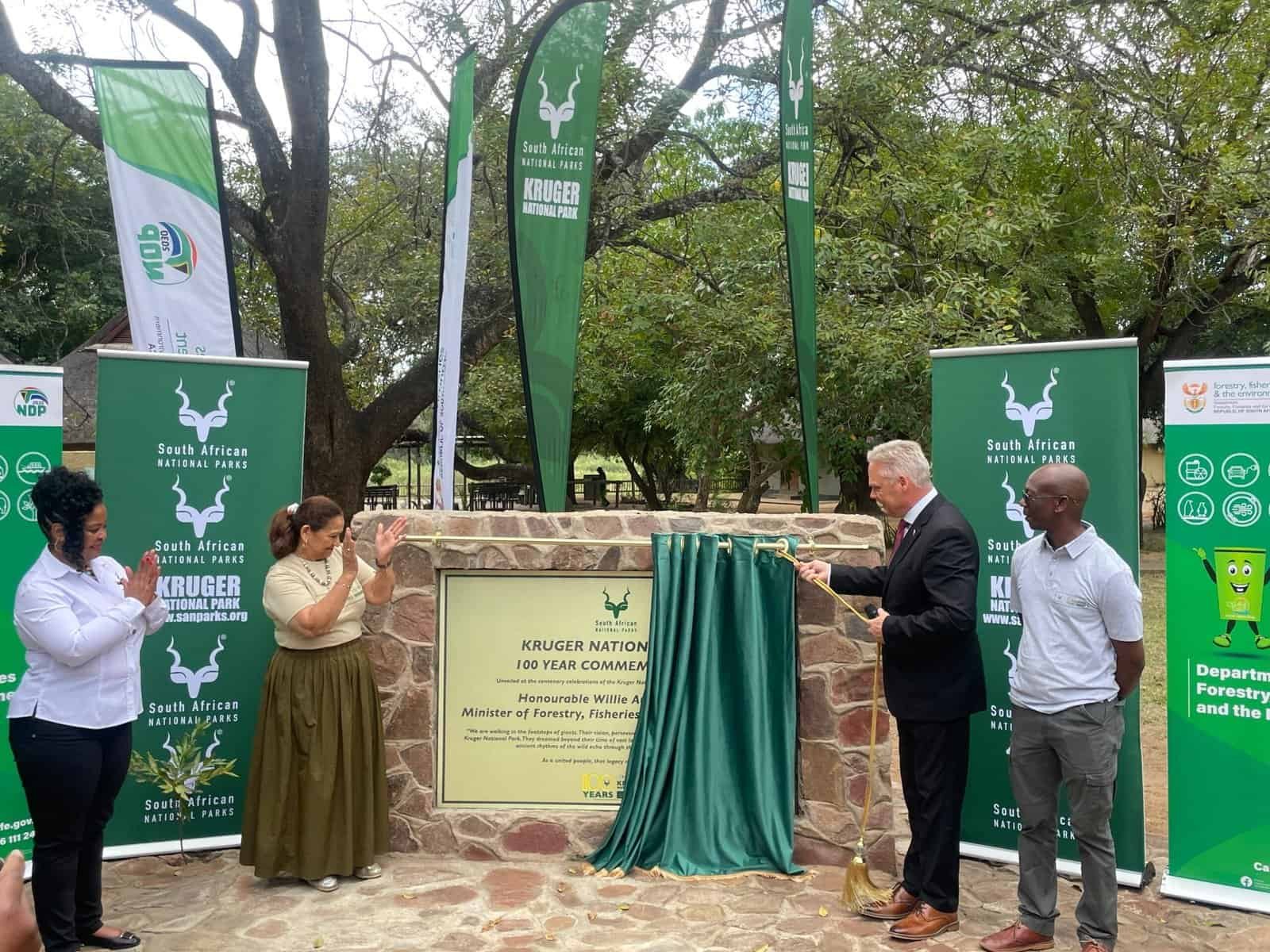
The unveiling of a commemorative plaque at Skukuza Rest Camp on Sunday marked the official public launch of the centenary of the Kruger National Park, bringing together government leaders, conservationists, traditional authorities, tourism stakeholders and lifelong visitors to celebrate one of South Africa’s most iconic national treasures.
The event, led by Minister of Forestry, Fisheries and the Environment, Willie Aucamp, came just a day after a landmark beneficiation agreement was signed between the South African National Parks (SANParks) and seven land claimant communities, signalling what speakers described as a new chapter in the relationship between conservation and communities.
Among those attending the celebrations were elderly visitors who have been travelling to the Kruger National Park since childhood, offering living testimony to the park’s enduring place in the hearts of generations of South Africans.
The plaque unveiling formed part of a weekend-long centenary commemoration honouring 100 years since the formal establishment of the Kruger National Park on 31 May 1926, when the Sabie and Shingwedzi game reserves were combined to create what would become one of the world’s most celebrated conservation areas.
Addressing guests at a gala dinner on Saturday evening, Aucamp reflected on the park’s history and his own personal connection to Kruger.
“I remember countless nights around the campfire with my family in the Kruger National Park,” he said. “I remember watching movies at Satara, competing with my brothers to spot animals, and even proposing to my wife here. Today I am creating those same memories with my own family.”
Aucamp described the park as more than a conservation area.
“The Kruger National Park is a living classroom, a source of inspiration and a national treasure that has touched the lives of generations of South Africans.”
While much of the weekend focused on celebrating a century of conservation success, speakers repeatedly stressed that the future of the park must be built on stronger partnerships with communities whose histories are intertwined with the protected area.
The minister highlighted the signing of the beneficiation agreement with seven land claimant communities as one of the most significant milestones of the centenary celebrations.
The agreement is expected to improve socio-economic opportunities for communities with historical claims linked to land incorporated into the park.
“Conservation must exist within society. It must contribute to sustainable livelihoods, support development and reflect the values of inclusion and dignity,” Aucamp said.
He argued that conservation, research and tourism had historically formed the three pillars of the Kruger National Park.
“We have now added a fourth leg, which is community involvement. Any table with four legs is more stable than one with three. This will be the future of the park.”
Traditional leaders welcomed the agreement, describing it as a long-awaited recognition of communities’ connection to the land. They said the signing represented an opportunity for meaningful participation in tourism, economic development and conservation initiatives.
Several traditional leaders expressed hope that the agreement would move beyond symbolic recognition and result in tangible benefits, including jobs, skills development opportunities, business participation and greater inclusion of young people in conservation programmes.
The gala event also heard from SANParks Interim Board Chairperson, Beryl Ferguson, who called for a conservation model rooted in connection and belonging.
“If Kruger National Park is to thrive in its next century, it must not only be known as a place of extraordinary biodiversity. It must be experienced as a place of belonging,” she said.
“A place where a young child from a village nearby does not only see a fence, but sees a future.”
Ferguson said conservation could not survive through policy alone.
“It has been sustained by people – by individuals whose commitment, often over decades, has shaped what Kruger National Park is today.”
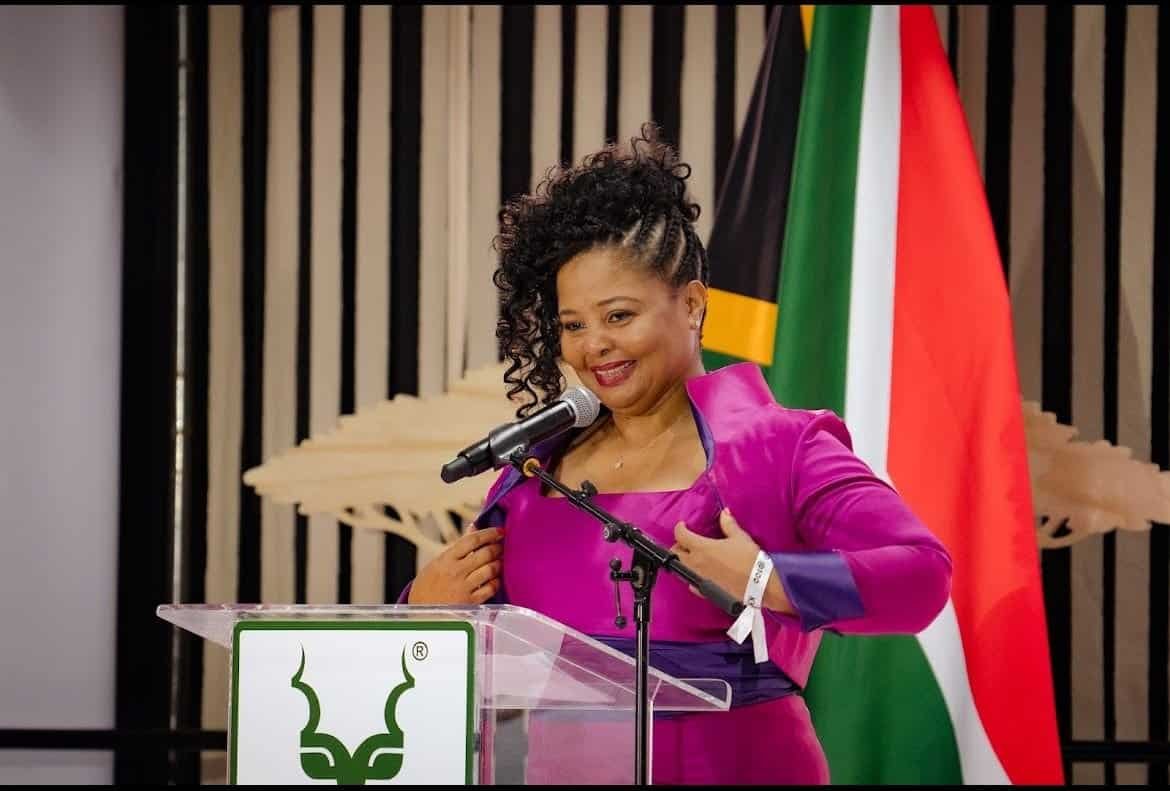
SANParks Chief Executive Officer, Hapiloe Sello, echoed those sentiments, saying the centenary was not simply about reflecting on the past but preparing for the future.
She said the organisation was committed to ensuring that communities living alongside the park become active partners in conservation and beneficiaries of opportunities created by tourism and environmental protection.
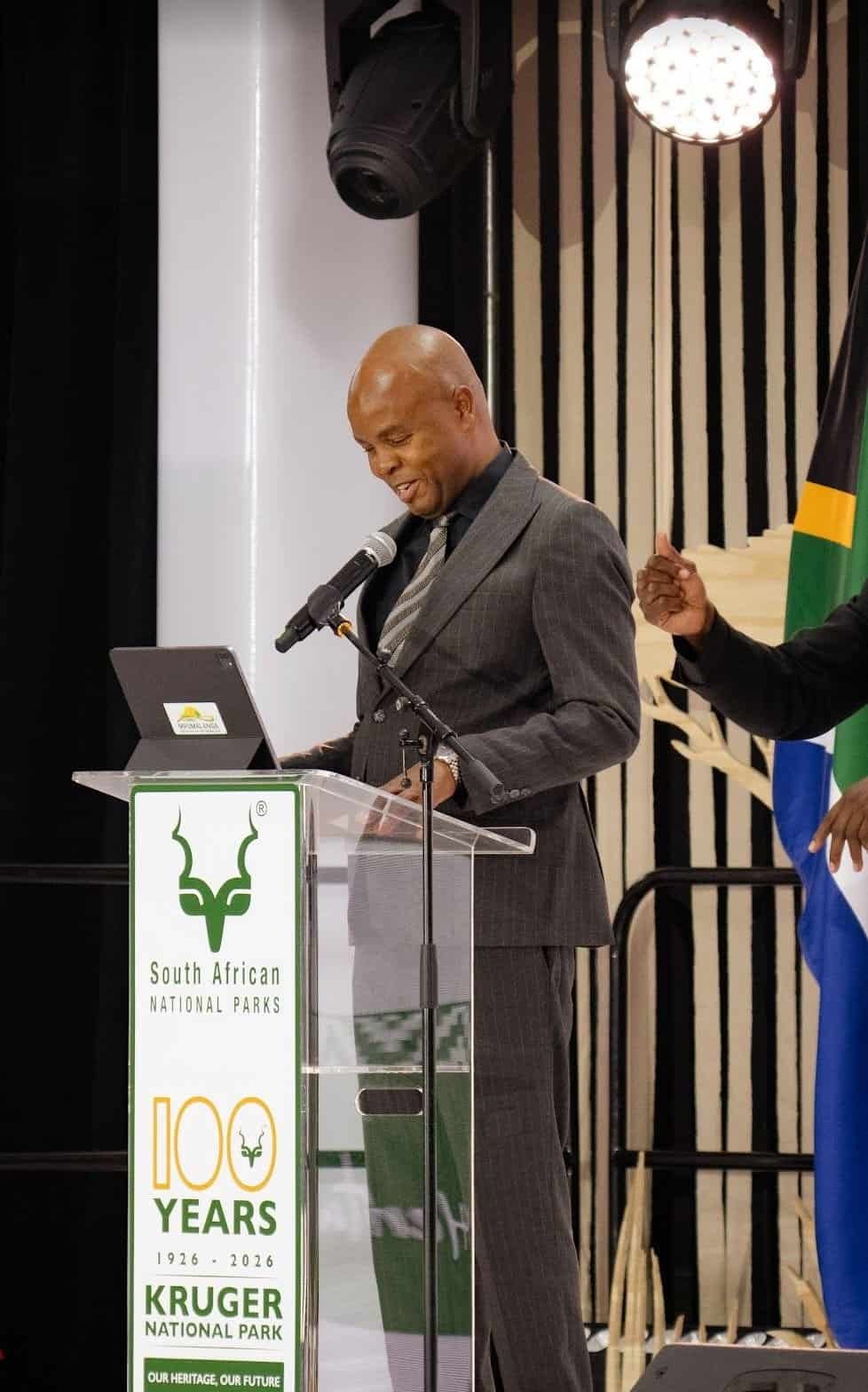
Mpumalanga Premier Mandla Ndlovu praised the role of the park in supporting the provincial economy and attracting international visitors to the province.
He said the centenary should serve as a reminder that conservation and economic development are not opposing goals, but complementary objectives that can uplift communities while protecting biodiversity for future generations.
The weekend also paid tribute to conservation giants whose contributions helped shape Kruger over the last century.
Special recognition was given to current and former SANParks staff members, researchers, rangers and conservation leaders, including figures such as James Stevenson-Hamilton, Harry Wolhuter, David Mabunda, Nombolo Mdluli and Oscar Mthimkulu.
Aucamp described them as “giants” whose dedication laid the foundation for the modern Kruger National Park.
The minister also acknowledged partners, including private reserves, tourism operators, honorary rangers and conservation organisations that have helped sustain the park through changing times.
Looking ahead, attention turned to the challenges facing the next century, including climate change, infrastructure resilience and community development.
Aucamp revealed that the government and its partners had established a Kruger Recovery Fund following severe weather events earlier this year, aimed at rebuilding climate-resilient infrastructure throughout the park.
As celebrations concluded, the message emerging from Skukuza was clear: the story of Kruger National Park is no longer only about wildlife and conservation.
A century after its establishment, the park is seeking to redefine its future around a broader vision that includes community empowerment, shared stewardship and meaningful participation.
For the elderly visitors who watched the plaque unveiling after decades of returning to Kruger, the centenary was a moment of nostalgia. For younger generations, speakers said, it should be an invitation to help shape the next 100 years of one of Africa’s greatest conservation landscapes.