China is advancing the protection of the Great Wall with an innovative combination of artificial intelligence and biological conservation, as experts deploy smart inspection robots and algae-based techniques to preserve the historic structure. This is reported by China Daily, a partner of TV BRICS.
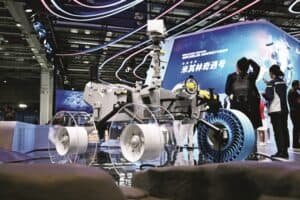
At the Shanhaiguan Pass in Qinhuangdao, Hebei Province, a four-legged robot equipped with high-definition cameras, lidar, and smart sensors is now being used to assess the structural integrity of the wall. This robotic system can detect cracks, missing bricks, and other forms of deterioration, transmitting real-time data to relevant authorities.
Hebei Province, which hosts one of the most well-preserved sections of the over 21,000-kilometre-long UNESCO World Heritage Site, has become a hub for technological innovation in cultural heritage preservation. Since 2017, drones have also been used to monitor inaccessible segments of the Wall, especially those located on cliffs or in remote areas. Data collected by these aerial patrols is stored in databases to guide future restoration strategies.
Alongside digital tools, researchers are employing biological methods to combat rain erosion, which poses a serious threat to the stability of the Wall’s rammed earth sections.
The research team discovered that filamentous cyanobacteria, naturally occurring on parts of the Wall, create a biological soil crust that acts as a natural protective barrier. This discovery has led to the cultivation and application of the algae to other vulnerable areas, offering an eco-friendly and self-sustaining conservation method.
African Times published this article in partnership with International Media Network TV BRICS