New technology achieves 95% lithium recovery while capturing CO₂
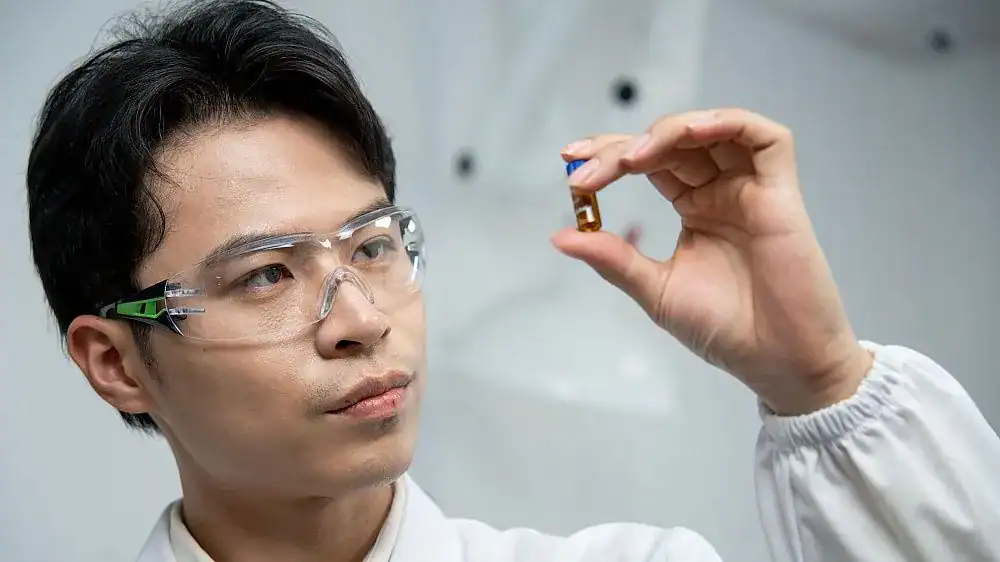
Chinese researchers have developed a recycling method for spent lithium-ion batteries that uses carbon dioxide and water. The process produces pure raw material for new batteries while simultaneously capturing CO₂, reports China Daily, a partner of TV BRICS.
Specialists at the Institute of Technological Design of the Chinese Academy of Sciences grind the cathode material from used batteries, breaking its crystalline structure. Lithium atoms migrate to the particle surface, separating from nickel and cobalt, which remain in the crystal lattice. The material is then immersed in water and exposed to carbon dioxide. The resulting hydrogen ions react with lithium, converting it into a lithium bicarbonate solution, while the other metals remain in the solid residue.
Heating the solution yields lithium carbonate with a purity exceeding 99.5 per cent. The remaining solid residue possesses a structure that makes it an effective catalyst, maintaining stability for over 200 hours of operation.
“Lithium-ion batteries typically degrade after five to eight years, making recycling essential for conserving strategic metals like lithium, cobalt and nickel, while preventing pollution and managing safety risks,” said Sun Zhi, a professor at the Institute of Process Engineering at the Chinese Academy of Sciences and the study’s corresponding author.
Traditional recycling methods require temperatures of up to 1000°C or complex chemical treatments, generating toxic waste. The new approach avoids these processes, using CO₂ as the sole reagent.
According to Sun Zhi, the method minimises chemical use and supports China’s dual carbon goals: reducing carbon emissions by 2030 and achieving carbon neutrality by 2060. Researchers plan to adapt the process to industrial flue gases containing low concentrations of CO₂, further enhancing both its environmental and economic benefits.
African Times published this article in partnership with International Media Network TV BRICS