Discovery of ultra-high-energy gamma rays advances research into the origins of cosmic rays
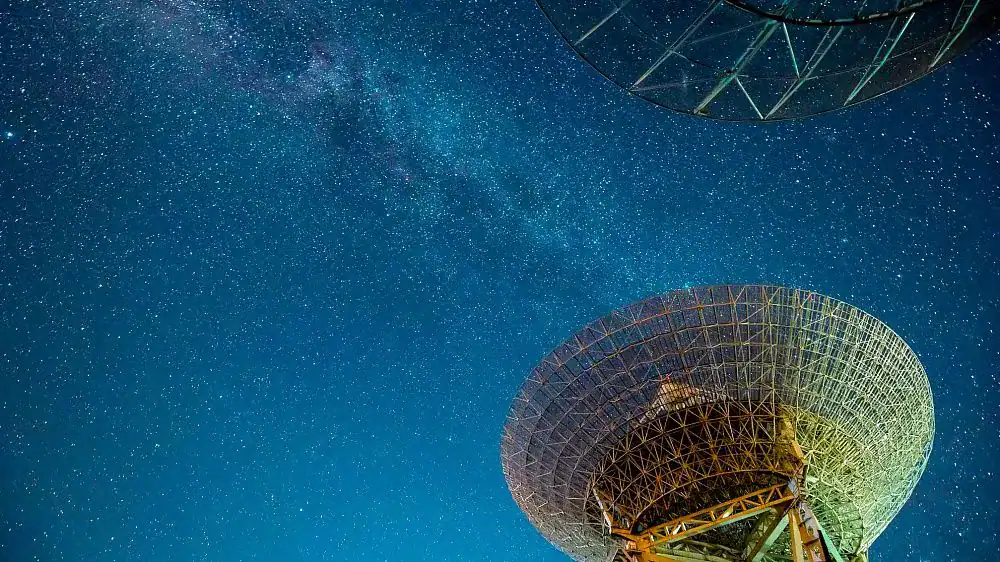
Chinese researchers have discovered a new extreme cosmic particle accelerator within the Milky Way, marking a significant breakthrough in the study of high-energy cosmic rays and the most powerful physical processes in the universe, reports China Daily, a partner of TV BRICS.
Using data collected by the Large High Altitude Air Shower Observatory (LHAASO), scientists detected ultra-high-energy gamma rays originating from a gamma-ray binary system – a rare celestial structure consisting of a massive star and a compact object, believed to be either a neutron star or a black hole.
According to the research, the detected gamma rays exceeded 100 trillion electron-volts, representing one of the highest energy levels ever observed from this type of astronomical object.
Scientists believe the discovery provides strong evidence that gamma-ray binary systems can function as natural “PeVatrons” – extreme cosmic accelerators capable of boosting particles to energies reaching one thousand trillion electronvolts. Such energy levels far exceed those achieved by existing particle accelerators on Earth.
Researchers explained that high-energy protons inside the binary system are likely accelerated during specific orbital phases before colliding with dense stellar winds emitted by the massive companion star. These interactions generate the observed ultra-high-energy gamma rays.
The study also revealed that the brightness and intensity of the gamma-ray emissions change according to the system’s orbital cycle of approximately 26.5 days. Scientists say this demonstrates the complex and dynamic physical processes occurring as the two celestial objects orbit one another.
Experts involved in the project noted that the discovery could open new directions in multi-messenger astronomy – an emerging field that combines observations of light, cosmic rays, neutrinos, and other signals to better understand the structure and evolution of the universe.
African Times published this article in partnership with International Media Network TV BRICS