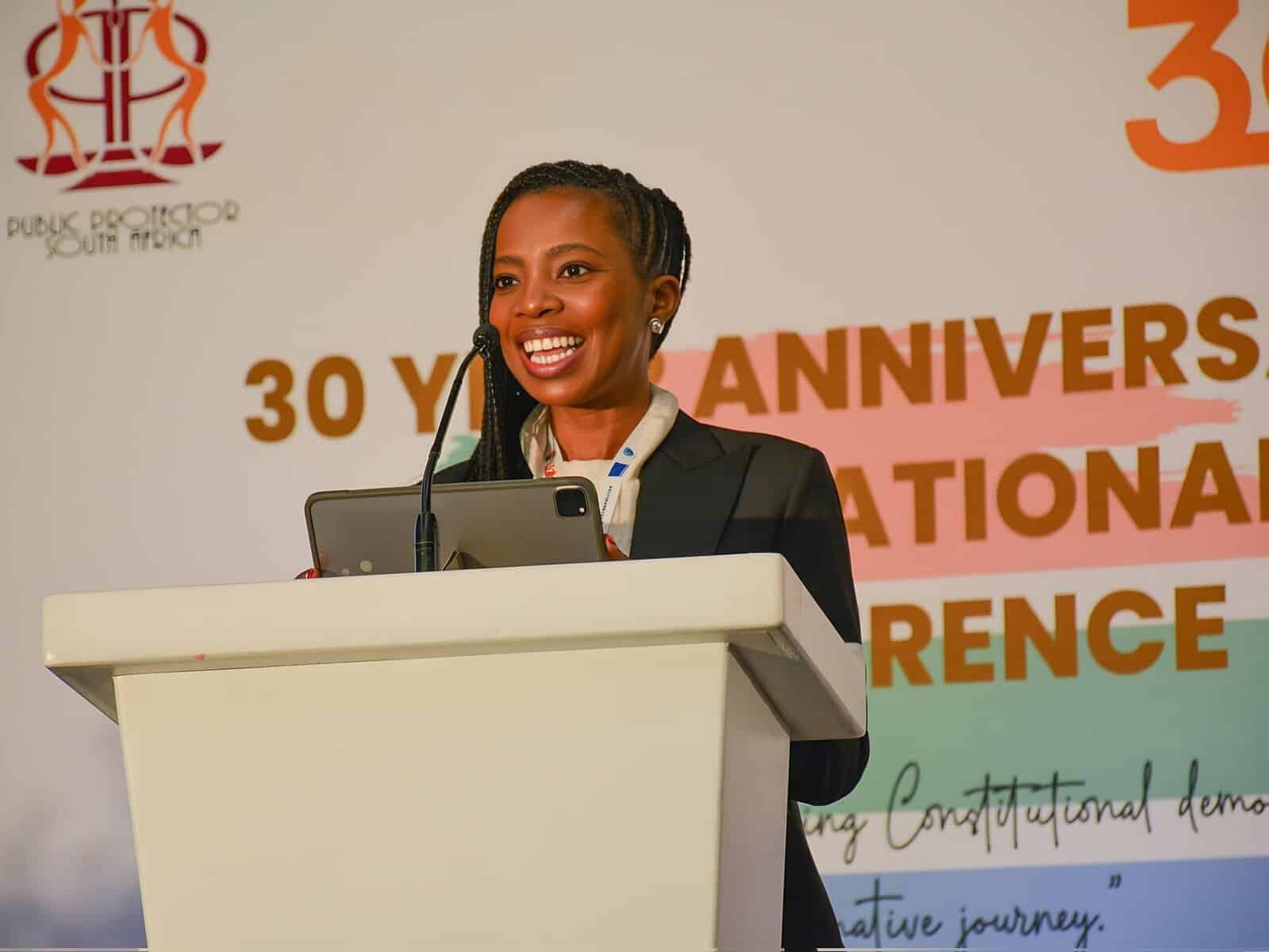
The uMkhonto weSizwe Party has formally called for the impeachment of Public Protector Advocate Kholeka Gcaleka, accusing her office of incompetence and misconduct in its handling of the explosive Phala Phala scandal involving President Cyril Ramaphosa.
In a letter submitted to National Assembly Speaker Thoko Didiza, the MK Party requested that Parliament initiate proceedings in terms of Section 194 of the Constitution, which governs the removal of heads of Chapter 9 institutions.
The party argues that Gcaleka and her office failed to properly investigate allegations linked to the theft of foreign currency from Ramaphosa’s Phala Phala farm and overlooked serious indicators of criminal conduct, abuse of state resources and maladministration.
The move intensifies political pressure on the Public Protector’s office following renewed scrutiny of the Phala Phala matter after findings by the Independent Police Investigative Directorate (IPID) allegedly exposed broader irregularities involving senior police officials and state resources.
In the letter, MK Party Chief Whip Mmabatho Mokoena-Zondi said both IPID and the Public Protector had access to substantially the same body of evidence, but reached vastly different conclusions.
“It is now evident that both institutions had access to substantially the same underlying body of evidentiary material,” the letter states.
The party claimed IPID identified issues involving alleged abuse of state resources, failures in criminal procedure, irregular conduct by senior SAPS officials and alleged off-the-books operations that were either ignored or insufficiently investigated by the Public Protector.
“Even where certain matters may have fallen outside the direct remedial powers of the Public Protector, the Office nevertheless carried a constitutional obligation to identify indicators of criminality, maladministration or abuse of public power and refer such matters to the relevant competent authorities,” the letter further reads.
The MK Party argued that these alleged failures amount to prima facie evidence of incompetence under Section 194 of the Constitution and raised concerns about possible bad faith and selective investigation.
The party said Chapter 9 institutions must operate “without fear, favour or prejudice”, particularly in cases involving the head of state and senior government officials.
The Public Protector’s office has previously defended its handling of the Phala Phala investigation, maintaining that its findings were based on the evidence before it and within the scope of its constitutional mandate.
In 2023, Gcaleka cleared Ramaphosa of allegations that he violated the Executive Ethics Code in relation to the concealed theft of foreign currency from his Limpopo game farm. Her report found no evidence that the president had improperly exposed himself to a conflict between his official responsibilities and private business interests.
The report drew fierce criticism from opposition parties, civil society organisations and some legal commentators, with critics accusing the office of failing to fully interrogate the source of the foreign currency and the conduct of state officials involved in the aftermath of the theft.
Gcaleka has also publicly defended the integrity of her office amid mounting criticism and online attacks. Earlier this year, she warned members of the public against insulting or undermining the Office of the Public Protector, saying criticism must not cross the line into attacks on a constitutional institution.
She said while public scrutiny was expected, deliberate attempts to damage the credibility of the office and spread misinformation could not be tolerated.
Parliament has not yet indicated whether Speaker Didiza will act on the MK Party’s request. Section 194 proceedings require a parliamentary inquiry and a supporting vote by at least two-thirds of the National Assembly for the removal of a Public Protector.
The latest push against Gcaleka comes as political tensions surrounding the Phala Phala saga continue to dominate national debate ahead of several key parliamentary processes linked to accountability and oversight.