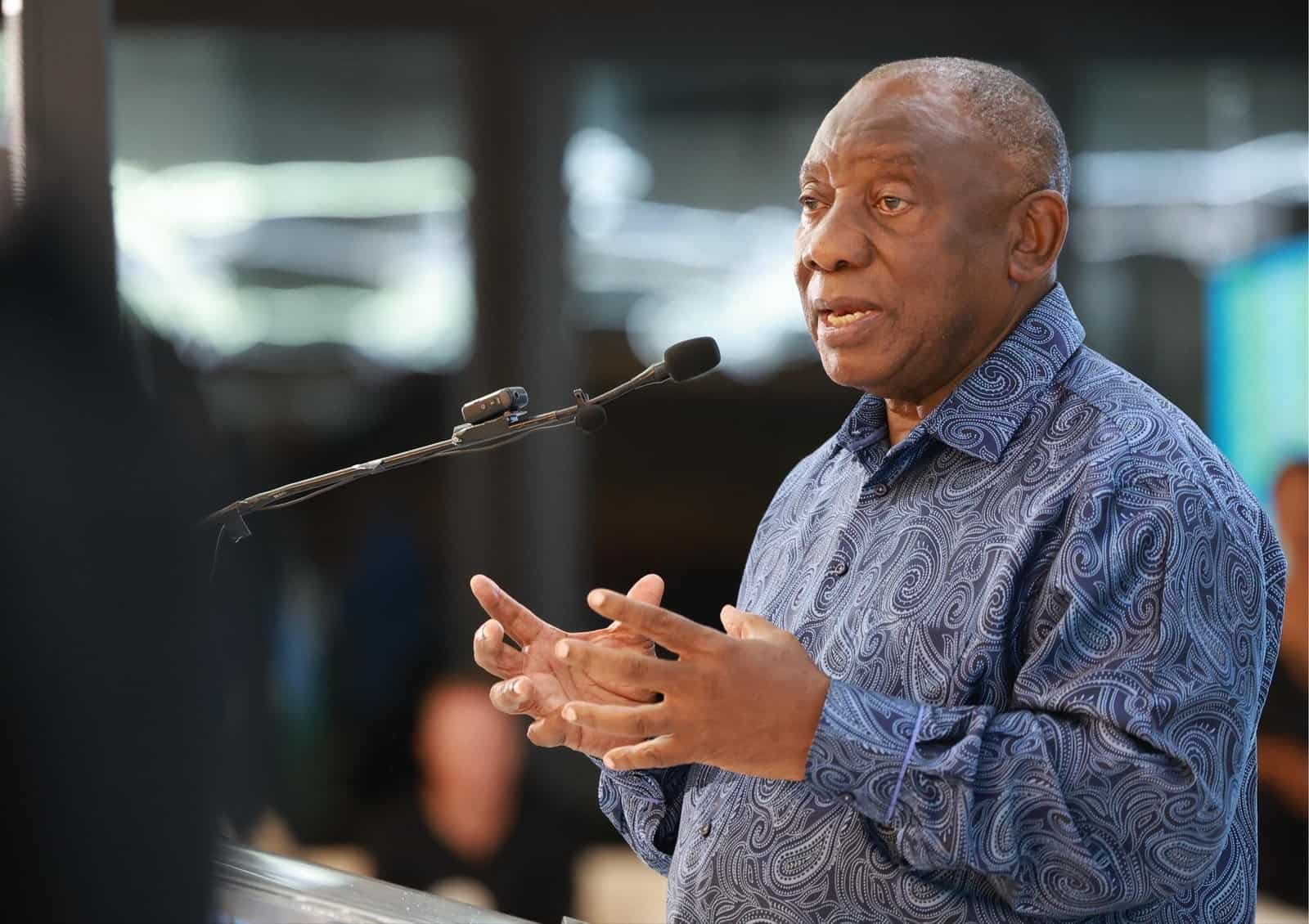
The Constitutional Court has ruled that Parliament acted inconsistently with the Constitution when it blocked the impeachment process against President Cyril Ramaphosa over the Phala Phala matter, handing a major legal victory to the Economic Freedom Fighters (EFF) and the African Transformation Movement (ATM).
In a landmark judgment delivered on Friday, the court declared the decision was unconstitutional and invalid because it allowed Parliament to terminate an impeachment process before a full inquiry could be conducted.
The court also declared invalid and unconstitutional the National Assembly vote taken on 13 December 2022, when the ANC used its majority to reject the independent Section 89 panel report that found President Ramaphosa may have a case to answer regarding the Phala Phala scandal.
“The vote of the National Assembly taken on 13 December is inconsistent with the Constitution, invalid and set aside,” Maya said during the judgment.
The Constitutional Court ordered that the matter be referred to the impeachment committee for further proceedings, effectively reviving the parliamentary impeachment process against Ramaphosa.
The ruling marks one of the most significant constitutional judgments involving executive accountability since the adoption of South Africa’s Constitution 30 years ago.
The Phala Phala controversy stems from the alleged theft of millions of US dollars from Ramaphosa’s Phala Phala farm in Limpopo in February 2020. The theft only became public in June 2022 after former State Security Agency director-general Arthur Fraser laid criminal charges against the president.
Fraser alleged that Ramaphosa concealed the crime, failed to report the theft properly and that large sums of foreign currency had been hidden inside furniture at the farm. Reports later alleged that a couch believed to have been used to hide the money had disappeared from the farmhouse.
In November 2022, an independent panel chaired by former Chief Justice Sandile Ngcobo found there was prima facie evidence that Ramaphosa may have violated the Constitution and anti-corruption laws. The panel recommended that Parliament proceed with an impeachment inquiry under Section 89 of the Constitution.
However, in December 2022, ANC MPs voted against adopting the report, effectively halting the impeachment process.
The EFF and ATM subsequently approached the Constitutional Court, arguing that Parliament’s decision and the rules governing the process were unconstitutional.
In Friday’s judgment, Maya said the Constitution envisages a two-stage impeachment process and that Parliament’s rules failed to ensure accountability.
“The rules it passes must be effective in ensuring that appropriate action may be taken to hold the President accountable,” Maya said.
She said Rule 129I improperly allowed the National Assembly to stop an impeachment process before a proper inquiry could determine whether grounds for removal existed.
“This has the effect of foreclosing full engagement with the merits of impeachment, stifling informed debate and undermining the values of accountability and transparency that must inform the National Assembly’s processes,” she said.
Maya added that Parliament was required to do more than simply debate and vote on a substantiated impeachment motion.
“It is not sufficient for the National Assembly to proceed directly from the stage of an independent panel report to a vote and thereby suppress an impeachment motion that discloses prima facie the existence of a ground under Section 89(1),” she said.
The court ruled that Parliament must amend Rule 129I to comply with the Constitution. Until then, a temporary reading-in remedy crafted by the court will apply.
The Constitutional Court also ruled that the National Assembly’s December 2022 vote was influenced by a material error of law and therefore unconstitutional.
Maya confirmed that the EFF had substantially succeeded in the case and should be awarded costs.
The judgment was not unanimous. Maya noted that there were minority judgments, including one by Justice Colleen Collis, who argued that the court should not interfere in Parliament’s internal processes in this matter.
Outside the Constitutional Court of South Africa, hundreds of EFF supporters who had gathered from early Friday morning celebrated the ruling by singing and dancing after the judgment was handed down.
EFF leader Julius Malema described the ruling as a victory against the abuse of parliamentary majorities.
“People use their majority to become unreasonable,” Malema said outside court.
“We told them this is not how democracy works. The panel led by the former Chief Justice said there was prima facie evidence of wrongdoing, and then they used their majority to suppress accountability.”
Malema also praised former National Assembly Speaker Nkosazana Dlamini-Zuma for voting according to her conscience during the original parliamentary process.
“The order is very clear. The impeachment committee must be set up,” he said.
Malema said the EFF would push for the impeachment process to begin immediately and confirmed that he intended to participate in the committee proceedings.
The Democratic Alliance (DA) said it will participate fully and constructively in the impeachment committee. In a media statement on Friday, the party stated that it would uphold the law in the impeachment proceedings.
“No one should expect the DA to shield wrongdoing. We will never be party to protecting misconduct, covering up corruption, or weakening accountability for political convenience. The impeachment committee must now do its work properly, rationally, fairly and constitutionally.”
The party added that the judgment draws a clear line between the DA and the ANC.
“For too long, the ANC has presided over a political culture in which accountability is delayed, diluted or avoided when it becomes inconvenient.”
The ruling is expected to reshape Parliament’s oversight powers and could have far-reaching political consequences ahead of the country’s evolving political landscape.
The Phala Phala matter has already triggered multiple investigations. In June 2023, the Public Protector cleared Ramaphosa of wrongdoing, while the South African Reserve Bank later found no breaches of exchange control regulations. However, the Independent Police Investigative Directorate recommended disciplinary action against certain police officials involved in the matter.
Friday’s judgment now reopens the parliamentary accountability process that had been halted more than three years ago, and places renewed focus on whether Ramaphosa could ultimately face impeachment proceedings in the National Assembly.