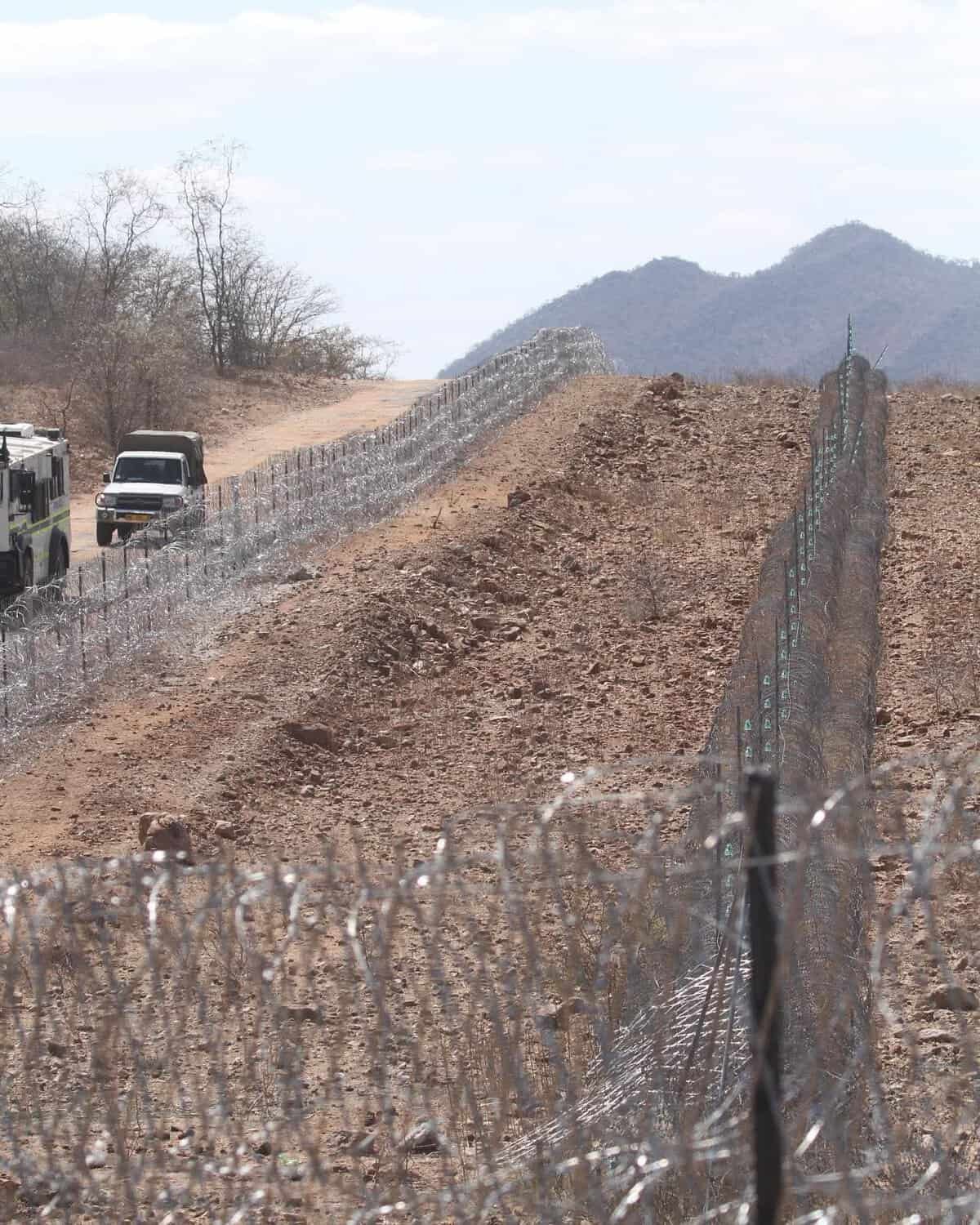
The Constitutional Court of South Africa has dismissed final attempts by two contractors to overturn findings against them in the controversial R40 million Beitbridge border fence project, bringing a years-long legal battle to a close.
In judgments handed down this week, the apex court refused applications for leave to appeal by Profteam CC and Caledon River Properties, trading as Magwa Construction. The companies had sought to challenge earlier rulings declaring their contracts unlawful.
The Special Investigating Unit (SIU) said it welcomes the outcome, stating that it reinforces accountability and confirms that no party can benefit from irregular state contracts.
The dispute stems from the awarding of contracts in 2020 for the construction of a 40-kilometre razor-wire fence along the Beitbridge border between South Africa and Zimbabwe, during the COVID-19 National State of Disaster.
The SIU found that the contracts, valued at approximately R40 million, were awarded without a competitive bidding process, in violation of constitutional procurement requirements. Section 217 of the Constitution requires that public procurement be fair, equitable, transparent, competitive and cost-effective.
Investigations further revealed that the contractors received advance payments of about R21.8 million before substantial work had been completed. Shortly after construction, the fence began to deteriorate, raising serious concerns about the quality of the work and value for money.
In its latest ruling, the Constitutional Court found that the applications did not fall within its jurisdiction and dismissed them with costs. The decision effectively ends all avenues of appeal for the contractors.
The ruling follows a series of earlier judgments that consistently found against the companies. In March 2022, the Special Tribunal declared the contracts invalid and ordered that the contractors be stripped of any profits, allowing them only to recover reasonable and proven expenses, subject to audited accounts.
This decision was upheld by the High Court in December 2023, which dismissed the contractors’ appeal and confirmed the requirement for proper financial accounting. The Supreme Court of Appeal (SCA) subsequently refused special leave to appeal in April 2024, finding no reasonable prospects of success.
A further attempt to reopen the case was dismissed by the SCA in January 2026, effectively closing the door at that level. The Constitutional Court’s latest ruling now marks the final legal word on the matter.
The SIU said the judgments collectively affirm a key legal principle — that companies involved in unlawful procurement cannot profit from their conduct.
“These outcomes cement the findings of multiple courts that the contracts were constitutionally invalid and that only reasonable, proven expenses may be recovered,” the SIU said.
The investigation into the Beitbridge fence formed part of a broader probe into COVID-19-related procurement, authorised by President Cyril Ramaphosa in July 2020 under Proclamation R.23.
The SIU added that any evidence of criminal conduct uncovered during its investigation will be referred to the National Prosecuting Authority (NPA) for possible prosecution.
It also confirmed that it will continue pursuing civil action to recover any financial losses suffered by the state, including funds paid for services not properly rendered.
The Beitbridge fence saga has become one of the most prominent examples of alleged procurement failures during the COVID-19 emergency period, highlighting weaknesses in oversight during a time of crisis.
With the Constitutional Court’s decision, the matter now shifts fully to financial recovery and potential criminal accountability, as authorities move to ensure that public funds are safeguarded and misused resources are reclaimed.