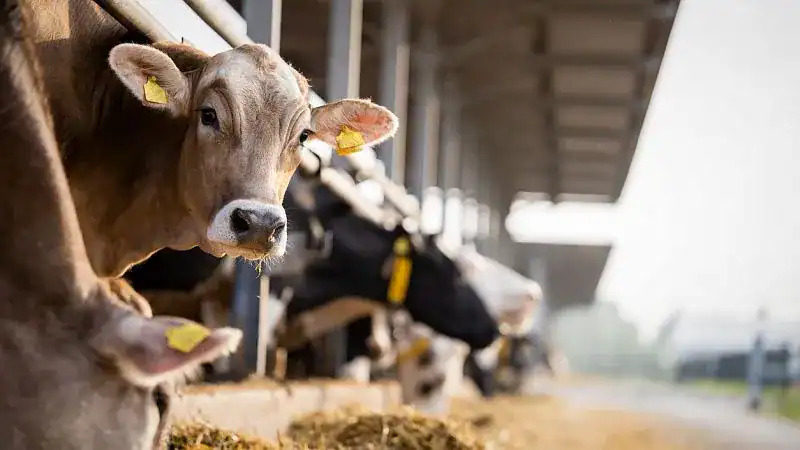
The Pretoria High Court has made a settlement allowing livestock owners and managers to vaccinate their animals against foot-and-mouth disease (FMD) an order of court, marking a significant development in the fight against the highly contagious animal disease.
The order, dated October 5, 2026, gives legal force to an agreement reached in July between business organisation Sakeliga, the Suid-Afrika Agri Inisiatief (SAAI), Free State Agriculture and several state respondents.
The settlement provides a framework for authorised livestock owners and managers to administer lawfully manufactured or imported foot-and-mouth disease vaccines, subject to specified requirements and state oversight.
It also provides that no state party may claim an exclusive right to import or distribute FMD vaccines, according to Sakeliga, which brought the application alongside its co-applicants.
The litigation, initiated in January 2026, sought to remove what the applicants described as state impediments to private vaccination and vaccine imports.
The court order could have important implications for livestock farmers seeking to protect their animals, but the settlement does not give farmers unrestricted permission to vaccinate their herds without following the prescribed procedures.
Under the agreement, applicants must obtain authorisation from the relevant state authority before administering vaccines.
The order was granted by the Gauteng Division of the High Court in Pretoria after the judge heard counsel for the parties, considered the papers and noted that the settlement had been reached by agreement.
The court directed that the settlement agreement, attached to the order, be made an order of court.
Farmers must meet strict requirements
The settlement recognises that owners and managers of cloven-hoofed livestock may voluntarily vaccinate their animals against FMD, provided they are authorised by the third respondent, the Minister of Agriculture, under section 3 of the Animal Diseases Act 35 of 1984.
The agreement states that livestock owners and managers will be regarded as suitably qualified to administer lawfully manufactured, imported and procured vaccines for the purpose of combating the spread of the disease, unless the relevant authority determines, after considering an application, that an applicant is not fit to do so.
Those seeking authorisation must apply through a system approved by the department and provide their personal details, including their full names, identity numbers, addresses, email addresses and telephone numbers.
They must also confirm that they have the necessary knowledge, experience, qualifications, equipment and means to store and administer the vaccines properly.
A key provision is that applications meeting the prescribed requirements will be deemed approved within five days.
However, the agreement allows the state to withdraw an authorisation if it finds that the requirements have not been fully met.
This means farmers will still have to comply with the administrative and technical conditions governing vaccination rather than simply purchasing vaccines and administering them without notifying the authorities.
Advance notification and record-keeping required
The agreement also places reporting obligations on livestock owners and managers.
At least five days before administering an FMD vaccine, they must notify the relevant provincial director of veterinary services or state veterinarian in writing.
The notification must identify the authorised person who will administer the vaccine and provide details of the vaccination method, date, dosage and vaccine brand.
Information about the animals must also be supplied, including their sex, age and identifying details such as brands, ear tags and other identification marks.
Within 14 days after administering the vaccine, owners and managers must submit a sworn declaration to the relevant veterinary authority confirming compliance with the applicable animal disease regulations.
The declaration must include written proof relating to the vaccination and details of the responsible person.
These requirements are intended to ensure that private vaccination takes place within a system that allows authorities to monitor the disease and the measures being taken to control it.
The agreement further provides that authorisation may be terminated if the state declares that vaccination should stop to pursue foot-and-mouth disease-free status without vaccination through the World Organisation for Animal Health.
This provision recognises that vaccination policy may have to change depending on the country’s disease-control objectives and international animal health requirements.
Litigation ends with settlement
Sakeliga welcomed the court order, describing the outcome as the conclusion of litigation aimed at removing barriers to private livestock vaccination and the importation of FMD vaccines.
The organisation thanked its co-applicants, members of the public, businesses and other organisations that supported the case, as well as the agriculture minister and participating state parties.
It said the outcome demonstrated the value of litigation as a legitimate means of resolving focused disputes in the public interest.
The settlement was signed in Pretoria on July 9, 2026, before being made an order of court nearly three months later.
The respondents named in the court papers include the Minister of Agriculture, the director-general of the Department of Agriculture, the Minister of Health, the South African Health Products Regulatory Authority, the Agricultural Research Council, Onderstepoort Biological Products and other state institutions and officials.
Design Biologix CC and Dunevax Biotech (Pty) Ltd are also named among the respondents.
The agreement records the parties’ shared interest in protecting livestock health, supporting profitable agricultural businesses and securing the wider economic benefits of containing foot-and-mouth disease.
For livestock owners, the immediate significance is that private vaccination is recognised within a legally enforceable framework, provided the stipulated conditions are met.
The order also means that the settlement remains binding unless it is set aside, varied or suspended by a competent court.
While the ruling establishes a framework for private vaccination and removes the basis for state parties to claim an exclusive right to import or distribute vaccines, its practical impact will depend on how the authorisation process operates and how effectively vaccination records are maintained.
The court order therefore represents a legal development in the country’s response to foot-and-mouth disease, with livestock owners, veterinary authorities and the agricultural sector now required to operate within the terms of the settlement.
At the time of print, the Department of Agriculture had not yet commented.