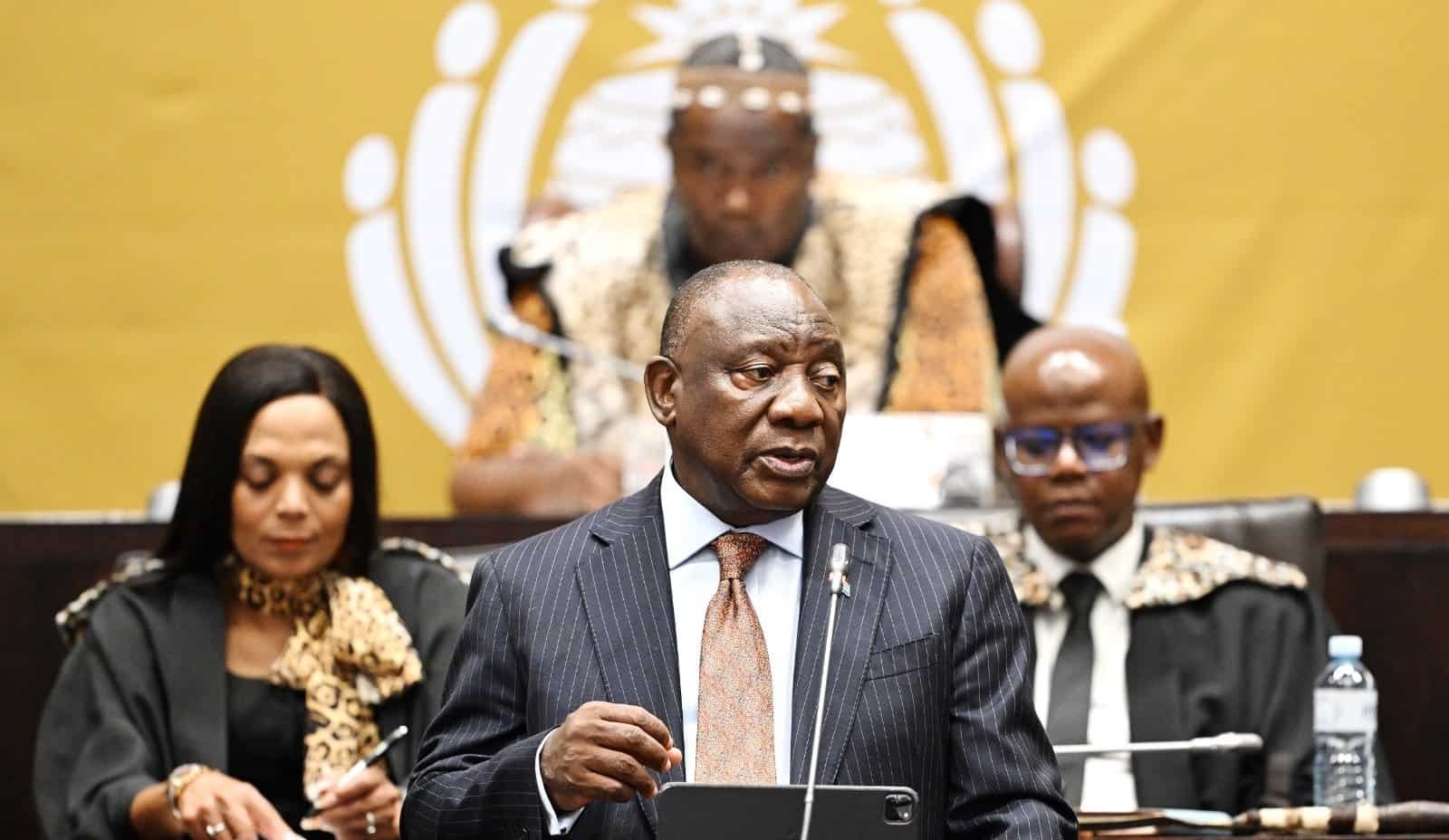
President Cyril Ramaphosa has called on traditional and Khoi-San leaders to play a central role in rebuilding rural economies, addressing youth unemployment and strengthening social cohesion.
Delivering the opening address of the National House of Traditional and Khoi-San Leaders at Parliament’s Good Hope Chamber on Thursday, Ramaphosa said traditional leadership remains a “stabilising force” and a vital partner in governance.
He described the institution as the “roots that hold the great tree of our nation”, emphasising its role in preserving culture, resolving disputes and guiding communities through social and economic challenges.
“Traditional leaders are indispensable partners as we work to improve our economy and the lives of every South African,” he said.
Ramaphosa acknowledged that while the country is in a better position than a year ago, deep structural challenges remain — particularly in rural areas. He highlighted high unemployment among young people, poor service delivery and the migration of youth to cities as key concerns weakening rural communities.
He said government interventions such as the Presidential Employment Stimulus have created more than 2.5 million work opportunities, including in rural areas, while programmes like the National Rural Youth Service Corps (NARYSEC) are equipping young people with skills in sectors such as agriculture, construction and hospitality.
Agriculture, he said, remains the backbone of rural economies. Government plans include deploying 10,000 agricultural extension officers and expanding support for black farmers through funding and market access.
On infrastructure, Ramaphosa pointed to ongoing efforts to address water shortages, announcing that more than R156 billion will be invested in water and sanitation projects over the next three years, many of which will benefit rural communities.
He also stressed the need for better cooperation between municipalities and traditional leadership structures, acknowledging that the current dual system often creates tension. A review of the local government framework is underway to improve coordination.
Ramaphosa further urged traditional leaders to take an active stand against gender-based violence and unsafe initiation practices, calling for collective action to protect vulnerable groups.
“As custodians of our culture and values, you must be at the forefront of ending violence against women and children,” he said.
He concluded by encouraging leaders to participate in the upcoming National Dialogue, saying collaboration is key to overcoming South Africa’s challenges and building stronger communities.