The Democratic Alliance’s legal challenge against the Expropriation Act is being heard in the Western Cape High Court, with the party arguing that the legislation is unconstitutional and was not lawfully passed through Parliament.
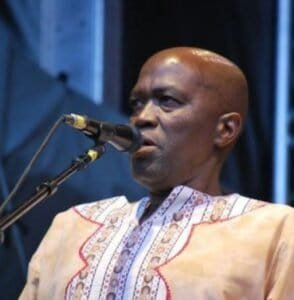
Speaking outside court on Monday, DA Federal Chairperson Bonginkosi Madikizela said the party believes the Act violates the Constitution and that the parliamentary process leading to its adoption was fundamentally flawed.
Madikizela said the DA was asking the court to declare the Act invalid in its entirety, arguing that it poses a threat to property rights and fails to comply with constitutional requirements governing the passage of legislation.
The DA’s challenge rests on two main arguments.
Firstly, the party contends that the National Council of Provinces did not follow the correct constitutional procedures when processing the Bill. According to the DA, several provincial legislatures voted in favour of the legislation without obtaining the legally required negotiating or final mandates from their respective legislatures. The party argues that this rendered the parliamentary process defective and unconstitutional.
Secondly, the DA argues that several provisions contained in the Expropriation Act conflict with Section 25 of the Constitution, which protects property rights. It maintains that clauses allowing for nil compensation in certain circumstances are vague, contradictory and inconsistent with constitutional safeguards governing expropriation.
Madikizela said the legislation grants excessive powers to the state and undermines legal certainty regarding property ownership.
The Expropriation Act was signed into law by President Cyril Ramaphosa in January 2025 after years of parliamentary deliberations. It replaced the apartheid era Expropriation Act of 1975 and establishes a framework governing how organs of state may expropriate property for a public purpose or in the public interest.
The Act provides that compensation must be just and equitable after considering several factors, including the current use of the property, its market value, the history of its acquisition and the extent of state investment. It also identifies limited circumstances in which nil compensation may be considered just and equitable, subject to constitutional requirements and judicial oversight.
Government has consistently maintained that the legislation does not permit arbitrary land seizures and that expropriation remains subject to constitutional protections, negotiations with property owners and review by the courts. It has argued that the Act seeks to align expropriation procedures with the Constitution while supporting land reform and public interest objectives.
The legislation has remained politically contentious since its enactment.
The DA has repeatedly stated that while it supports land reform, it opposes expropriation without compensation and believes expanding secure property ownership is a better way to address historical injustice. The party says weakening property rights will discourage investment and economic growth.
The court challenge also comes against the backdrop of broader legal opposition to aspects of the Act from other organisations, which have similarly questioned whether some of its provisions comply with the Constitution.
The outcome of the Western Cape High Court proceedings is expected to have significant implications for South Africa’s land reform framework and the future implementation of the Expropriation Act.
Should the court find in favour of the DA, the legislation could be declared invalid, or parts of it struck down. If the challenge fails, the Act will remain the legal framework governing expropriation in South Africa, subject to future constitutional interpretation by the courts.