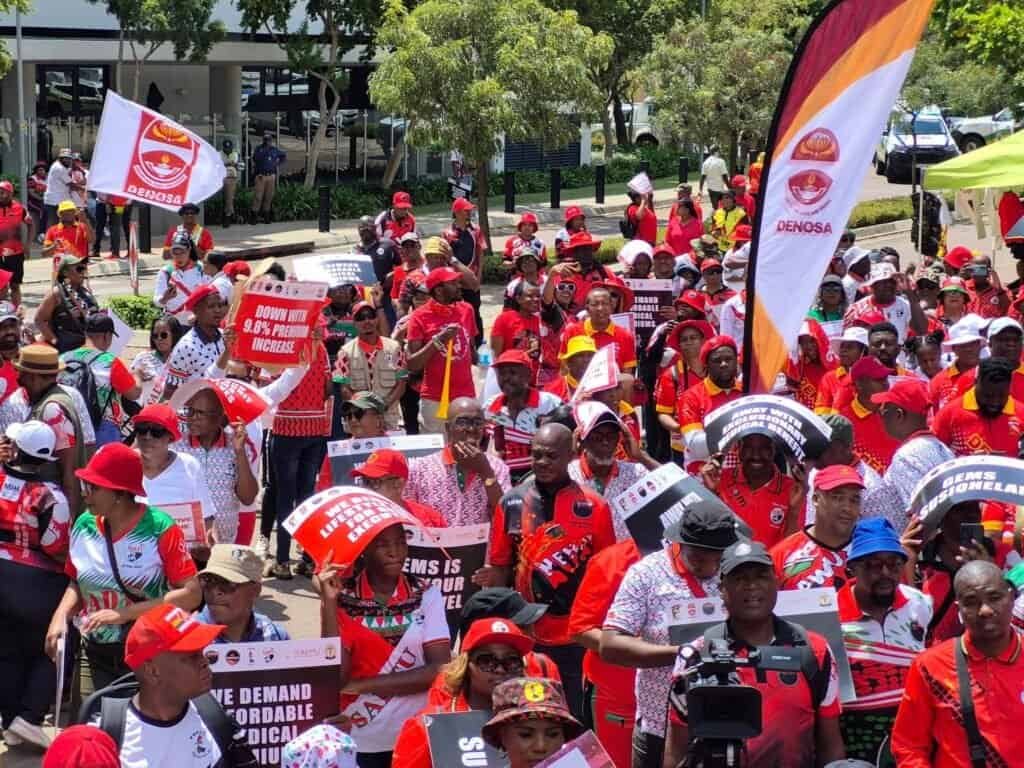
The Democratic Nursing Organisation of South Africa (DENOSA) in North West has welcomed a Johannesburg Labour Court ruling that upheld an arbitration award ordering the North West Department of Health to pay an enrolled nursing assistant an 8% rural allowance, backdated to April 2018.
The union said the judgment, handed down on Monday, confirms that the Public Health and Social Development Bargaining Council (PHSDSBC) Resolution 2 of 2004 has been incorrectly interpreted by the department for years, resulting in enrolled nurses (ENs) and enrolled nursing assistants (ENAs) being excluded from receiving the rural allowance despite working in qualifying rural healthcare facilities.
According to DENOSA, the Labour Court dismissed the North West Department of Health’s review application against an earlier arbitration ruling by the PHSDSBC. The arbitration had found that the nurse, who has been employed at a rural health facility in the province since April 2018, was entitled to receive the rural allowance retrospectively.
The union said it first took up the matter on behalf of the nurse in December 2020 after she had not received the allowance since the start of her employment.
DENOSA said the ruling means the nurse must now receive the unpaid allowance dating back more than eight years, amounting to a significant salary adjustment.
The organisation argued that the department’s interpretation of Resolution 2 of 2004 has unfairly limited the payment of the rural allowance to professional nurses only.
According to the union, the department has interpreted the agreement to mean that only nurses holding the rank of professional nurse qualify for the 8% rural allowance if they work in designated rural clinical facilities.
However, DENOSA maintained that the wording of the agreement refers to nurses who are registered with the South African Nursing Council rather than a specific nursing rank.
The union said the only category specifically excluded from the agreement is student nurses.
DENOSA believes the judgment confirms that enrolled nurses and enrolled nursing assistants should also benefit from the rural allowance when they work in qualifying rural healthcare facilities.
The organisation said thousands of nurses across South Africa may have been denied the allowance since the agreement was introduced in 2004.
It argued that the ruling could have significant implications for healthcare workers in rural areas nationwide who have been excluded from receiving the additional remuneration.
DENOSA said many enrolled nurses and nursing assistants remain in the same position as the successful applicant and may now have grounds to seek payment of the allowance owed to them.
The union described the ruling as an important victory for fairness and the correct application of collective bargaining agreements in the public health sector.
It said the judgment demonstrates that Resolution 2 of 2004 has not been implemented properly by provincial health departments, particularly in relation to lower categories of nursing staff working in rural facilities.
DENOSA further stated that it intends to ensure that the North West Department of Health complies fully with the court ruling.
The union said it would enforce implementation of the judgment to ensure affected nurses receive the benefits to which they are entitled.
“DENOSA is happy that, finally, justice has been served,” the organisation said in a statement issued on Tuesday.
The rural allowance was introduced to encourage healthcare professionals to work in rural and underserved communities, where recruitment and retention of staff have historically been challenging.
Healthcare unions have previously argued that excluding certain categories of nurses from the allowance undermines efforts to improve staffing levels at rural health facilities and creates disparities among employees performing similar duties.
The latest judgment is expected to attract attention from other provinces where enrolled nurses and enrolled nursing assistants have also been excluded from receiving the allowance under similar interpretations of the bargaining council agreement.
It remains unclear whether the North West Department of Health will take further legal steps following the Labour Court’s ruling or begin implementing the order.
The department had not commented publicly on the judgment at the time of publication. DENOSA said it would continue monitoring implementation to ensure affected nurses receive the payments due to them.