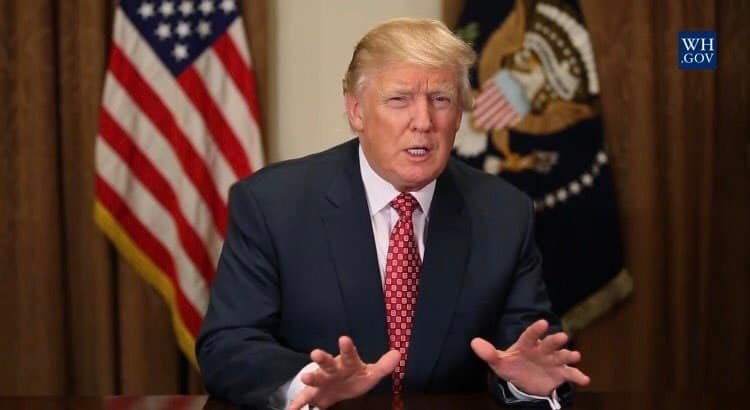
A fragile pause in escalating tensions between the United States and Iran has emerged after President Donald Trump agreed to suspend planned military strikes for two weeks, opening a narrow window for negotiations amid fears of a broader regional conflict.
The announcement follows days of heightened rhetoric and military posturing, with Washington previously warning Tehran to reopen the strategic Strait of Hormuz or face severe military consequences. The waterway, a critical artery for global oil supply, became a flashpoint after Iran signalled its willingness to restrict access in response to ongoing sanctions and military pressure.
According to officials, the two-week ceasefire is conditional and hinges on both parties engaging in structured talks. While details of the agreement remain limited, early indications suggest that the framework for negotiation may incorporate elements proposed by Tehran, marking a notable shift in the diplomatic dynamics between the long-time adversaries.
The development has drawn strong reactions globally, including from South Africa’s Economic Freedom Fighters (EFF), which issued a sharply worded statement praising Iran’s stance and framing the ceasefire as a strategic victory against what it described as “U.S. imperialism.”
In its statement released on Wednesday, the EFF commended Iran for what it called “resilience and strategic victory over the combined aggression” of the United States and its allies, including Israel. The party claimed that Washington’s decision to halt strikes came just an hour before a previously implied deadline to “obliterate” Iran, interpreting the move as a retreat rather than a diplomatic breakthrough.
“What has emerged from this confrontation,” EFF national spokesperson Sinawo Thambo said, “is that the United States, despite its military arrogance, has been forced to retreat and accept a framework of engagement shaped by Iran itself.”
Central to the EFF’s argument is the assertion that Iran has successfully pushed key demands onto the global agenda. These include the lifting of both primary and secondary sanctions, the release of frozen Iranian assets, and recognition of its influence over the Strait of Hormuz. Additional conditions cited include the withdrawal of U.S. forces from the Middle East, a halt to all attacks on Iranian territory, and the formalisation of any agreement through a United Nations Security Council resolution.
The party further argued that the confrontation reflects a broader historical pattern, comparing the current situation to past U.S. engagements such as the Vietnam War and the Cuban Missile Crisis, where American power was ultimately constrained despite initial aggression.
However, analysts caution that such comparisons may oversimplify a complex and evolving situation. While the ceasefire may signal a temporary de-escalation, the underlying tensions remain unresolved, with both nations maintaining hardened positions on key issues such as nuclear development, regional influence, and economic sanctions.
The humanitarian and economic toll of the recent escalation has also come into focus. Reports indicate that the conflict has resulted in thousands of deaths across multiple countries, alongside significant disruptions to global oil markets. Rising energy prices have already begun to ripple through international economies, raising concerns about inflation and economic stability, particularly in developing nations.
The EFF echoed these concerns, highlighting the disproportionate impact on working-class communities worldwide. “It is working-class people across the world and within the United States itself who bear the cost of reckless militarism,” Thambo said, pointing to rising fuel prices and the human cost of military deployments.
The party also called for international accountability, urging that President Trump be held responsible for actions that it claims escalated the conflict and violated international law. It accused the U.S. administration of attempting to “disguise retreat as victory,” a narrative that has been echoed in some international commentary but remains contested within diplomatic circles.
Despite the strong rhetoric, diplomatic observers note that both Washington and Tehran have incentives to avoid a full-scale war. For the United States, prolonged conflict risks further economic strain and geopolitical backlash, while Iran faces internal economic pressures exacerbated by sanctions and instability.
Global powers, including members of the United Nations Security Council, are likely to play a significant role in shaping the outcome. There are growing calls for a multilateral approach to ensure that any agreement reached is sustainable and addresses the broader security concerns of the region.
The next two weeks are expected to be critical in determining whether the ceasefire can evolve into a more durable agreement or collapse under renewed tensions. Key questions remain around enforcement mechanisms, verification processes, and the role of international mediators.
For now, the ceasefire offers a temporary reprieve in what has been one of the most volatile geopolitical standoffs in recent years. Whether it marks the beginning of meaningful dialogue or merely a pause before further confrontation will depend on the willingness of both sides to compromise in the days ahead.
As the situation unfolds, the world watches closely, aware that the stakes extend far beyond the borders of Iran and the United States, with implications for global security, economic stability, and the balance of power in an increasingly uncertain international order.