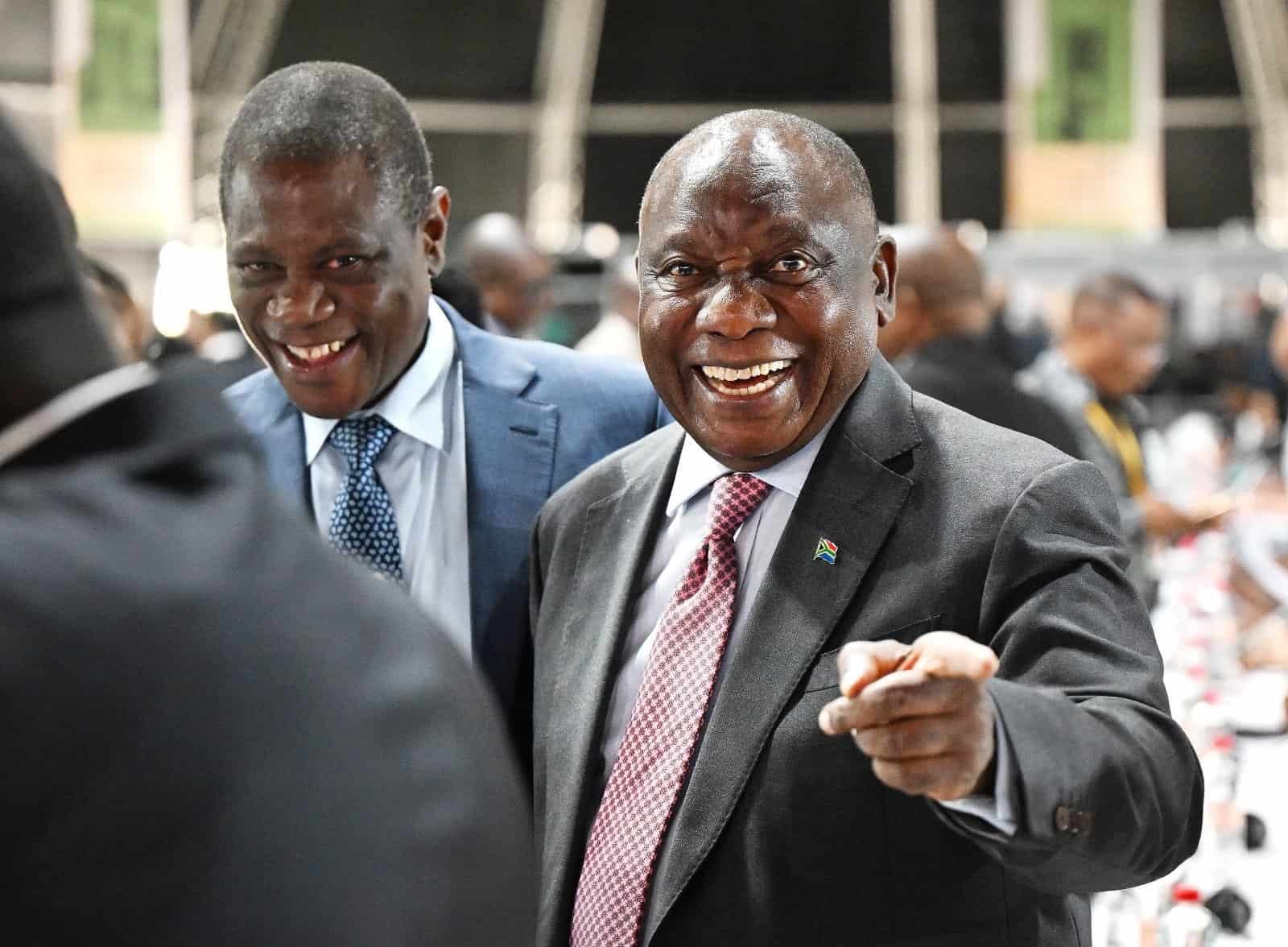
Public outrage is mounting after President Cyril Ramaphosa approved above-inflation salary increases for South Africa’s political office-bearers, a move critics say exposes a widening moral gap between the country’s leadership and the lived realities of millions of struggling citizens.
The 3.8% salary hike, approved following recommendations by the Independent Commission for the Remuneration of Public Office-Bearers, will see ministers, deputy ministers, premiers and members of Parliament earning significantly more in a country grappling with rising unemployment, deepening inequality, and failing public services. While the increase is slightly below the commission’s proposed 4.1%, it still exceeds inflation and has triggered sharp criticism from civil society organisations and labour unions.
Civic Root Advocacy has strongly condemned the decision, describing it as a “moral failure” at a time of profound social crisis. In a statement issued on Wednesday, the organisation said the approval of pay hikes for political elites sends a deeply troubling message to communities battling daily for basic services.
“In a country where communities are protesting over access to water, sanitation and electricity, where children continue to die from unsafe sanitation, and where schools remain overcrowded, increasing the pay of political elites signals a complete disconnect from the suffering of ordinary people,” said Civic Root Advocacy managing director Siyabulela Jentile.
Jentile stressed that while the commission operates within a legal framework, legality should not be confused with ethical leadership. “Public representatives are meant to embody service, sacrifice and accountability. Instead, this decision reinforces the perception that those in power are insulated from the lived realities of the poor and working class,” he said.
Under the approved adjustments, Deputy President Paul Mashatile, National Assembly Speaker Thoko Didiza and the Chairperson of the National Council of Provinces will each earn about R3.28 million a year. Ministers’ salaries will increase to R2.79 million annually, while deputy ministers will earn R2.29 million. Premiers will take home R2.64 million.
The commission justified its recommendation by pointing to a decline in inflation, which dropped from early projections of 4.5% to about 3.5% by the end of the year. It concluded that a realistic inflation range for 2025/26 would be between 3.5% and 4.5%, placing the approved increase within that band. However, critics argue that economic indicators mean little to households facing stagnant wages, joblessness and rising food and transport costs.
Labour union NEHAWU has also joined the chorus of condemnation, describing the approval as “completely unprincipled”. The union said the increase comes at a time when South Africa’s economy remains stagnant, with low growth prospects and persistent crisis-level unemployment.
“As NEHAWU, we find it completely unprincipled for President Ramaphosa to approve the increment amidst the challenges confronting the country, which are a direct result of the dismal failure of public office-bearers to govern,” said NEHAWU general secretary Zola Saphetha.
The union blamed what it described as the continued pursuit of neo-liberal macroeconomic policies and austerity measures, which it said have entrenched poverty and inequality while shielding political leaders from the consequences of economic decline.
Although the government has previously pointed out that the overall wage bill has declined as a share of consolidated spending — from 35.7% in 2013/14 to 32.1% in 2023/24 — critics say such figures do little to address the symbolic damage caused by approving pay hikes for politicians while ordinary South Africans are urged to tighten their belts.
Civic Root Advocacy has called on all public office-bearers to voluntarily reject the increases as an act of solidarity with the poor and working class. Jentile said moments of national hardship demand humility and restraint from leaders, not incremental rewards.
“A voluntary rejection of the increase would send a powerful signal that public office is about service, not self-enrichment, and that leaders are prepared to share in the sacrifices they routinely ask of citizens,” he said.
The organisation warned that decisions such as these risk further eroding public trust in democratic institutions, which is already dangerously low. With communities increasingly resorting to protests over service delivery failures, critics argue that the credibility of governance is on the line.
As the country moves closer to the 2026 local government elections, civil society groups say voters are paying close attention. “Citizens are watching closely,” said Jentile. “These decisions will shape not only electoral outcomes, but the legitimacy of the democratic project itself.”
For many South Africans, the pay hike has become a symbol of a broader crisis of leadership — one in which political elites appear detached from everyday hardship, even as they preside over a country marked by inequality, unemployment and shrinking hope.