What will ultimately prevail – climate ambitions or hydrocarbon reality? When and under what conditions is the energy transition possible? Read more in the TV BRICS feature
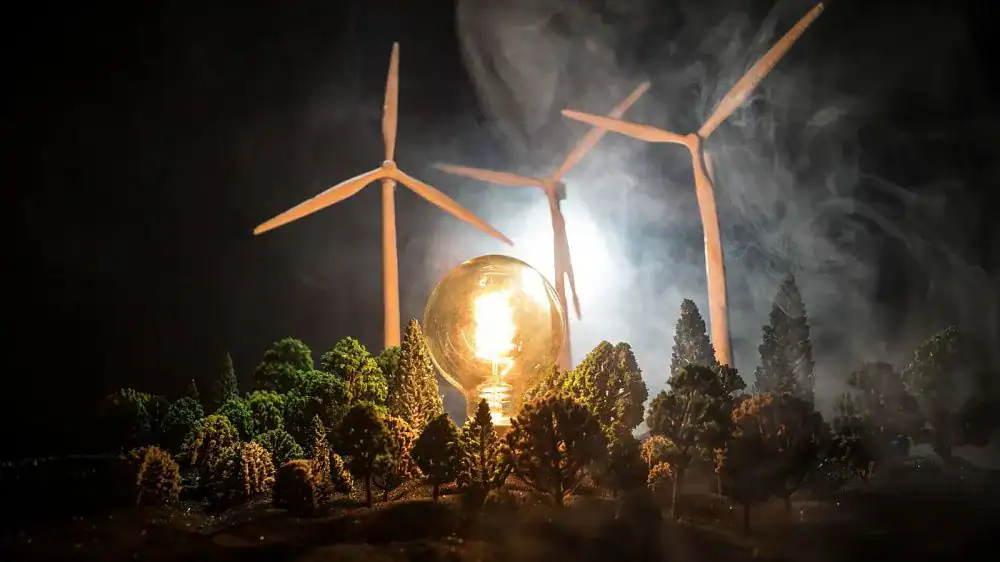
The BRICS countries, particularly India and China, are actively developing renewable energy sources while at the same time continuing to rely on traditional fuels – hydrocarbons. Experts describe this situation as the central paradox of climate governance. As, in essence, the largest energy powers, accounting for around half of global energy consumption and production, the countries of the group are literally now positioned between coal and the sun.
BRICS as the epicentre of global energy
BRICS unites countries representing not only a large share of the world’s landmass but also of the global energy market. The accession of oil producers such as Iran and the United Arab Emirates and the active participation of Saudi Arabia in the group’s activities, as well as the presence of the largest importers – China and India – make BRICS a structure encompassing the global energy sector as a whole. This strengthens the role of the group as a regulator of the global oil market. This is particularly significant given that Russia is also one of the leading producers of oil and gas and, together with China, India and South Africa, ranks among the main suppliers of coal.
However, not all bets are placed on hydrocarbons. The BRICS countries are actively developing renewable energy sources (RES), planning to triple their capacity by 2030. China’s progress in green energy technologies and the ambitious plans of other countries make this quite achievable. Even though today the situation in the BRICS energy market appears paradoxical. On the one hand – climate ambitions; on the other – growing energy demand and, as a result, the need to use hydrocarbons.
“The expansion of the BRICS group, which includes countries with diverse economic and energy agendas, including South Africa, India, China, and Russia, highlights the central paradox of global climate governance – the challenge of reconciling economic development with the urgent need for decarbonisation. An analysis of the energy profiles of these countries reveals a complex web of historical dependence on fossil fuels and, at the same time, growing investment in renewable energy, making the energy transition, at best, ambiguous,” Gabriela de Fatima Cia, an expert in sustainable development, international environmental cooperation, water resources management and forest ecosystems, member of the BRICS Student Commission and coordinator of the Youth Secretariat of the Centre for Integration and Cooperation of Russia and Latin America (CICRAL), told TV BRICS in an interview.
It should be noted that BRICS members lead not only in energy production and consumption but also in greenhouse gas emissions. This is why the pace of renewable energy deployment in the countries of the group becomes critically important for achieving climate goals. However, the roles of the member states differ significantly.
“China and India are global leaders in absolute growth of renewable capacity, but at the same time they are the largest consumers of coal. Brazil has one of the lowest-carbon energy balances. Russia and South Africa, despite modest efforts to develop renewable resources, continue to rely significantly on traditional energy sources,” commented Nelli Semenova, Candidate of Political Sciences, Senior Research Fellow at the Department of Economic Studies of the Institute of Oriental Studies of the Russian Academy of Sciences, and Leading Research Fellow at the Centre for Chinese Economic Studies of the Institute of China and Contemporary Asia of the Russian Academy of Sciences.
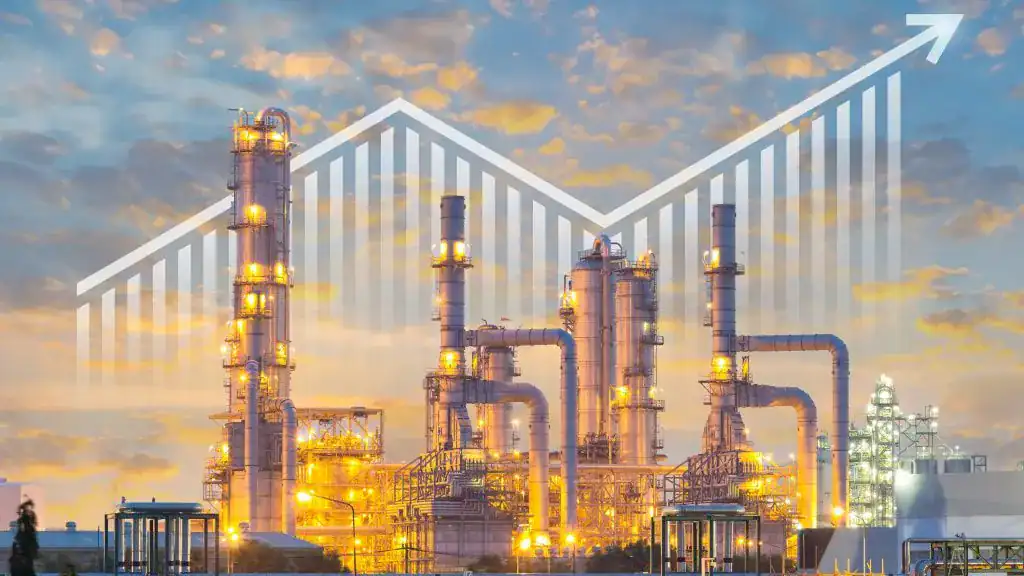
Energy portrait of the giants: from coal to nuclear
Nevertheless, the need for an energy transition has long been under close attention within BRICS. This is reflected both in the declarations adopted following BRICS summits and in the communiqués of meetings of the group’s energy ministers. However, BRICS partners invariably emphasise that a just energy transition is based on independence and freedom of choice of pathways. Countries are free to shape their own energy balances and develop their energy sectors based on national characteristics and priorities. Therefore, today the BRICS states can and do use all available energy sources and technologies.
Brazil and a low-carbon balance
Brazil is one of the world’s leading energy powers. The country possesses a unique combination of abundant oil and gas resources as well as renewable energy sources, from which, according to experts, it derives nearly 90 per cent of its electricity. Overall, renewables account for more than half of Brazil’s energy balance, with a large share coming from hydropower and biofuels, which together, according to the 2024 study “Just Energy Transition of the BRICS Countries”, constitute 44 per cent of the energy balance. The main biomass source in Brazil is sugarcane, used both for electricity generation and ethanol production.
However, a significant share of Brazil’s energy balance (36 per cent) is still accounted for by oil and petroleum products. Oil production in the country in 2023 amounted to 198 million cubic metres, or 176 million tonnes of oil equivalent. Around 47 per cent of the total volume was exported. In 2025, Brazil set a historic record for oil and gas production. Growth was driven by deep-water offshore fields, which accounted for more than 80 per cent of national production. According to the National Agency of Petroleum, Natural Gas and Biofuels (ANP), output reached 4.897 million barrels of oil equivalent per day. This is 13.3 per cent higher than in 2024. This was reported by Safras, a partner of TV BRICS.
“With a historically cleaner energy matrix based on hydropower and biofuels, Brazil could assume a leading position in the energy transition,” Gabriela de Fatima Cia noted in an interview with TV BRICS.
Experts describe Brazil as a global leader in clean energy generation. State policy seeks to combine the economic benefits of fossil fuels with decarbonisation and sustainable development goals.
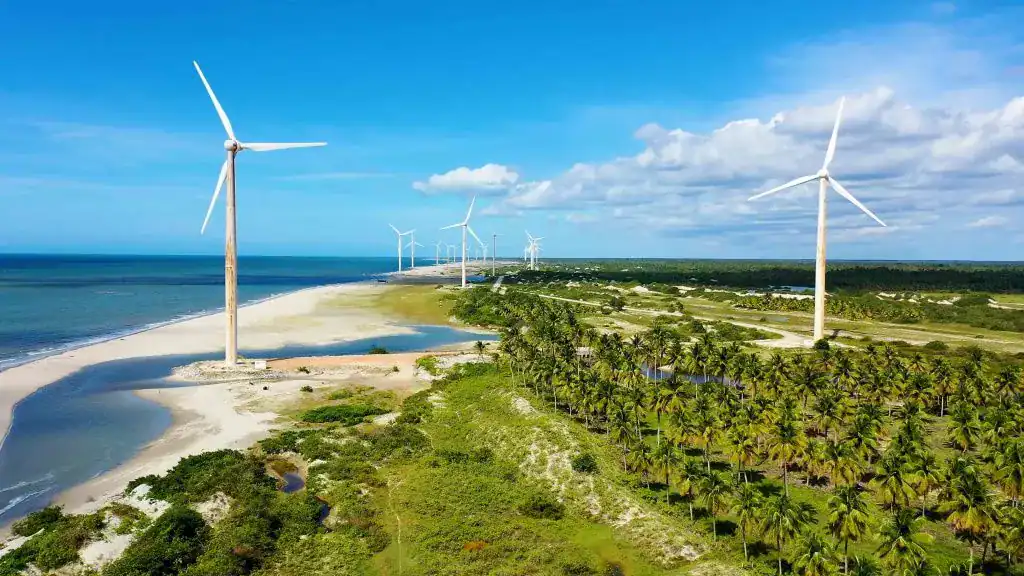
China and new challenges in renewable energy development
China concluded 2025 with a record expansion of its energy system. Total installed power generation capacity in the country reached 3.89 TW by the end of 2025, Xinhua News Agency, a partner of TV BRICS, reports. This is more than 16 per cent higher than in 2024, meaning a net increase of 540 GW in a single year. Notably, no other major economy in 2025 managed to expand capacity on a comparable scale. Most of the growth came from renewables. China commissioned more than 430 GW of new solar and wind power capacity, bringing the combined capacity of these sources to over 1.8 TW.
Installed solar capacity reached 1.2 TW, increasing by more than 35 per cent compared to 2024. Wind power capacity, due to the development of onshore and offshore projects, rose to 640 GW, 22.9 per cent higher than the previous year. Investment in onshore wind energy grew particularly rapidly, increasing by nearly 50 per cent over the year.
Total investment in energy projects reached an unprecedented US$508 billion. However, investment was not limited to clean energy. Expenditure also increased in coal power, hydropower and coal mining, reflecting concerns over energy security and reliability of supply.
Speaking of China’s overall energy balance, experts agree that the country has achieved significant success in the energy sector in terms of production capacity, transition to environmentally friendly and low-carbon technologies, and innovation in energy technologies. In 2023, China’s primary energy production amounted to 4.8 billion tonnes of coal equivalent. All this occurred against the backdrop of an accelerated transition to green and low-carbon energy. In 2023, total installed renewable capacity in China reached 1,500 GW, including hydropower, solar and wind, accounting for more than 50 per cent of total installed capacity. Solar capacity stood at 610 GW (up 55.2 per cent year-on-year), while wind capacity reached 440 GW (up more than 20 per cent over the year). At the same time, the share of coal in total energy consumption in China decreased by 0.7 per cent, while consumption of green energy increased by 0.4 per cent.
“China is becoming the main driver of the global energy transition in terms of scale and investment. Despite being the world’s largest emitter, it leads in the deployment of renewable technologies and has set ambitious goals: to peak emissions before 2030 and achieve carbon neutrality by 2060,” Gabriela de Fatima Cia told TV BRICS.
However, despite these successes, the situation remains ambiguous. It is not only that coal continues to play a key role in China, accounting for more than 55 per cent of primary energy consumption. It is also that renewable energy generation and its consumption are different indicators. Victoria Perskaya, Director of the Institute for Research on International Economic Relations at the Financial University under the Government of the Russian Federation and Doctor of Economics, drew particular attention to this in an interview with TV BRICS.
“For example, the challenges of expanding energy infrastructure in provinces such as Qinghai or Henan are well known. These provinces host significant renewable generation capacity, but infrastructure development is required to deliver energy to consumers. Today, compared to 2024, renewable energy losses due to transmission bottlenecks have more than doubled (to 6.6 per cent for wind and 5.7 per cent for solar). The costs and timelines for eliminating these bottlenecks and modernising grids significantly exceed, paradoxically, the costs and timelines for developing renewable generation capacity,” Victoria Perskaya said.
Thus, China’s experience has exposed a very important issue in renewable energy development not only domestically but worldwide. “Whereas previously it was customary to speak of the high cost of developing renewable generation capacity, as the share of renewables in the fuel and energy balance grows, one must acknowledge the disproportionate increase in the cost of developing power grids themselves and energy storage capacity,” concluded Fedor Arzhaev, Candidate of Economic Sciences and Senior Research Fellow at the Institute for International Economic Relations Research, Financial University under the Government of the Russian Federation.
India – the world’s third-largest energy consumer
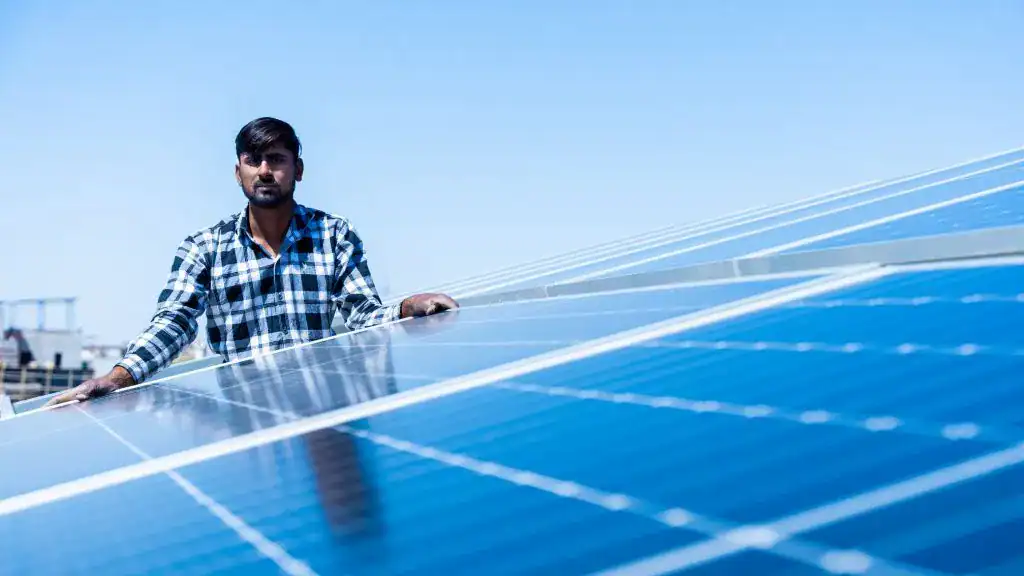
As a major economy with a population of more than 1.4 billion, India is the world’s third-largest energy consumer. Amid growing demand for energy resources, the Indian authorities pay particular attention to renewables. According to the International Renewable Energy Agency (IRENA), the country already ranks fourth globally in total installed renewable capacity. India places primary emphasis on solar energy. However, the Renewable Energy Development Association notes the country’s significant potential in wind, hydro, and bioenergy due to its geographical location and climatic conditions.
India has set ambitious targets for 2030: to increase renewable-based electricity generation capacity to 500 GW, reduce emissions intensity by 45 per cent, and achieve 50 per cent of cumulative electric power capacity from non-fossil sources.
However, in developing renewables, India, according to experts, lags behind Brazil and China and may also face technical challenges.
“Despite its ambitious targets, India lags behind China in terms of scale of deployment, particularly in developing its own manufacturing chain, remaining largely dependent on equipment imports,” said Nelli Semenova.
Energy in other BRICS countries
For the BRICS countries, the goal of tripling renewable energy capacity, set at the 28th Conference of the Parties to the United Nations Framework Convention on Climate Change in 2023, is not only a matter of preserving the Earth’s ecosystem but also of creating new energy carriers. However, on the one hand, many developing economies face financing shortages (90 per cent of investments are concentrated in developed countries and China); on the other hand, structural dependence on coal and natural gas remains a key constraint to accelerated transition in most BRICS countries.
“Coal retains fundamental importance for energy security, affordability and social stability in coal-mining regions. Gas is viewed as a necessary transition fuel to ensure flexibility of power systems when integrating variable renewable generation. This dependence shapes a gradualist transition model (evolutionary rather than revolutionary), whereby increasing renewable capacity does not entail the immediate replacement of traditional energy sources and is often accompanied by overall growth in energy consumption,” said Nelli Semenova.
Thus, Russia’s Energy Strategy to 2050, adopted in 2025, places primary emphasis on traditional sources – oil, gas, coal and nuclear power. Solar and wind generation are mentioned in the context of overall diversification of the energy balance; however, no specific targets for their development are set. According to experts, by 2050 solar and wind may account for around 10 per cent of the country’s energy balance.
In 2023, Indonesia entered the top five countries globally in terms of coal-fired generation. Electricity generation at coal power plants increased by 74 per cent between 2015 and 2023, reaching 217 terawatt-hours.
In 2025, South Africa announced plans to revive its modular nuclear reactor programme and increase the share of gas-fired electricity generation. According to the updated Integrated Resource Plan (IRP), US$140.44 billion is planned to be invested in energy infrastructure by 2042. However, coal dominates South Africa’s primary energy supply, accounting for 70 per cent of total primary energy in 2023.
Iran is one of the world’s largest suppliers of oil and gas – unsurprisingly, petroleum products occupy a central place in the country’s energy balance ( 72.06 per cent). However, the country also has significant potential in renewable energy, particularly hydropower, solar and wind.
Ethiopia accounts for a negligible share of CO₂ emissions. However, access to modern energy services remains among the lowest in the world. More than 56 million people (46 per cent of the population) lack access to electricity. Biomass forms the basis of the energy balance. Firewood and charcoal accounted for 86 per cent of total energy consumption in 2019–2020.
Egypt’s Development Concept to 2030 aims to support diversified energy security. Egypt has significant potential in clean energy production, particularly green hydrogen based on hydropower from the Aswan High Dam. At the same time, Egypt is the largest oil and gas producer in Africa, and these resources cover the bulk of its domestic energy needs.
Green initiatives of BRICS
According to experts, the effectiveness of green investment becomes fully apparent when financing exceeds 2 per cent of GDP. In the BRICS countries, this figure remains relatively low – averaging 0.8 per cent. Their share of global investment is also modest: developing countries account for around 15 per cent of global green asset investment. Therefore, to implement the principles of the BRICS Declarations and achieve national climate goals, the countries of the group need to increase investment in the green economy.
The New Development Bank helps to overcome weak financial infrastructure limiting access to green loans. In 2023, the NDB announced the allocation of US$35 billion for climate initiatives. Since then, the NDB’s project portfolio has been expanded with projects in sustainable development, environmental protection and the low-carbon economy. A striking example is a US$100 million loan agreement for projects in Shanghai covering clean energy and digital infrastructure, Xinhua News Agency reports.
Experts also believe that certified green financial products, such as green bonds, could become an effective instrument for mobilising investment within BRICS. Cooperation on the development and dissemination of such products should be carried out by BRICS financial institutions and focus on harmonising and mutually recognising green project standards and disclosure requirements at the project and product levels. This could become an important step towards achieving BRICS’ goals for the transition to a low-carbon economy and help fulfil the group’s international commitments in this area.
Future and prospects of the energy transition in BRICS countries
Despite all efforts to develop renewables, hydrocarbons account for 80 per cent of the global fuel and energy balance. Over the past decade, global electricity demand has continued to grow, experts note. According to forecasts, high global demand for oil and gas will persist until 2050.
“Renewables also demonstrate positive dynamics, including in the number of investment projects being implemented. The average annual growth of renewables until 2050 is estimated at 4 per cent; their share in global consumption has increased from 20 per cent in the 2000s to 30 per cent in 2025. However, this does not mean that renewables will replace fossil fuels in the foreseeable future or that developed countries will be able to significantly reduce their dependence on mineral imports,” Tural Natig oglu Mammedov, Candidate of Economic Sciences and Leading Research Fellow at the Institute for Research on International Economic Relations at the Financial University under the Government of the Russian Federation, told TV BRICS.
At the same time, green energy does not lose its importance in combating climate change. However, several key conditions are required for its development. Firstly, a technological breakthrough and economic efficiency must be achieved not only in renewable generation itself but also in integrated systems, including long-term and seasonal energy storage, according to Nelli Semenova. In addition, the expert emphasises deep structural transformation of economies dependent on hydrocarbon export revenues (Russia) or domestic coal consumption (South Africa, India, China) is necessary. Moreover, in order for the transition not to create technological dependence, countries must be able to ensure sovereign access to renewable equipment supply chains and critical minerals.
Thus, many experts agree that in the foreseeable future, the prospects and growing interest in hydrocarbons will coexist with a long-term decarbonisation trend. Therefore, a more realistic scenario for BRICS is not complete replacement but the development of hybrid energy systems, where an increasing share of renewables is combined with the continued significant role of natural gas as a transition fuel and source of flexibility. In some cases, the most likely green alternative to hydrocarbons will be the development of nuclear energy.
The article was prepared by Svetlana Khristoforova.
African Times published this article in partnership with International Media Network TV BRICS