On the morning of 8 June 2026, a judgment landed quietly in the Gauteng Division of the High Court. No fanfare. No public broadcast. Just 18 pages from Judge Anthony Millar that, in my reading, redraw the legal boundaries of South Africa’s electricity sector more definitively than anything that has come before — including the Electricity Regulation Amendment Act.
The case is City of Tshwane Metropolitan Municipality v National Energy Regulator of South Africa & Eskom Holdings SOC Limited [1]. At its heart, the question was simple: can NERSA amend Eskom’s distribution licence to include an area — the 50 000-unit Mooikloof Mega City development — that already sits inside Tshwane’s licensed area of supply?
NERSA said yes. On 10 February 2023, it approved Eskom’s application and granted the amendment [2]. Tshwane took NERSA to court. And on Monday, the court took NERSA apart.
What actually happened at NERSA
I want to dwell on the procedural record here, because it tells you something important about how this decision was made.
Farm Rietfontein 375-JR, which forms part of the Mooikloof site, has been within Tshwane’s licensed area of supply since NERSA granted Tshwane its electricity distribution licence on 22 September 2011 [3]. Eskom’s licence at that time was limited to supplying its existing legacy customers in the area — those agricultural and historical consumers who had been on Eskom’s books before the transfer of jurisdiction. The undeveloped portions of the farm — which is where the Mega City would be built — belonged, under every legal instrument, to Tshwane [4].
Eskom applied to NERSA in March 2021 to expand its distribution licence to include the Mega City development [5]. Tshwane only found out about this application — not through the official notification from NERSA required by the licensing procedure — but through social media and newspaper reports in March 2022, nearly a year after the application was filed [6].
That procedural failure alone was extraordinary. But what followed was worse.
At NERSA’s Electricity Subcommittee Meeting on 1 December 2022, members observed that Eskom’s application contained no legal argument addressing Tshwane’s constitutional rights over electricity distribution within its own jurisdiction [7]. Rather than requiring Eskom to address this, NERSA obtained a legal opinion to the effect that reticulation had “not been defined to a point where it is deemed as constitutionally acceptable” [8]. In other words, NERSA was not sure municipalities had exclusive authority. It proceeded, nevertheless.
At the very next meeting, on 10 February 2023, Subcommittee members again raised concerns — this time even more explicitly. They queried whether an area could be included in Eskom’s licence while it remained in Tshwane’s licence and recorded the view that Tshwane’s licence should first be amended to remove the area before including it in Eskom’s distribution licence [9]. No such amendment was ever sought. No such amendment was ever made [10].
On the same day, NERSA approved Eskom’s licence amendment [11]. The Subcommittee’s own minutes documented the unresolved problem. NERSA approved the application anyway.
What the court found — and why paragraph 43 matters
The legal framework is less complicated than it sounds. Section 156(1)(a) of the Constitution gives municipalities executive authority over local government matters listed in Part B of Schedule 4, which includes electricity reticulation [12]. The Electricity Regulation Act (ERA) reinforces this by defining a municipality as an entity that has “executive authority over and the right to reticulate electricity within its area of jurisdiction” [13].
NERSA’s own licensing rules draw a clear distinction between a “licensed area of supply” — an area already covered by an issued licence — and a “licensable area of supply” — an area eligible for new licensing. These are mutually exclusive: once an area is licensed, it cannot be licensed to someone else unless the first licence is amended or revoked [14]. Farm Rietfontein 375-JR has been in Tshwane’s licensed area since 2011. It was not a greenfield. It was not available for re-licensing [15].
In paragraph 43, Millar J dealt with this directly:
“Nersa and Eskom argued that electricity supply does not fall within the exclusive jurisdiction of municipalities and that Tshwane’s interpretation of section 156(1)(a) of the Constitution is incorrect. This contention is rejected. The Constitution unequivocally confers executive authority and jurisdiction over electricity reticulation on Tshwane. ERA expressly recognises and gives effect to this constitutional position. Nersa ought not to have approved Eskom’s licence amendment without either addressing whether or not this was permissible in the absence of an amendment to Tshwane’s licence and also the constitutional position of Tshwane. This was fundamental to the consideration of whether to approve Eskom’s application. This is the nub of the review and why it must succeed.”[16]
Three words carry the weight of that passage: “unequivocally” and “exclusive.” The court did not find that municipalities have a strong claim over reticulation, or a preferred claim, or a claim subject to NERSA’s override. The Constitution confers this authority without qualification. That is not language that Parliament can walk back by amending the ERA. It would take a change to the Constitution itself.
What this means for Eskom — and for the ERAA
Here is the commercial reality. Tshwane told the court that the full build-out of Mooikloof would generate approximately R125 million per month in electricity revenue [17]. That is R1.5 billion a year from a single development. That revenue now belongs to Tshwane. Multiply that across the dozens of comparable greenfield and infill developments across South Africa’s eight metropolitan municipalities, and you begin to understand the scale of what Eskom has lost — not because of this judgment, but because the Constitution always said so.
Eskom is simultaneously owed more than R105 billion in arrears by the very municipalities it supplies at the bulk level [18]. It supplies those municipalities under long-term contracts. It cannot easily exit those contracts. And it cannot offset that debt by expanding into creditworthy new customers in the same municipal areas — because those customers, by constitutional mandate, belong to the municipality.
I have heard the counterargument: surely the Electricity Regulation Amendment Act changes this? It came into force on 1 January 2025. It opens the market, creates competitive trading, and enables wheeling. Surely Eskom can get to new customers through the ERAA’s new mechanisms?
No. And paragraph 43 explains why. The ERAA is an ordinary Act of Parliament. It cannot override section 156(1)(a) of the Constitution [19]. Wheeling — the transmission of electricity from an independent producer to an end user — takes place at the transmission level. But the last mile, the physical wire from the substation to the meter inside the Mooikloof development, runs through distribution infrastructure. Who owns and operates that infrastructure, and who receives the revenue for doing so, is a distribution question. And distribution within a municipally licensed area is constitutionally the municipality’s domain [20].
The ERAA can open the generation and trading market. It cannot open the municipal distribution market without the municipality’s consent. The court has confirmed that consent is required — and that NERSA cannot manufacture that consent by amending licences behind a municipality’s back.
The deeper problem this judgment exposes
I do not write this as a critic of Eskom. The utility is in an impossible position: financially stressed, operationally overstretched, and trapped in a business model that the Constitution was always going to strain.
But NERSA’s conduct in this matter deserves sharper scrutiny. The regulator had its own Subcommittee members raising the exact right questions — twice. It had Tshwane formally objecting. It had its own licensing rules pointing in one direction. It obtained a legal opinion that effectively said “we are not sure, so we’ll proceed” — and then it proceeded. That is not regulatory prudence. That is regulatory convenience.
Section 10 of NERA requires that every NERSA decision be consistent with the Constitution, in the public interest, procedurally fair, and based on reasons and evidence [21]. The court found that fundamental criteria — the constitutional position of Tshwane — were never properly addressed. The decision was set aside, and NERSA and Eskom were ordered to pay costs on Scale C, including two counsels [22].
That cost order is not merely procedural. It is a signal from the court about the seriousness of what NERSA did.
What comes next
For municipalities, this judgment is a legal fortress unless set aside on appeal. Every metropolitan municipality can now point to paragraph 43 to block any NERSA attempt to license a non-municipal distributor for new development within its licensed area — without first amending the municipal licence with the municipality’s knowledge and agreement.
For Eskom, the distribution unbundling plan — the creation of a separate distribution entity, NEDCSA — becomes harder to justify. A distribution company whose customer base is constitutionally capped at its legacy customers and cannot expand into new developments without individual municipal consent has no commercial growth story. Eskom’s own CEO has acknowledged publicly that distribution unbundling cannot proceed without meeting solvency and liquidity tests [23]. This judgment makes those tests harder to meet.
The only lawful path for Eskom within municipal areas is the one it has always resisted: acting as an agent under a Distribution Agency Agreement, operating the municipal network under the municipal licence, providing technical capacity it has in abundance — but not owning the customers, not capturing the revenue growth, and not competing with the very entity whose constitutional authority it has spent years quietly eroding.
That is a managed retreat. It is not glamorous. But it is what the Constitution requires.
The era of Eskom as an expanding distributor of electricity in South Africa’s cities is over. The court has not ended it — the Constitution did that a long time ago. The court has simply made it impossible to pretend otherwise.
REFERENCES
1. City of Tshwane Metropolitan Municipality v National Energy Regulator of South Africa & Eskom Holdings SOC Limited, Case No. 2023-072548 (Gauteng Division, Pretoria, 8 June 2026) (Millar J).
2. Judgment, para 15.
3. Judgment, para 5.
4. Judgment, paras 6–7.
5. Judgment, para 8.
6. Judgment, para 9.
7. Judgment, para 13.
8. Ibid.
9. Judgment, para 14.
10. Ibid.
11. Judgment, para 15.
12. Constitution of the Republic of South Africa, 1996, s 156(1)(a), read with Schedule 4, Part B (‘Electricity and gas reticulation’).
13. Electricity Regulation Act 4 of 2006 (ERA), s 1 (definition of ‘municipality’).
14. NERSA Internal Electricity Licence Procedure Rules (April 2012); judgment, para 24.
15. Judgment, para 36.
16. Judgment, para 43.
17. Judgment, para 12.7.
18. Municipal debt figure sourced from Eskom’s publicly reported integrated results for the financial year ended 31 March 2025, as widely reported in the financial press.
19. Electricity Regulation Amendment Act 27 of 2024 (ERAA); Constitution, s 156(1)(a). Ordinary legislation cannot override constitutionally entrenched local government authority.
20. Judgment, paras 32–34 (on the mutual exclusivity of licensed areas and the impermissibility of overlapping licences without amendment of the incumbent licensee’s licence).
21. National Energy Regulator Act 40 of 2004 (NERA), s 10(1)(a)–(f); judgment, para 26.
22. Judgment, paras 48–50.
23. Statement of Eskom CEO Dan Marokane on distribution unbundling and solvency constraints, as publicly reported.
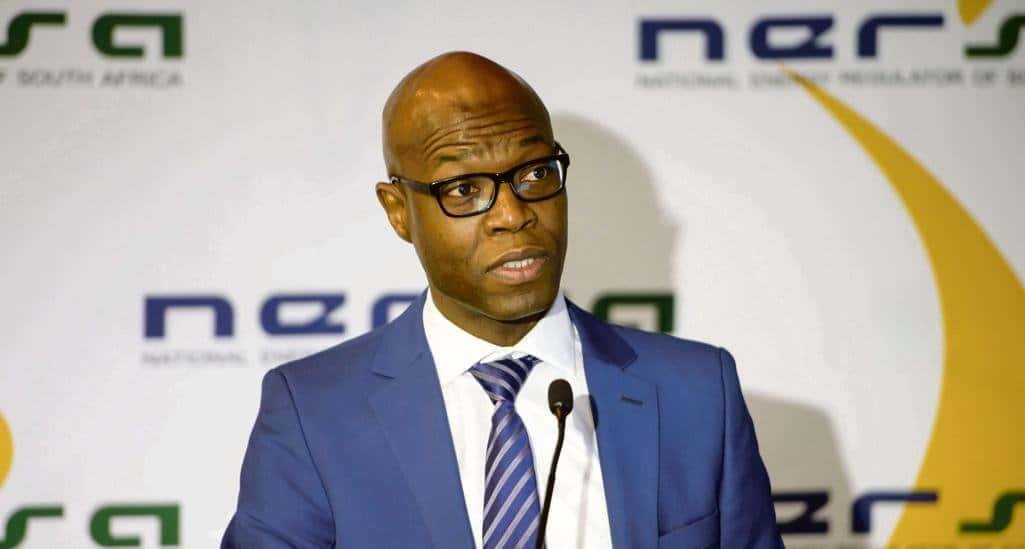
Matshela Koko is a Doctoral Candidate, Graduate School of Business Leadership, UNISA; Managing Director, Matshela Energy. Former Eskom Interim Group Chief Executive (2016–2017). He writes in his personal capacity.