
ESKOM
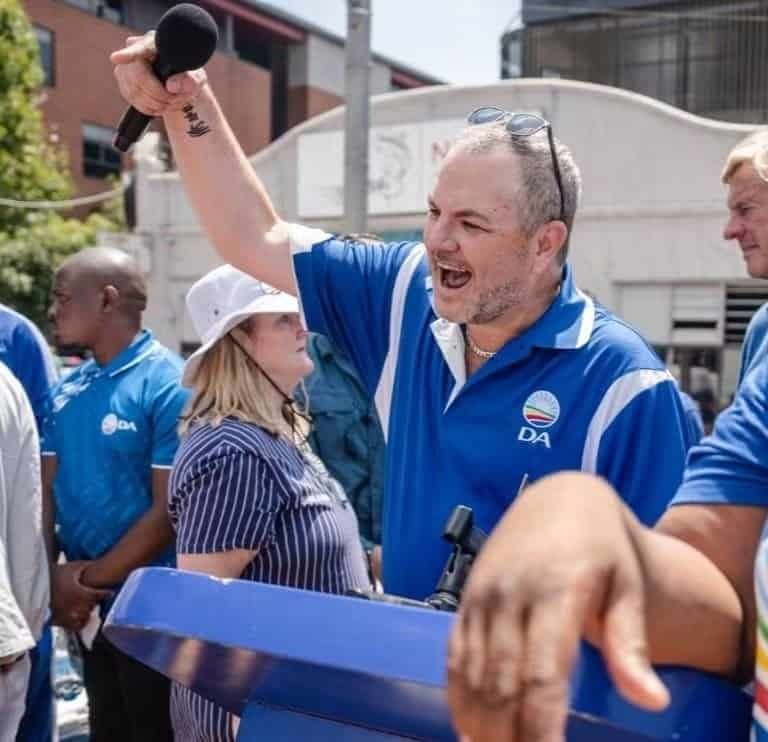
DA Urges South Africans to Challenge Electricity Pricing Policy Before 27 September Deadline
The Democratic Alliance (DA) has called on South Africans to use the public participation process…
Eskom’s Turnaround Is Real and Raises a Question Worth Asking
Eskom’s recent operational results deserve to be taken at face value, because they are genuinely…
Unbundling Eskom’s Grid Will Not, on Its Own, Close the Transmission Gap
The argument over Eskom’s transmission assets has settled into two camps. Eskom chair Mteto Nyati…
South Africa’s 2030 Electricity Cliff: Why Storage Alone Won’t Close the Gap
A sentence buried in South Africa’s own grid operator adequacy modelling deserves far more attention…
Extradited UK Businessman Michael Lomas Convicted After Plea Agreement in Eskom Kusile Corruption Case
The Gauteng High Court in Johannesburg has convicted British businessman Michael Lomas and businessman Hudson Kgomoeswana after the pair entered into plea and sentence agreements with the National Prosecuting Authority’s Investigating Directorate Against Corruption (IDAC) in connection with the R1.4 billion Kusile Power Station corruption case. The convictions, announced on Thursday, mark another milestone in one of South Africa’s most significant corruption prosecutions involving Eskom’s Kusile power station upgrade project in Mpumalanga. The two men pleaded guilty in terms of…
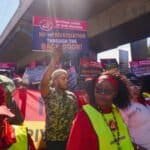
NUM Warns Against Eskom Restructuring as Ramaphosa Backs Independent Transmission Operator
The National Union of Mineworkers (NUM) has raised concerns over government’s plans to establish an independent Transmission System Operator (TSO), warning that the restructuring of Eskom could threaten jobs, weaken public ownership and pave the way for greater private sector involvement in South Africa’s electricity sector. The union’s response follows President Cyril Ramaphosa’s approval of the first phase report of the Eskom Restructuring Task Team (ERTT), which recommends creating an independent, state-owned TSO separate from Eskom. The Presidency has argued…
The Gas Bridge South Africa Can’t Afford
South Africa faces a real capacity cliff between 2029 and March 2030: roughly 9.5 GW of dispatchable capacity, driven mostly by coal retirements under Minimum Emission Standards and the expiry of the Cahora Bassa import contract. IRP 2025’s answer — around 6 GW of imported LNG-fired CCGT — solves the availability problem on paper, but converts it into an affordability and currency problem that current planning barely models. Worse, NERSA’s new electricity Trading Rules (Version 3, May 2026) create a…
Eskom Cannot Build Its Way Into Your City. The Court Just Confirmed It.
On the morning of 8 June 2026, a judgment landed quietly in the Gauteng Division of the High Court. No fanfare. No public broadcast. Just 18 pages from Judge Anthony Millar that, in my reading, redraw the legal boundaries of South Africa’s electricity sector more definitively than anything that has come before — including the Electricity Regulation Amendment Act. The case is City of Tshwane Metropolitan Municipality v National Energy Regulator of South Africa & Eskom Holdings SOC Limited [1].…
Two Grids, One Diagnostic: What Britain’s Constraint Crisis Reveals About South Africa’s 2030 Cliff
On 20 May 2026, Britain’s National Energy System Operator (NESO) issued a market notice restricting its ability to reverse power flows across interconnectors with France, Denmark, the Netherlands, and Belgium [2]. The restriction, effective immediately and in place until year-end, is the latest consequence of a structural problem that NESO’s own statutory reporting has been documenting for several years. According to the 2025 Annual Balancing Costs Report — published under Condition C9 of the NESO Electricity System Operator Licence —…
The Minister’s Determination and the Legislated Capacity Cliff: What South Africa’s Energy Planning Community Must Now Confront
A Determination That Redefines the 2030 Capacity Cliff from Planning Risk toLegal Certainty On 31 March 2025, the then Minister of Forestry, Fisheries and the Environment, Dr D.T. George, issued his determination on the exemption applications submitted by Eskom SOC (Pty) Ltd in terms of Section 59 of the National Environmental Management: Air Quality Act, 2004[1]. The decision received measured coverage in the energy press. It deserved considerably more. The determination did not merely resolve a regulatory dispute about particulate…
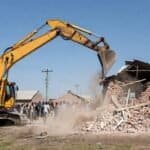
Thornville House Demolitions Illustrate the Systemic Devaluation of Black Lives
There is something deeply revealing about the speed and urgency with which a society attends to particular matters. Urgency is never neutral. It signals what is deemed important, what is valued, and, by implication, what can be discarded with little hesitation. In contemporary South Africa, one of the matters that has recently been addressed with remarkable speed is the demolition of houses in Thornville, just outside Pietermaritzburg. Homes constructed on land owned by an Eskom subsidiary, National Transmission Company of…

Rearranging Deck Chairs on a Sinking Grid: Why South Africa’s ERAA Is the Wrong Reform at the Worst Possible
Moment in Energy History-Part 2 South Africa has chosen to liberalise its electricity sector at the precise historical moment that the global energy order is being structurally rewritten—not by governments, not by regulators, but by the world’s most capitalised private corporations quietly building their own power stations and walking away from the grid entirely. The Electricity Regulation Amendment Act (ERAA) of 2024 is not merely a policy error of local dimension; it is a category mistake of global consequence, timed…
The Mirage of Reform: Why the Electricity Regulation Amendment Act is a Death Warrant for South Africa’s Energy Security
The South African state is currently engaged in a high-stakes gamble with the nation’s industrial backbone. Under the banner of “modernisation” and “liberalisation,” the Electricity Regulation Amendment Act (ERAA) is being touted as the panacea for the rolling blackouts which first appeared in 2008. In his 2026 State of the Nation Address, President Cyril Ramaphosa insisted that these reforms—specifically the unbundling of Eskom and the creation of an independent Transmission System Operator (TSO)—will proceed at all costs. In his budget…

South Africa is Deliberately Being De-Industrialised: What Must Be Done?
In the heart of South Africa’s Eastern Cape, where the hum of factories once promised progress and prosperity, silence now reigns. On August 16, 2025, Goodyear announced the closure of its tyre manufacturing plant in Gqeberha, condemning over 900 workers to unemployment in a province already staggering under a 49% jobless rate. This is no isolated tragedy; it is a symptom of a far deeper malaise—the deliberate de-industrialisation of our nation. As a fighter for economic justice and a member…