Special attention should be paid to young people as the key driver of future global production and consumption
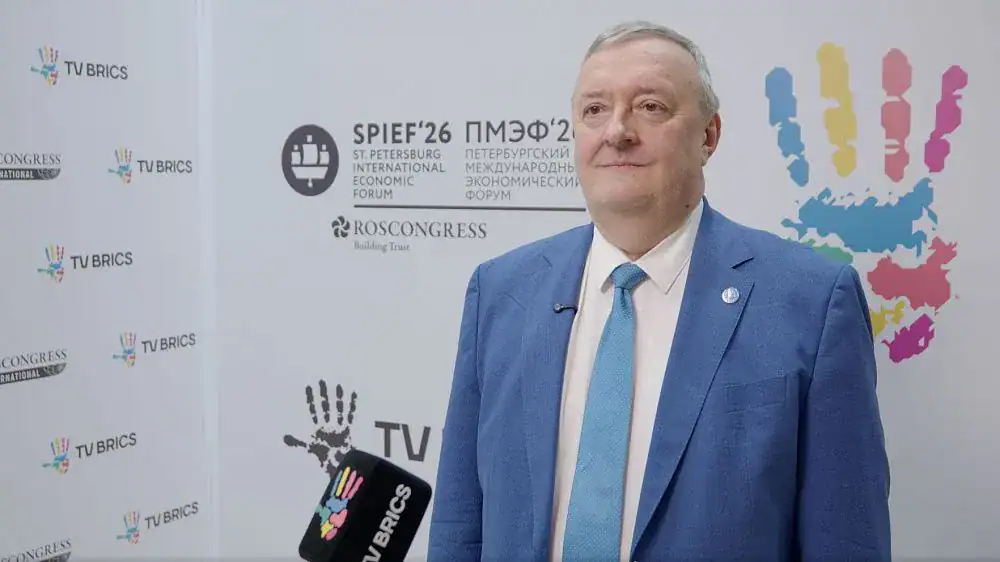
The population of the BRICS countries, which accounts for 42 per cent of the world’s population, is becoming younger, making it essential to focus on youth in the development of the agricultural sector, as they represent the future of global production and consumption. This view was expressed by Oleg Kobyakov, Director of the Liaison Office with the Russian Federation of the Food and Agriculture Organisation of the United Nations (FAO), in an exclusive interview at the TV BRICS studio in the Roscongress International Cooperation Area at the St. Petersburg International Economic Forum (SPIEF).
He noted that BRICS brings together some of the world’s most populous countries, located across all continents. The BRICS member states account for more than one-third of global gross domestic product (GDP) and a significant share of international trade, including agricultural products and related industries. The development of the global economy and trade will largely depend on cooperation with BRICS countries and within the grouping itself.
“How cooperation develops between the BRICS states and between this group of countries and other nations in such an area as the agri-food sector will, of course, largely determine the future development of the global economy and global trade. The principal direction here is undoubtedly ensuring the sustainable development of agri-food systems. This includes creating a regulatory framework, exchanging best practices, ensuring fair market access conditions for producers, and embracing the entire spectrum of innovations related to artificial intelligence and the application of scientific achievements at the nano-molecular level, including in plant and animal breeding. It also undoubtedly involves education and a strong focus on young people, because the agricultural sector is not solely the domain of older generations. It is increasingly becoming a field for the young. This is especially true in BRICS countries with youthful populations, including Brazil, South Africa, and India. Today’s schoolchildren and university students are the generation that will shape the landscape of global production and global consumption in the years ahead,” said Kobyakov.
He particularly emphasised the importance of developing and supporting farming, describing farmers as a pillar of social stability.
“In most countries around the world, a significant share of agricultural production is provided by farms. Farmers help maintain vibrant rural communities. Bringing modern rural areas in line with contemporary requirements – through the provision of infrastructure such as roads, hospitals, educational institutions, reliable broadband internet and financial opportunities – is a factor in the stable development of a state, strengthening its social foundations and improving the welfare of the entire population,” Kobyakov noted.
The 29th St. Petersburg International Economic Forum is taking place from 3 to 6 June. TV BRICS is serving as an information partner of the forum.
African Times published this article in partnership with International Media Network TV BRICS