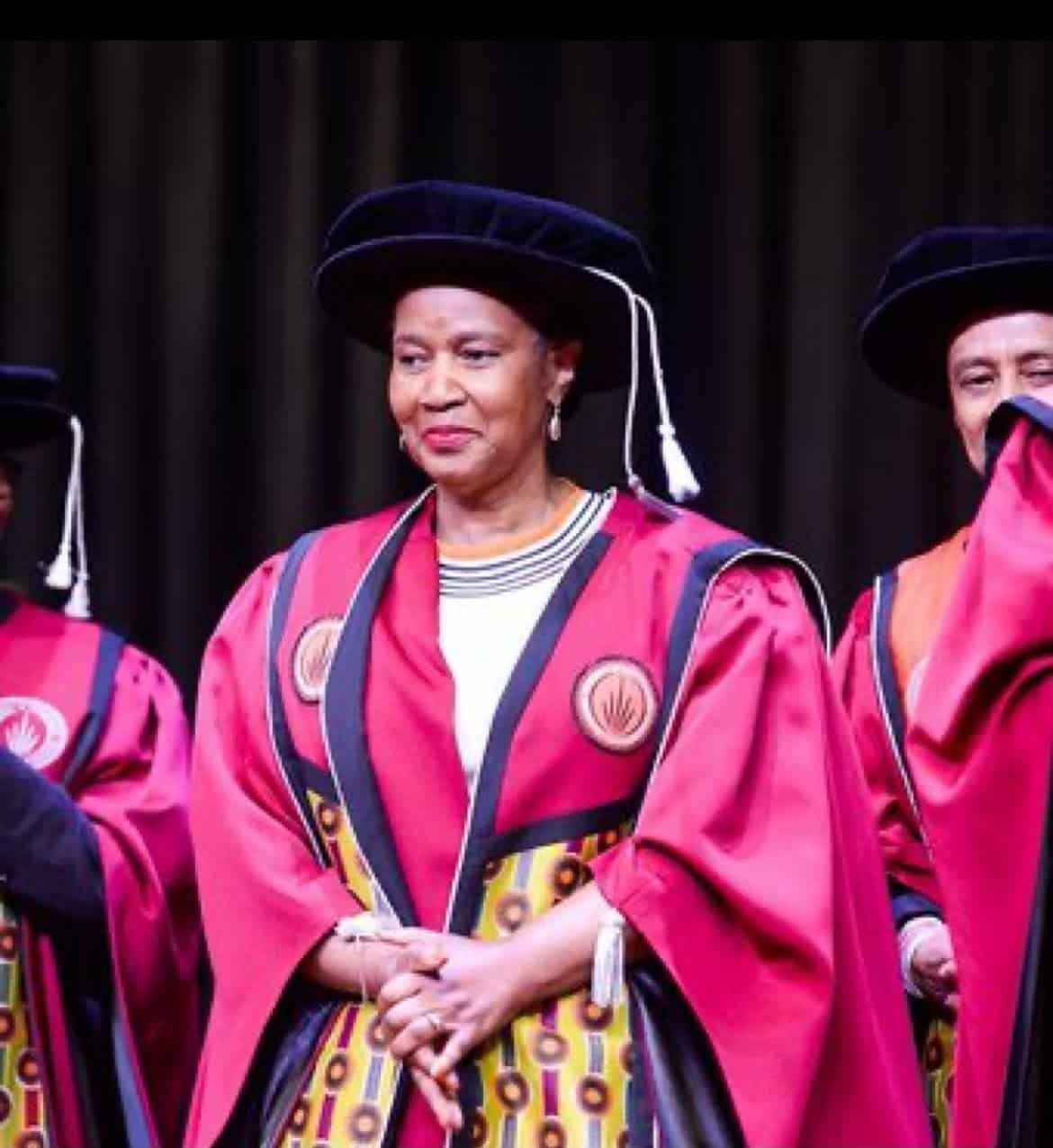
South Africa has lost one of its most prominent female political leaders following the death of former deputy president Phumzile Mlambo-Ngcuka at the age of 71.
The Presidency announced her passing on Friday evening, 20 November 2026, confirming that Acting President Paul Mashatile had received the news with shock and sadness.
Mlambo-Ngcuka made history in 2005 when she became South Africa’s first female deputy president, serving under former president Thabo Mbeki until September 2008.
She also served as the United Nations Under-Secretary-General and Executive Director of UN Women, where she led the global organisation responsible for advancing gender equality and the empowerment of women and girls.
The circumstances surrounding her death, including the cause of her passing, have not yet been made public.
In its announcement, the Presidency said Mashatile had conveyed his condolences to the Mlambo-Ngcuka family on behalf of President Cyril Ramaphosa, government and the people of South Africa.
“The Acting President will communicate further details after due consultation with the family,” the Presidency said.
The family has requested privacy during this difficult period while expressing appreciation for the messages of support and condolences received from South Africans and the international community.
Her death has also prompted tributes from political leaders, with the United Democratic Movement (UDM) describing her as a distinguished public servant whose contribution extended beyond South Africa’s borders.
In a statement issued on Friday, UDM president and Deputy Minister Bantu Holomisa said Mlambo-Ngcuka belonged to a generation of leaders who dedicated their lives to democracy, social transformation and the empowerment of women.
“Her service as Deputy President of South Africa, Minister of Minerals and Energy, and later as Executive Director of UN Women reflected her commitment to public service, gender equality and the advancement of opportunities for women and girls,” Holomisa said.
He said her contribution to the emancipation of women, both nationally and internationally, remained an important part of her legacy.
“She understood that the freedom of a nation could never be complete while women continued to face discrimination, economic exclusion and inequality,” he said.
Holomisa added that although political parties differed on governance and public policy, the contributions of those who had served the country and participated in its development should be acknowledged.
Mlambo-Ngcuka’s political career began before the country’s first democratic elections in 1994. She became a member of the first democratically elected Parliament and later held several senior government positions.
She was appointed Deputy Minister of Trade and Industry in 1996, a position she held until 1999, before being appointed Minister of Minerals and Energy in June 1999.
She served in the minerals and energy portfolio until June 2005, when she was appointed deputy president following the removal of Jacob Zuma from the position.
During her tenure as deputy president, she was involved in government programmes addressing poverty, economic development, education and HIV/AIDS.
After leaving government in 2008, she continued working in public and international affairs, particularly on issues affecting women and girls.
In August 2013, she was appointed Executive Director of UN Women and became a United Nations Under-Secretary-General. She served in the position until August 2021.
Her appointment placed her at the forefront of international efforts to advance women’s rights, promote women’s leadership and address gender-based discrimination and violence.
She also founded the Umlambo Foundation, an organisation focused on supporting education and leadership development.
Her death marks the end of a political and public service career that spanned government, civil society and international institutions.
South Africa is expected to receive further details from the Presidency following consultations with her family.
WHO WAS PHUMZILE MLAMBO-NGCUKA? A BRIEF BIOGRAPHY
Full name: Phumzile Mlambo-Ngcuka
Date of birth: 3 November 1955
Age at death: 71
Place of birth: Claremont, Durban, KwaZulu-Natal
Political affiliation: African National Congress (ANC)
Spouse: Bulelani Ngcuka
Education
- Matriculated at Ohlange High School in Inanda, KwaZulu-Natal.
- Obtained a Bachelor of Arts degree in Social Science and Education from the National University of Lesotho in 1980.
- Completed studies in Gender Policy and Planning at University College London in 1988.
- Obtained a Master of Philosophy degree in Educational Planning and Policy from the University of Cape Town in 2003.
- Later completed a PhD in Education and Technology at the University of Warwick in the United Kingdom.
Career and public service
- 1980–1981: Lecturer at Mpumalanga Teachers Training College.
- 1981–1983: Teacher at Ohlange High School.
- 1984–1989: Worked with the World Young Women’s Christian Association (YWCA) in Geneva, coordinating young women’s programmes.
- 1993–1994: Founder and managing director of Phumelela Services, a management consulting company.
- 1994: Became a member of South Africa’s first democratically elected Parliament.
- 1996–1999: Deputy Minister of Trade and Industry.
- 1999–2005: Minister of Minerals and Energy.
- 2005–2008: Deputy President of South Africa, becoming the first woman to occupy the position.
- 2013–2021: United Nations Under-Secretary-General and Executive Director of UN Women.
- 2022: Appointed Chancellor of the University of Johannesburg for a five-year term beginning in October 2022.
Legacy
Mlambo-Ngcuka’s public service career covered education, politics, economic development and international advocacy.
Her work focused particularly on women’s empowerment, gender equality, education and the advancement of women in leadership.
She also established the Umlambo Foundation, which supports education and leadership development.
Her appointment as South Africa’s first female deputy president in 2005 was a historic milestone in the country’s democratic political history.