Initiatives in the energy, agriculture, trade and infrastructure sectors were presented at the Russia–Africa Summit
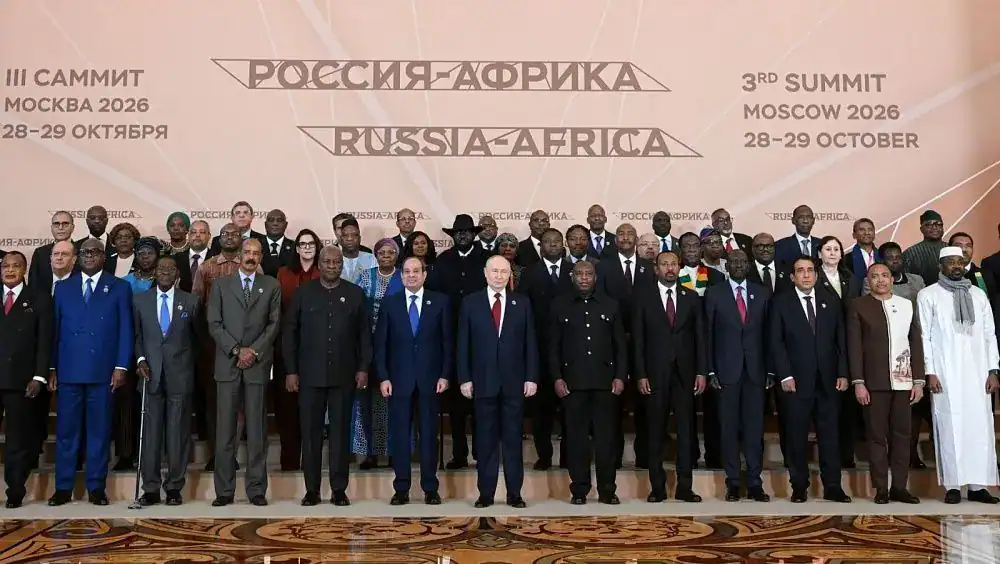
African leaders have proposed that Russia expand investment in industry, set up joint production ventures, develop energy and transport projects, and cooperate in the field of artificial intelligence. They made this statement at the plenary session of the third Russia–Africa Summit, which is taking place at the Grand Kremlin Palace in Moscow, chaired by Russian President Vladimir Putin and the President of Burundi and Chairperson of the African Union, Evariste Ndayishimiye.
Russian President Vladimir Putin expressed his readiness to expand economic and technological cooperation with African states. According to him, Russian companies are already involved in projects in the energy sector, the mining industry, manufacturing and logistics, engaging local contractors and transferring technology.
“Russian businesses consistently demonstrate integrity, respect and good faith in their cooperation with African partners. They work on an equal footing with their partners […] they invest and reinvest their earnings in the development of your national economies. They share advanced technologies and expertise, make extensive use of local subcontractors, establish new production facilities and create jobs,” Putin emphasised, according to the Kremlin’s website.
He reported that Russia’s trade turnover with African states last year exceeded US$27 billion, having increased by one and a half times compared with the previous summit. The rouble accounts for 85 per cent of Russian-African commercial transactions.
The President of Burundi and Chairperson of the African Union, Evariste Ndayishimiye, called on Russian enterprises to invest more actively in African industry and to transfer technology and expertise to local companies. According to him, the continent’s nations intend to develop the processing of raw materials, modernise agriculture and establish their own production chains.
“Africa will not be content with exporting raw materials and importing finished products. We must develop our own industrial potential, modernise our agriculture, strengthen our energy infrastructure and logistics routes, and invest more in research and technological development,” he said.
Ndayishimiye proposed focusing future cooperation on industrial investment, infrastructure projects, education and technology transfer. He emphasised that the new action plan must include specific projects, sources of funding and mechanisms for evaluating results.
Ethiopian Prime Minister Abiy Ahmed announced that the country was working jointly with Russia to build its first nuclear power station. He also expressed an interest in the application of nuclear technologies for the treatment of cancer and in developing cooperation in the field of artificial intelligence.
Abiy Ahmed invited Russian universities to collaborate with Ethiopian scientific and educational organisations working in the field of artificial intelligence. He proposed that Russian companies expand their manufacturing operations in Ethiopia’s special economic zones and called for the simplification of mutual payments by reducing the cost of financial transactions.
Egyptian President Abdel Fattah El-Sisi advocated the creation of strategic transport corridors and logistics zones, an increase in intra-regional trade in Africa, and the development of links between electricity grids. Among other priorities, he cited support for agriculture and the alleviation of the debt burden on African states.
The Egyptian leader emphasised that the current summit should ensure a transition from assessing the results achieved to the practical implementation of new initiatives. In his view, the Russian-African partnership must take into account the priorities of the continent’s nations and be mutually beneficial.
Following the third Russia–Africa Summit, it is planned to adopt a final declaration, the Partnership Forum Action Plan for 2027–2029, and a separate declaration on cooperation in the field of civilian applications of artificial intelligence. The signing of intergovernmental and inter-agency agreements is also expected.
The plenary session is being attended by representatives from around 50 African states, including heads of state and government, as well as leaders of regional organisations.
African Times published this article in partnership with International Media Network TV BRICS