At a time when the global economy is grappling with uncertainty, shifting alliances and uneven growth, a different narrative is steadily gaining ground — one that places Africa not at the margins, but at the centre of the world’s economic future.
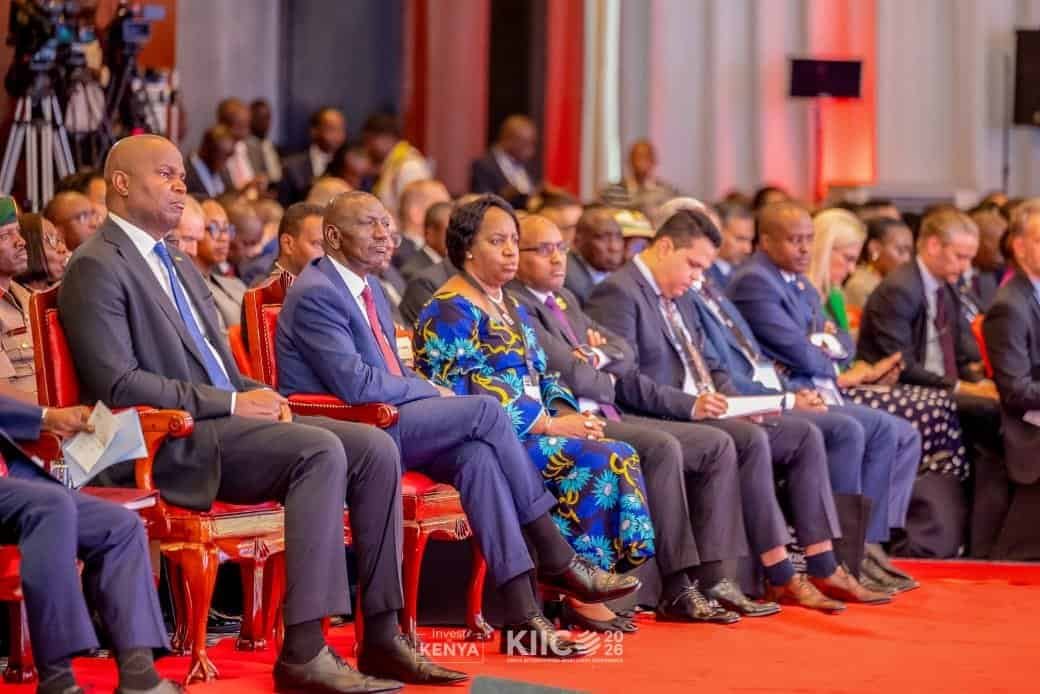
That vision came sharply into focus in Nairobi on Wednesday, where Daniel Chapo of Mozambique and William Ruto of Kenya used the Fourth Kenya International Investment Conference (KIICO) 2026 to deliver a coordinated message: Africa must move beyond potential and into performance.
A continent at a crossroads
For decades, Africa has been described in terms of promise — rich in natural resources, endowed with vast agricultural land and home to the world’s youngest population. Yet, as Chapo made clear, the defining challenge of this generation is no longer identifying opportunity, but unlocking it.
Standing before investors and policymakers, he framed the moment in stark terms: Africa’s future will not be determined by what it has, but by what it does with it.
“Africa is the continent of the future,” he said. “But the real test is turning that future into reality.”
His remarks reflected a growing impatience among African leaders with narratives that celebrate potential without delivering progress. The emphasis is shifting — from extraction to value addition, from dependency to self-determination, and from fragmented markets to continental integration.
The AfCFTA factor
Central to this transformation is the African Continental Free Trade Area (AfCFTA), a landmark agreement that is quietly reshaping the economic geography of the continent.
With a combined market of 1.4 billion people and a GDP estimated at $3.7 trillion, AfCFTA represents one of the most ambitious trade projects in modern history. But, as both Chapo and Ruto stressed, its success will depend on execution — on infrastructure, logistics, regulatory alignment and, crucially, investment.
Ruto, positioning Kenya as a gateway to this emerging market, made a compelling case to global capital: Africa is no longer a collection of isolated economies, but a single, increasingly integrated marketplace.
Kenya’s pitch: stability in an unstable world
In a world marked by volatility, Kenya is presenting itself as a rare constant.
Ruto highlighted a series of economic gains, rising foreign direct investment, stable inflation, robust foreign exchange reserves and a resurgent capital market, as evidence that the country offers a predictable and investor-friendly environment.
But beyond the numbers lies a broader strategy: to turn Kenya into a regional hub for finance, technology, manufacturing and logistics, connecting East and Central Africa to global markets.
“We offer stability, predictability and openness,” Ruto told investors, a message calibrated for a world where such qualities are increasingly scarce.
From raw materials to industrial power
If there was one theme that united both leaders, it was the urgency of industrialisation.
For too long, African economies have relied on exporting raw materials, capturing only a fraction of the value generated along global supply chains. Chapo’s intervention was unequivocal: that model must end.
“This is the moment to move decisively beyond the export of raw materials,” he said, calling for a shift towards manufacturing, innovation and value creation.
The implications are profound. Industrialisation is not only about economic growth — it is about jobs, skills, resilience and sovereignty. For a continent with a rapidly expanding youth population, the stakes could not be higher.
Mozambique’s strategic proposition
In this evolving landscape, Mozambique is positioning itself as more than a resource-rich nation, as a strategic partner in Africa’s transformation.
Chapo outlined a vision anchored in agriculture, energy, digital innovation and the blue economy, underpinned by the country’s unique geographic advantage. With key logistics corridors linking landlocked countries to the Indian Ocean, Mozambique has the potential to become a critical artery of regional trade.
Its energy mix, spanning hydropower, natural gas and renewables, adds another layer of strategic relevance, particularly as the continent seeks to balance industrial growth with sustainability.
The infrastructure imperative
Both leaders were clear: unlocking Africa’s potential will require massive investment in infrastructure.
From roads and railways to ports, energy systems and water security, the scale of the challenge is immense — and so too is the opportunity. Kenya alone estimates it will need around $40 billion to deliver its national transformation agenda, including plans to triple energy generation and construct dozens of mega dams.
For investors, this represents not just a development story, but a commercial one, a pipeline of bankable projects across sectors.
A new partnership model
Underlying the rhetoric in Nairobi was a call for a redefined relationship between Africa and the rest of the world.
No longer content with being a passive recipient of capital, African leaders are seeking partnerships based on mutual benefit, shared risk and long-term value creation.
Chapo spoke of the need for “patient capital” — investment that understands the continent’s realities and is willing to engage beyond short-term returns. Ruto, meanwhile, emphasised reforms aimed at making that engagement easier, from tax incentives to digitalised investment processes.
Africa’s time — but not by default
There is a growing consensus that Africa’s moment has arrived. Demographics, urbanisation, digital adoption and market integration all point in the same direction.
Yet, as the discussions in Nairobi made clear, this future is not guaranteed.
It will depend on political will, policy consistency, regional cooperation and the ability to translate ambition into execution. It will require governments that can build trust, institutions that can deliver, and partnerships that can endure.
In that sense, the message from Nairobi was both optimistic and cautionary.
Africa may indeed be the future engine of global growth, but only if it chooses to be.
As Chapo put it in his closing remarks, with a clarity that captured the mood of the conference: “The future of the global economy lies in Africa — but it will be defined by our capacity to act. The time for Africa is now.”