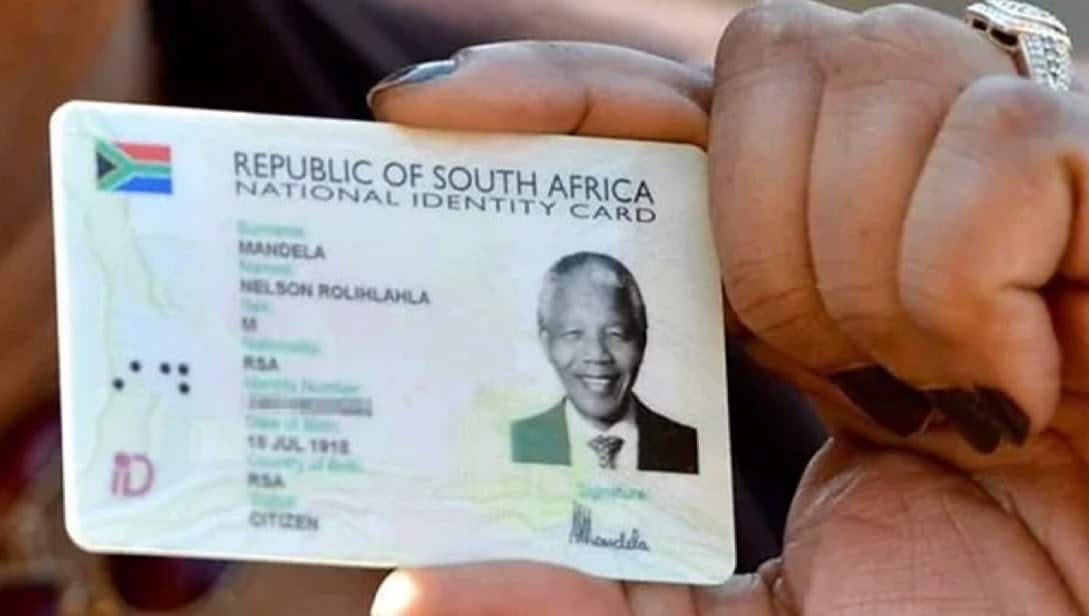
Home Affairs Minister Dr Leon Schreiber has intensified calls for South Africans to replace their green barcoded identity books with Smart ID cards, warning that the ageing document has become a prime target for fraudsters and criminal syndicates.
Speaking amid a broader government crackdown on immigration fraud and undocumented migration, Schreiber said the green ID book’s security weaknesses have allowed identity thieves to manipulate documents and commit various forms of fraud.
“The green ID book is far less secure than the Smart ID card and has increasingly become vulnerable to criminal abuse,” Schreiber said as Home Affairs accelerates efforts to modernise the country’s identification system. The department is planning a full transition to a digital and biometric identity system as part of wider reforms aimed at strengthening border security and curbing corruption.
The minister’s renewed appeal comes as the Department of Home Affairs prepares to cancel more than 2,000 study visas fraudulently issued through corruption networks operating within the department.
Addressing an Inter-Ministerial Committee on Migration briefing in Pretoria, Schreiber confirmed that the visas were identified during a Special Investigating Unit (SIU) investigation into systemic corruption within Home Affairs.
“The next step is to cancel a number of those visas. We’re starting with 2,000 study visas which were affected,” Schreiber said.
The SIU investigation uncovered extensive corruption spanning nearly two decades, with officials allegedly exploiting manual visa processing systems to issue permits and visas illegally in exchange for bribes. Investigators have traced more than R181 million in suspicious financial benefits linked to fraudulent visa applications.
The latest action forms part of the government’s broader response to mounting public concern over illegal immigration, which has become one of the country’s most contentious political issues.
While there is no official figure for the number of undocumented foreigners living in South Africa, government estimates, and migration studies suggest the largest migrant communities originate from Zimbabwe, Mozambique, Lesotho, Malawi and Nigeria. The absence of accurate records has fuelled public frustration and intensified calls for stronger immigration enforcement.
Home Affairs recently revealed that more than 109,000 undocumented foreign nationals were deported over the past two financial years, reflecting a significant increase in immigration enforcement efforts.
Public anger over illegal immigration has also driven a wave of anti-immigration demonstrations across the country. The movement known as March and March has gained significant momentum in recent months, organising protests demanding the deportation of undocumented migrants and stricter border controls. The group has announced plans for further demonstrations later this month.
Many supporters of the protests argue that illegal immigration contributes to unemployment, crime and pressure on public services. However, experts and government officials have cautioned against blaming entire nationalities for criminal activity, warning that such claims risk fuelling xenophobia.
Government leaders have urged South Africans to express their concerns peacefully and within the law. President Cyril Ramaphosa has similarly acknowledged public concerns about undocumented migration while condemning violence and vigilantism directed at foreign nationals.
Ramaphosa said undocumented migration places pressure on housing, healthcare and municipal services but stressed that immigration laws must be enforced by the state and not by community groups. He warned that attacks on foreign nationals were criminal and would not be tolerated.
Government’s response now centres on tightening border controls, rooting out corruption within Home Affairs and replacing vulnerable identity and immigration systems with secure digital alternatives.
For Schreiber, the widespread adoption of Smart ID cards represents a crucial part of that strategy.
Officials believe a modern biometric identity system will make it significantly harder for criminal syndicates to exploit loopholes, commit identity fraud or obtain documents illegally as South Africa seeks to restore confidence in its immigration and identification systems.