The project will help increase yields
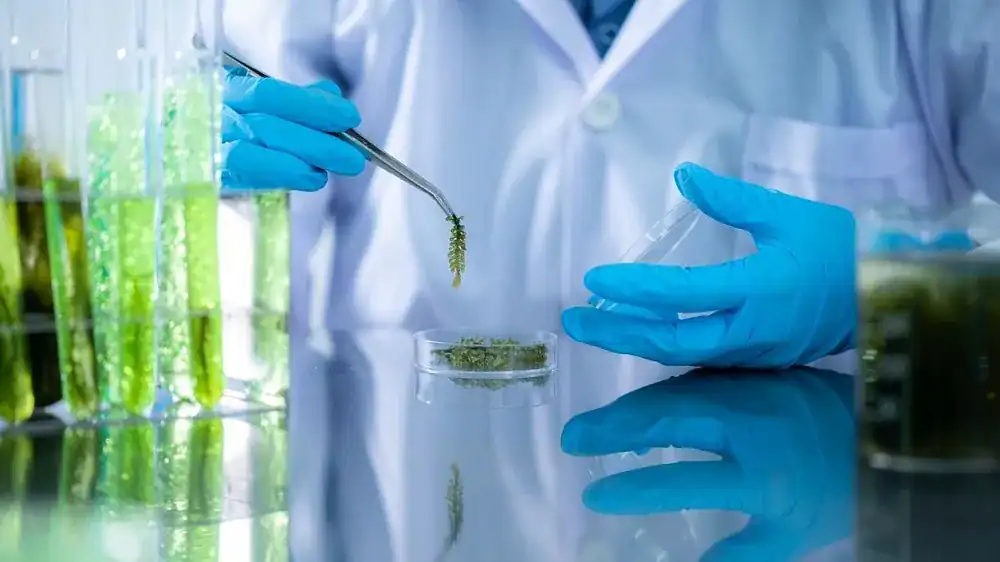
Indonesia is building an international centre for tropical seaweed research in the province of West Nusa Tenggara. This was announced by Deputy Minister of Higher Education, Science, and Technology Stella Christie, according to ANTARA.
The complex will include research facilities, dormitories for international scientists and a pharmacy.
“Our major focus in recent months has been to position Indonesia as the world’s seaweed centre, and that must start now. We are establishing an international-standard research centre with global networks,” she emphasised.
Ekas Bay, where local residents have long been engaged in aquaculture and commercial fishing, has been chosen for the construction. The new centre is expected to increase yields and enhance seaweed quality through the use of high-grade seedlings developed on a scientific basis.
Indonesia remains the world’s largest producer of tropical seaweed, accounting for about 75 per cent of the global volume, according to the Deputy Minister. At the same time, the global industry for such products is estimated at approximately US$12 billion annually.
Researchers across BRICS countries are also advancing oceanological studies. Specialists from the A. O. Kovalevsky Institute of Southern Seas Biology and the Southern Scientific Centre of the Russian Academy of Sciences (SSC RAS) studied water samples from the Azov-Black Sea basin and found that algae help restore the nitrogen-phosphorus balance in the marine environment. They formulated a rule: whenever the normal balance of nutrients in the water is disturbed in the region, the activity of photosynthetic organisms is always aimed at restoring this balance. This was reported by the SSC RAS website.
At an international exhibition and summit on seaweed in India, experts concluded that due to growth in domestic consumption, expanded industrial applications, and a favourable political environment, the country could become one of the leading players in the global seaweed market within two decades, according to IANS, a partner of TV BRICS.
Meanwhile, Brazil announced that the state would join the United Nations global initiative on seaweed development. The Ministry of Fisheries and Aquaculture highlighted that seaweed cultivation has great potential and contributes to the preservation of biodiversity, reports the Brazilian government’s website.
African Times published this article in partnership with International Media Network TV BRICS