A meeting from a series of closed strategic sessions of the media network, bringing together representatives of diplomacy, business and media
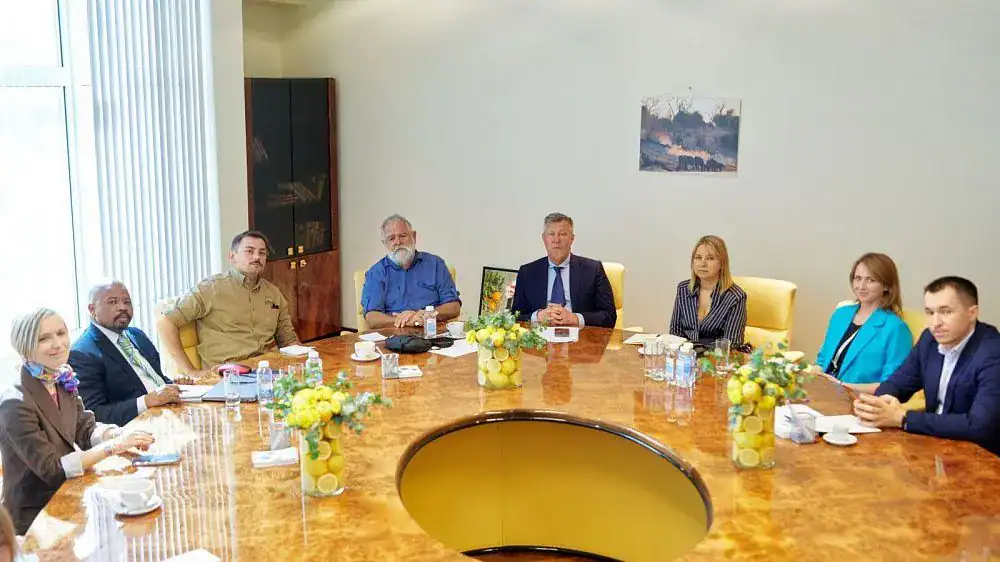
At the headquarters of TV BRICS in Moscow, a round table entitled “Russia and South Africa: Developing Multidisciplinary Cooperation in Economics, Culture, and Tourism” was held. The event was part of a series of closed conferences by TV BRICS dedicated to current issues and development prospects of sectoral markets in the Global South space. It brought together representatives of the diplomatic corps, business, media and the expert community to discuss practical approaches to strengthening humanitarian, cultural and trade-economic ties between the two countries in the context of the expanding BRICS+ agenda.
With a welcoming address to those present, Sibusiso Shezi, Consul of the Embassy of the Republic of South Africa in the Russian Federation, spoke. He emphasised that the media play a special role in diplomacy: the media shape understanding of the world, influence public opinion and are capable of uniting entire nations.
The diplomat also noted that bilateral relations between South Africa and Russia open up numerous opportunities to strengthen cooperation across various sectors, including trade, economy and tourism.
“South African fruits firmly established themselves on tables of Russian families. […] South Africa is further looking at expanding the scope of our bilateral trade by exploring other potential sectors. At the core of our bilateral relations and cooperation is also an important factor of tourism as a driver of economic growth and strengthening the South Africa-Russia ties” – Sibusiso Shezi, Representative of the Embassy of the Republic of South Africa in the Russian Federation
Aleksandra Burman, Director of the International Cooperation Department of TV BRICS, noted the importance of developing cooperation with the African region and stressed that South Africa has remained one of the key partners of the International Media Network in Africa for many years. According to her, cooperation with national media, educational and cultural organisations, including in the format of such round tables, contributes to strengthening humanitarian and information dialogue. In this context, media diplomacy and humanitarian cooperation are becoming important tools for developing economic, business and intergovernmental ties between BRICS countries and the Global South.
The main topic of the economic part of the discussion was cooperation in agriculture. Mikhail Fateev, Head of Food and Agriculture at the Russia-South Africa Business Council, presented trade statistics for 2025, according to which shipments of fresh fruit from South Africa to the Russian market accounted for 90 per cent of total South African exports to Russia.
“Cooperation between Russia and South Africa in food security occupies a leading position in overall economic relations between our countries. Volume of agricultural products in the trade turnover is well over 50 per cent. According to the trade statistics of 2025 supplies of fresh fruits from South Africa to the Russian market accounted for 90 per cent of the total South African exports to Russia. […] Fruits from South Africa arrive predominantly om direct refer vessels to St. Petersburg. […] It brought about 6 thousand tons of vitamins rich fresh lemons, grapefruits, oranges, mandarins, pears and other fruits from South Africa to Russian people” – Mikhail Fateev, Head of Food and Agriculture at the Russia-South Africa Business Council.
According to Fateev, the fruit industry and agriculture are intended to become a core around which other forms of economic and trade relations can be built. He noted that fertilisers from Russia are now available in South Africa, expanding opportunities for local farmers. Farmers also need affordable fuel, and Russia is one of the world’s leading suppliers of petroleum products. Packaging materials, cardboard, wooden pallets and transport can also meet the needs of farmers in South Africa.
The Chief Executive Officer of one of the leading suppliers of South African citrus fruits to the Russian market, Barend Vorster, noted that South Africa has been exporting citrus fruits to Russia since the late 1990s. “South Africa see Russia as a very important market for citrus, for the palm fruit apples. We started with the avocados nowadays, and we are very thankful for the opportunity, for the bilateral agreements that gets in place to make the trade agreements smooth,” he said.
The Chief Operating Officer of the Citrus Growers’ Association of Southern Africa (CGA), Paul Hardman, reported that the annual turnover of South Africa’s citrus industry exceeds US$2.47 billion. If only BRICS countries are considered, trade with Russia amounts to approximately US$246 million. According to Hardman, South Africa has now become the world’s largest exporter of citrus fruits. For several years it held second place, but in 2025 it rose to the top position.
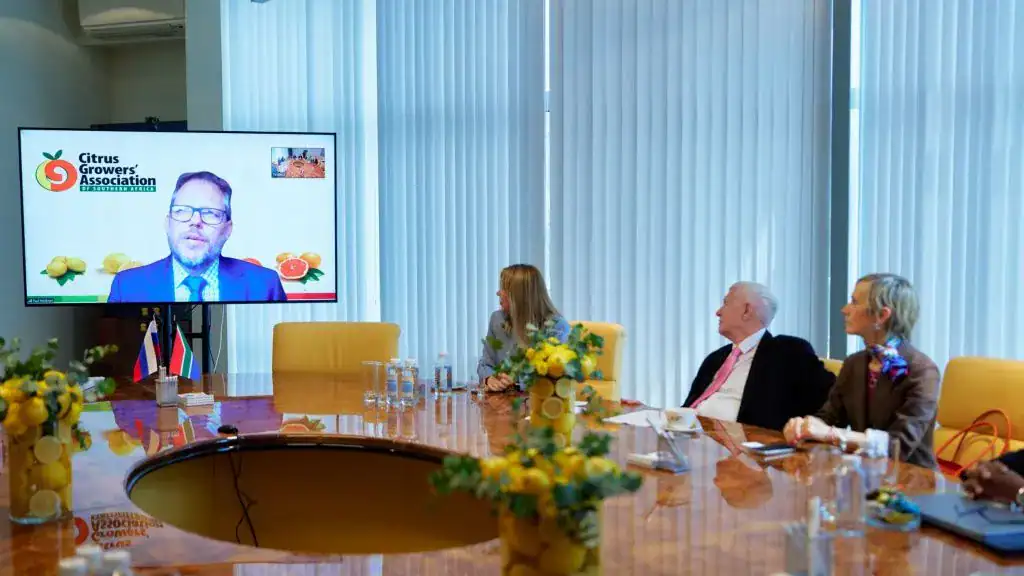
“Importantly for the citrus industry, eight of the world’s top fifteen citrus-producing countries are now members or partners within BRICS+, including China, Brazil, India, Egypt, Nigeria, Iran, Indonesia, and South Africa. […] South Africa is uniquely positioned within this framework as the leading citrus exporter in the Southern Hemisphere among BRICS+ countries. This creates strong opportunities to complement Northern Hemisphere production cycles by supplying high-quality citrus during their off-season periods,” Hardman said.
Hardman emphasised that Russia is a strategically important market, particularly due to the fact that South Africa can supply exactly those fruits that are in demand there.
He also noted that South Africa is seeing an expansion of supplies to India: last year trade volume amounted to US$54 million. China is also a significant market, with trade volume of US$97 million. According to him, these figures demonstrate the importance of strengthening agricultural cooperation within BRICS+. He added that the industry welcomes China’s introduction of duty-free trade for 53 African countries from 1 May. Russia’s tariffs, in his assessment, are not as significant compared to other countries. Hardman also reported that around 140,000 people in South Africa are employed on farms, in auxiliary facilities and across the supply chain.
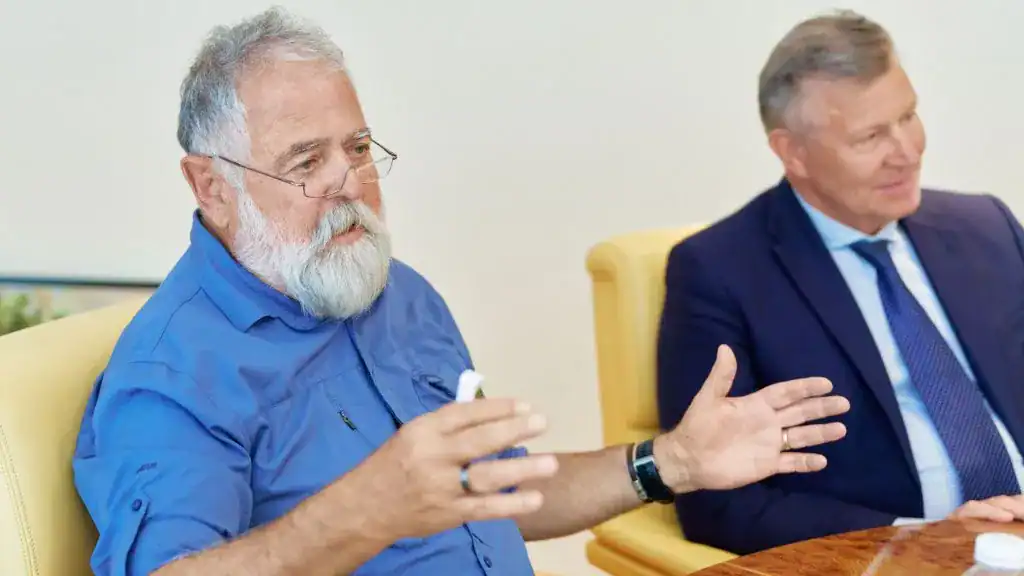
All experts note the potential for growth in cooperation between South Africa and Russia in other areas as well. Thus, the Pavel Yakovlev, Chairman of the Russian Chapter of the Russia-South Africa Business Council, mentioned a project by South African director Johan Badenhorst to undertake a large-scale expedition across Russian cities – from Murmansk to Magadan from 30 April to 10 July – which will result in a multi-episode documentary film.
“Of course, we want cultural exchange to support our business relationship because, first of all, the main aim of the Business Council is to arrange face-to-face meetings between people from both sides to discuss different aspects of business and culture, whether they are journalists, travellers or citrus exporters. So, I think this is a very good idea because the final result will be a multi-part film, perhaps consisting of 10, 13 or 15 episodes. The film should be very interesting for both sides, as it will give our South African partners an opportunity to see things from a new perspective” – Pavel Yakovlev, Chairman of the Russian Chapter of the Russia-South Africa Business Council.
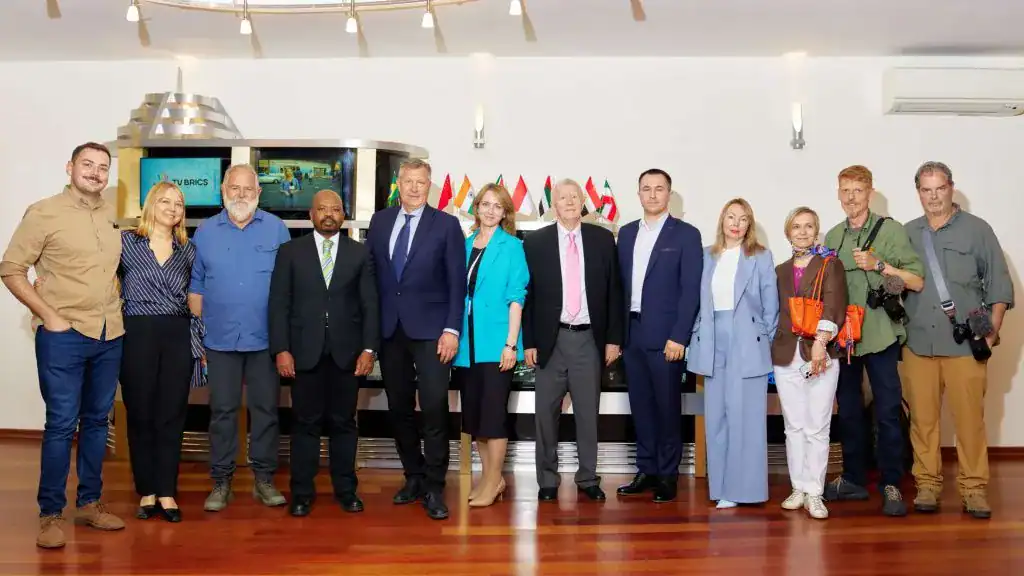
The series of closed strategic sessions by TV BRICS is becoming a new dialogue platform for sectoral experts and analysts. The media network has a broad partner network in the fields of culture, education, business and the GR sector, which allows it to prepare expert analytical materials on the socio-economic development of BRICS+ countries. These data are then used by leading media outlets in different countries for information exchange and the formation of a unified analytical agenda.
Previously, at the TV BRICS International Media Network, the first dialogue between Russian pharmaceutical manufacturers and industry experts was held, dedicated to prospects for entering the markets of BRICS+ countries, where attention was paid not only to analytics and logistics, but also to the role of media diplomacy in promoting sectoral cooperation, forming a unified information space and new standards for assessing pharmaceutical development in the Global South.
African Times published this article in partnership with International Media Network TV BRICS