Experts called for stronger international coordination and cooperation in addressing global health threats
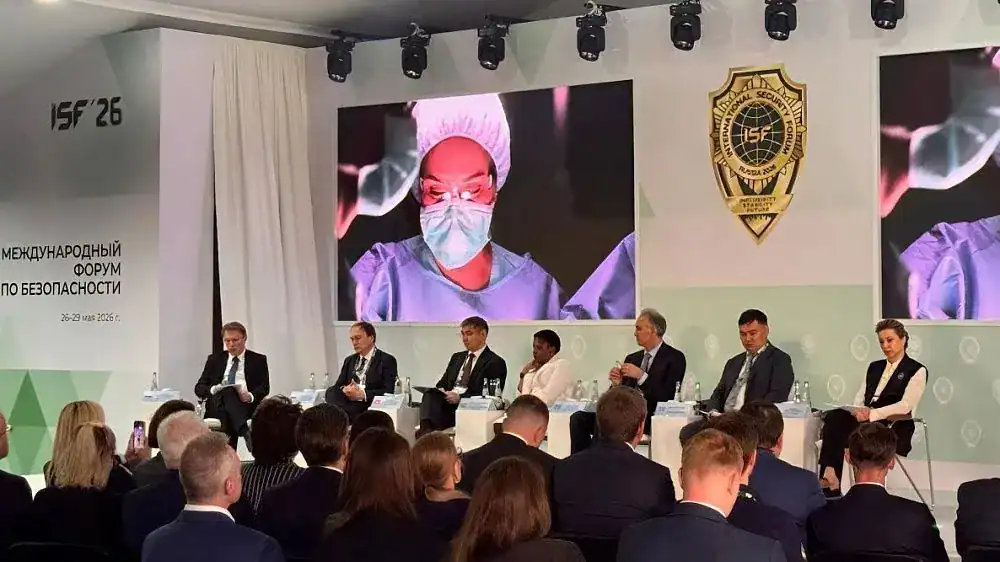
The International Security Forum, held under the auspices of the Security Council of Russia, has opened in the Moscow Region. TV BRICS is serving as the international media partner of the event.
More than 140 foreign delegations from over 120 countries are taking part in the forum, including nations from Africa, all member states of the Shanghai Cooperation Organisation (SCO), BRICS, the Association of Southeast Asian Nations (ASEAN), as well as most countries of the Middle East and Latin America. Among the participants are secretaries of security councils, heads of intelligence agencies, representatives of international organisations, and experts.
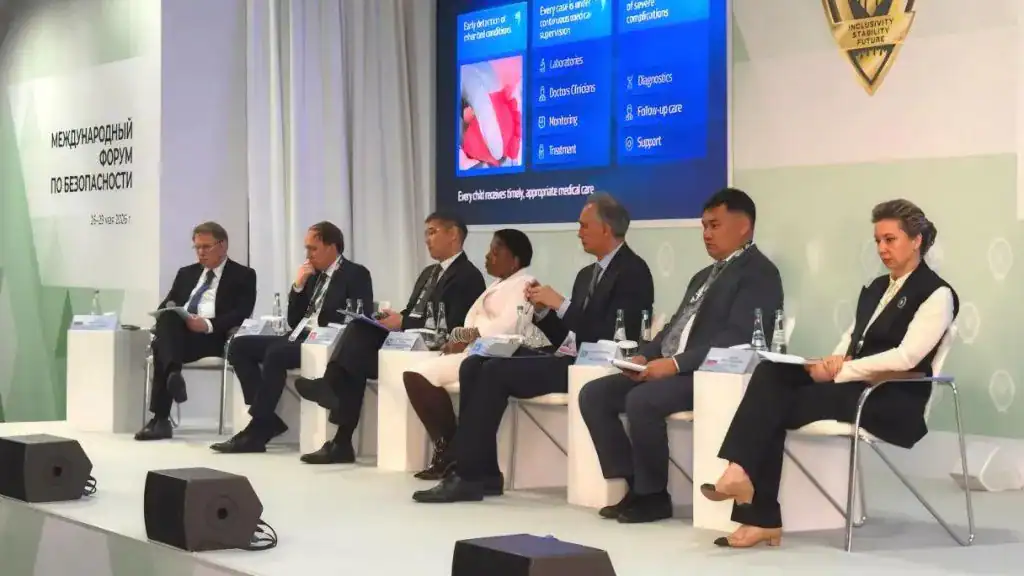
On the first day of the forum, a round table entitled “The Power of Cooperation for the Health of Nations”, organised by the Russian Ministry of Health, took place. Russian Minister of Health Mikhail Murashko delivered a keynote address.
“We are speaking about the health of our population, because this is what makes your state sustainable and consolidated. […] There are no boundaries, nor passports, nor flags for infections. So we have to cooperate and to implement the best practices. A strong national health system contributes to global security. And efficient international cooperation helps each country to maintain stability in the face of global challenges. […] Health is a category which influences trust, security and demographic development. And as to the security, it’s based on a strong national system, national security cooperation between different strong systems and security at a global level” – Mikhail Murashko, Russian Minister of Health.
The Minister also outlined the key priorities for the development of Russian healthcare through to 2030, including strengthening primary healthcare, preventing non-communicable diseases, advancing digital transformation, and implementing personnel policies that have increased the number of medical professionals.
Murashko also noted that Russia possesses its own reserve of vaccine technologies and is capable of developing new vaccines, including those targeting various strains, among them Ebola. According to the minister, epidemics, biological risks, non-communicable diseases, workforce shortages, and cyber threats are linked not only to the healthcare system but also to the country’s national security.
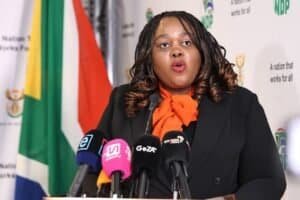
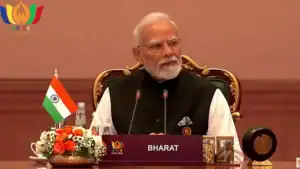
In a comment to the TV BRICS International Media Network, the Official Representative of the Russian Foreign Ministry, Maria Zakharova, highlighted the importance of coordination and the development of common BRICS positions on creating a secure information space in the context of ongoing global digitalisation.
“Cooperation on international information security is one of the central items on the BRICS agenda. It has been developing for a long time, since 2013. A dedicated working group was established then, and much has been achieved since. For example, the parties have united and developed common approaches to this issue. We are talking about building a universal system of international information security based on the principles of the sovereign equality of states, non-interference in internal affairs, and recognition of the central role of the United Nations. […] In 2024, the BRICS register of points of contact was launched. This mechanism enables computer incident response teams to establish and maintain communication promptly in order to identify the sources and circumstances of malicious activity. […] Work is also under way to coordinate responses to computer incidents, combat cybercrime, and strengthen cooperation among the academic community and experts” – Maria Zakharova, Director of the Information and Press Department of the Ministry of Foreign Affairs of the Russian Federation
Practical experience of international coordination in healthcare was presented by South African Minister in the Presidency Khumbudzo Phophi Silence Ntshavheni. She stressed that epidemic response, cooperation, and coordination have become an integral part of international security in the post-pandemic era. During the COVID-19 pandemic, South Africa served as the African Union lead state for coordinating the response to the outbreak.
“The pace with which COVID-19 vaccines were developed showed that with cooperation, it is possible to resolve endemic diseases. Therefore, with cooperation, it should also be possible to eradicate epidemics such as malaria, tuberculosis, cholera, HIV, AIDS, Ebola, and other regional epidemics. […] South Africa is driving several initiatives, such as a partnership to set up Africa’s first end-to-end multivaccine production plant that will produce oral cholera vaccines and later expand to include vaccines for polio, pneumonia, and meningitis. Once fully operational, the facility will have a production capacity of up to 40 million doses annually” – Khumbudzo Phophi Silence Ntshavheni, South African Minister in the Presidency
The importance of international cooperation was also emphasised by the World Health Organisation (WHO) Representative in Russia, Batyr Berdyklychev. He recalled that WHO does not possess supranational powers: each country independently determines its national healthcare policy. The organisation’s role is to bring together international experience, facilitate information exchange, coordinate responses, and develop standards and recommendations. All decisions are taken by the member states.
“International cooperation can help detect risks quicker, also exchange the results of research and coordinate the response measures. Without this coordination, the consequences of the global crisis could be heavier. […] We are witnessing the world becoming more and more interconnected and interdependent. Every outbreak of infection in one region can be a potential threat globally. The experience shows us that the resilience of healthcare systems affects economic stability, the national security of states and public trust” – Batyr Berdyklychev, World Health Organisation Representative in Russia
The forum will continue until 29 May.
African Times published this article in partnership with International Media Network TV BRICS