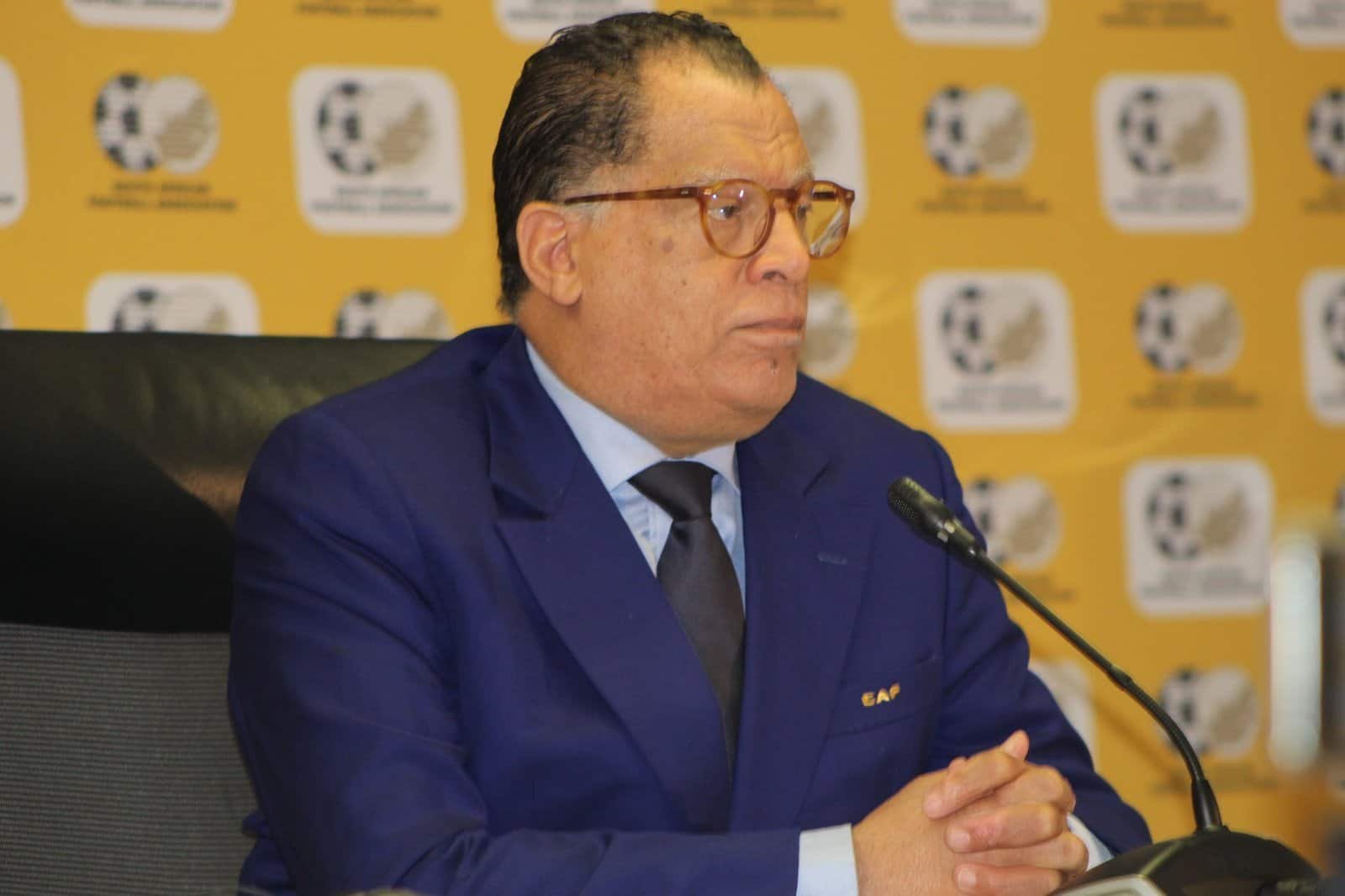
Dr Danny Jordaan has secured his fourth term as president of the South African Football Association (SAFA), defeating businessman and AmaZulu chairman Sandile Zungu in a decisive vote preceded by a dramatic dispute over the exclusion of a KwaZulu-Natal region from the elective congress.
Jordaan won 157 votes to Zungu’s 82, giving the incumbent a commanding 75-vote majority and a fresh mandate to lead South African football.
But the election was conducted against the backdrop of deepening tensions within SAFA, with the Harry Gwala Region in KwaZulu-Natal barred from participating in the congress after the association’s national executive committee (NEC) took a decision on the eve of the vote.
In a letter dated 11 September, SAFA chief executive and secretary-general Lydia Monyepao informed the Harry Gwala Regional Executive Committee (REC) that the NEC had resolved that the region would not be accredited for Saturday’s congress at the Vodacom World Dome in Midrand.
The letter, addressed to the regional executive committee, instructed the region to ensure that its delegates were neither presented for accreditation nor allowed to participate in the proceedings.
The decision followed an extraordinary NEC meeting held at the Premier Hotel in Midrand on Friday morning.
It cast a long shadow over an election that had already exposed sharp divisions over SAFA’s leadership and direction.
When the ballots were eventually counted, however, Jordaan had prevailed comfortably.
His 157 votes amounted to a substantial majority of the votes cast for the two presidential candidates, while Zungu’s 82 votes demonstrated that the challenge to the long-serving president had attracted significant support within SAFA’s structures.
The result represents a victory for continuity at a time when the association had been facing calls for change.
Jordaan, one of the most recognisable figures in South African football administration, will now have to convert that electoral mandate into an administration capable of bridging the divisions that surfaced during the campaign.
Speaking at a media briefing after the congress, Jordaan hit back at what he described as derogatory campaigning and warned against the use of unsubstantiated allegations in public discourse.
“We are now going into local government. You will see all of the smears.
“And what we have to say and what we have to do is to ask those people and keep them accountable. If you say this, bring your proof. But it’s not a requirement,” Jordaan said.
“Proof is not a requirement. It’s just a word of mouth. Whatever you say, I report it as if it’s factual. And South Africans must move away from that. One of the things that FIFA said to me when we were making a bid for the World Cup, they said, look, show the positive about your bid. Show us what your country can offer world football and how it can promote FIFA’s interests.”
Without mentioning Zungu by name, Jordaan accused the businessman of running a negative campaign, which he said was counterproductive.
“And don’t think that if you speak negatively about Germany or Brazil through our bids, that is going to promote your case. It’s going to damage your case. Maybe that was a lesson that I’ve learned.
“And if you look at how we ran the bid, we never spoke about any other country. Particularly, we never talked in any consulting or derogatory way of the other bids, never. So this is perhaps a lesson for all of us and a lesson particularly for football people.
“You cannot promote your own case or show how good you are by telling me how bad this other person is or how bad this organisation is. Deal with your own case. Present your case.
“Convince me of your case. You’re not going to convince me by being negative on anybody else. And that is the problem,” he maintained.
Jordaan’s decisive victory now puts the spotlight on his next term and whether the new administration can heal the divisions that emerged before and during the congress.