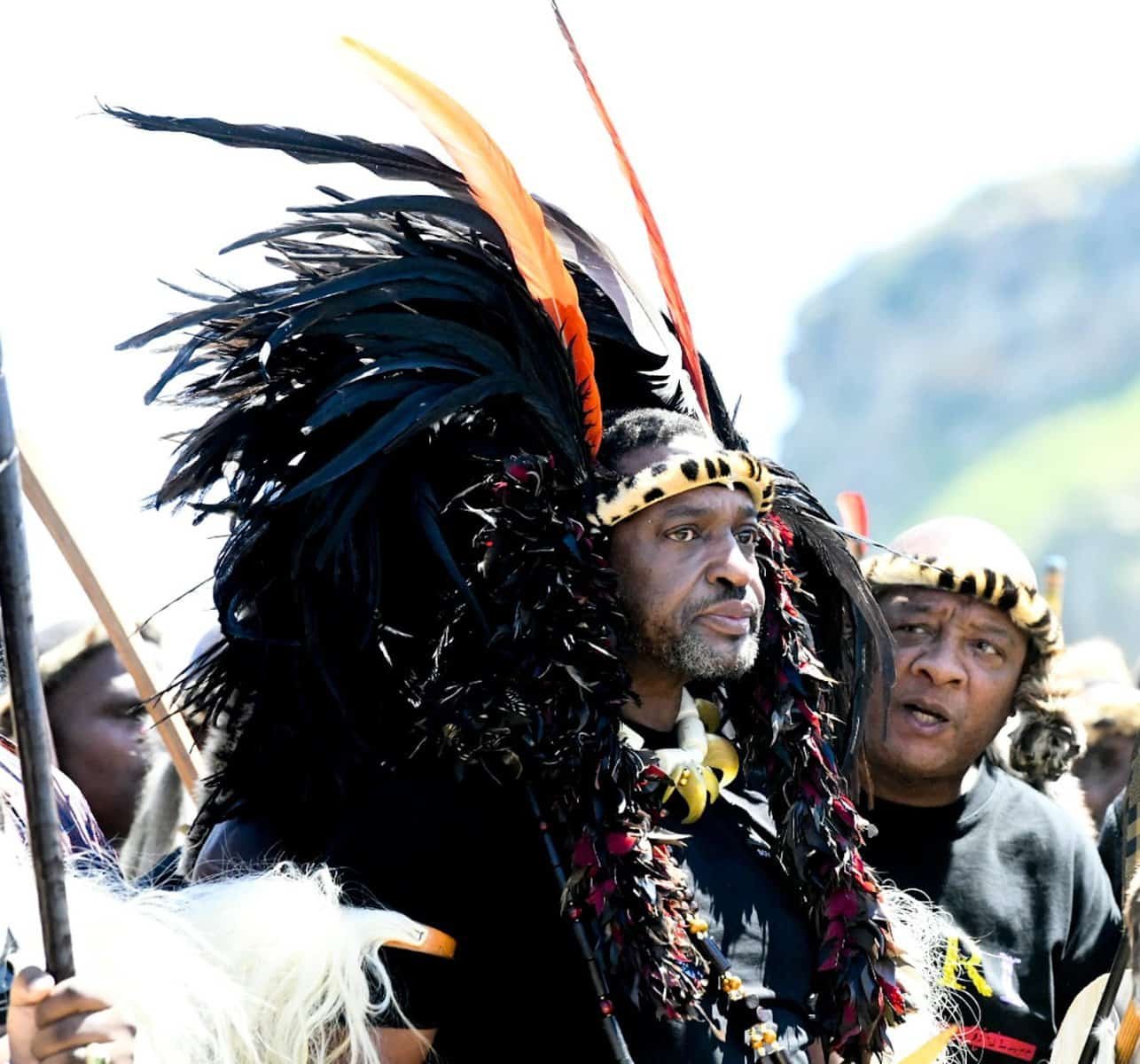
The King of the Zulu nation has called for the colonial name “Natal” to be removed from the official title of the province of KwaZulu-Natal.
Speaking in Nquthu during commemorations of the historic Battle of Isandlwana, King Misuzulu kaZwelithini implied that the colonial name may be contributing to a sense of entitlement among some foreign nationals living in the province.
The battle of Isandlwana took place on 22 January 1879, following a royal directive by the legendary King Cetshwayo. In the battle, the Zulu army became the first foreign army to inflict defeat on the British imperial army.
“This is not the first time we are facing a challenge with immigrants; it was there during the time of Umdlokombane (the late King Goodwill Zwelithini), and we overcame it; it is now back during my tenure. My Zulu people, we are not surprised by this; it’s not something new.
“My Zulu people, let me make this one promise to you: they can make noise all over, this land is not going to be taken over, no one will touch it, this is KwaZulu. We are in a campaign to remove the word Natal because it creates problems for us; it should be only KwaZulu. I don’t know what is this Natal is all about. It is this Natal that is creating problems for us, this is KwaZulu,” the King said.
King Misuzulu said there will be no war directed at foreign nationals; instead, they will be told to leave.
“There will be no war, but we will just tell them to leave, no one can claim that he does not have his own homeland,” the King added.
The King noted the recent skirmishes at Addington Primary School in Durban, where there was a fight over academic space between foreign nationals and locals. He said that since many local women have children with foreign men, the children should be left behind as they are nephews.
“If my nephew’s father is a foreign national, he must leave, and the nephew remains. If it has to be like that, let it be,” the King said jokingly, and said the Zulu nation has to make relations with other nations.
He also reminded the Zulu nation that the Ndebeles in Zimbabwe are actually Zulus, and so are the descendants of Soshangane in Mozambique.