MAHASHA RAMPEDI
The Krasnoyarsk Hydroelectric Power Plant in the Siberian region of Russia is more than just an engineering feat. It seems to be a symbol of how hydropower can secure energy resilience while harmonising with nature.
In an era of climate crisis and energy wars, this mega dam in Krasnoyarsk city reminds the world that the mightiest rivers, when harnessed wisely, can light up civilisations without burning the planet.
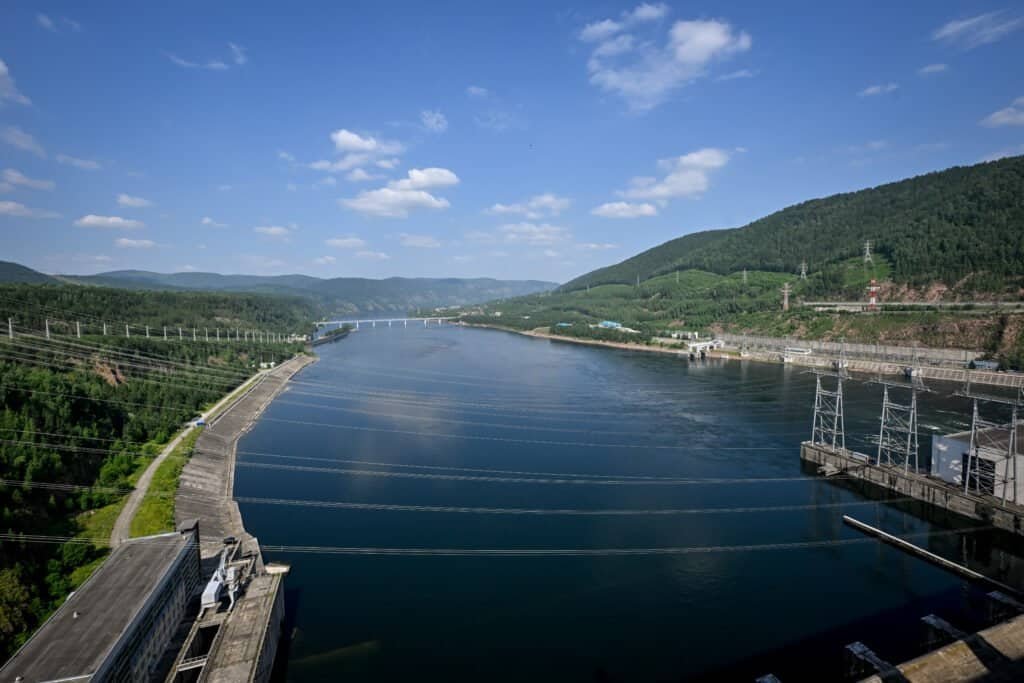
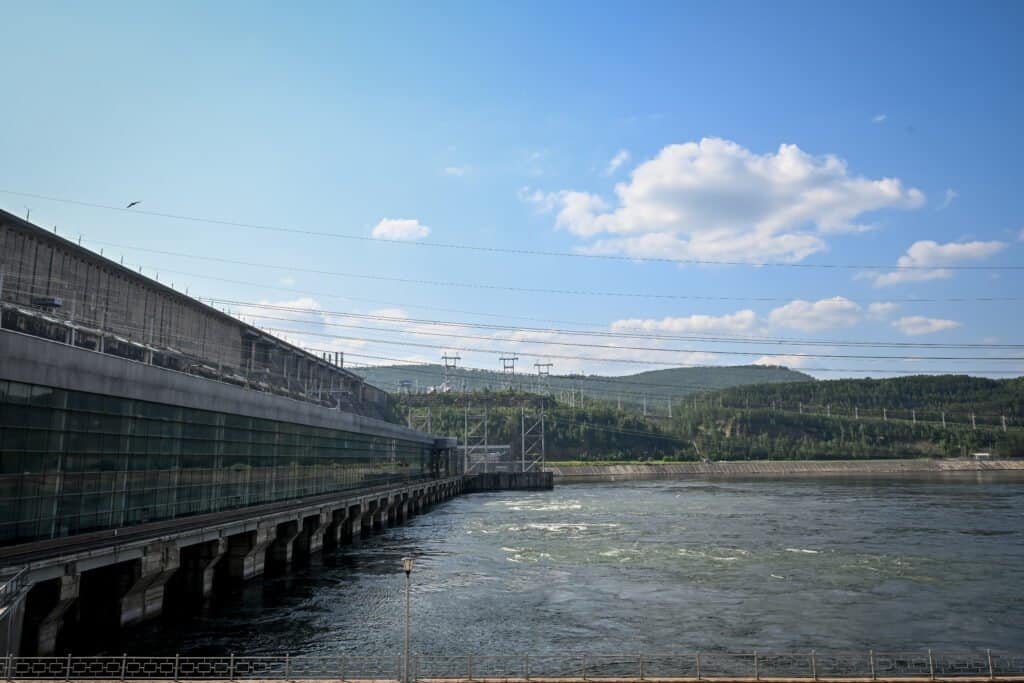
Additionally, it highlights why hydroelectric power is responsible for 14% of the global energy. Imagine a massive concrete dam stretching like a titan across the roaring Yenisei River, its curved wall holding back a vast, shimmering reservoir that mirrors the Siberian sky.
Perched at the feet of the Sayan mountain ranges, about 4,200 kilometres east of the capital Moscow, the Krasnoyarsk Hydroelectric Power Plant is a blend of industrial might and natural beauty.
A division of En+, a Russian energy and metallurgical holding company, the plant produces 6,000 MW of electricity. It powers approximately 30% of Krasnoyarsk.
African Times was among the international media that joined a Global Energy Prize International Award Committee delegation when it visited the plant in July.
As you negotiate your way down the sharp curves towards the structure, snow-capped mountains loom in the distance, while the dam’s spillways unleash thunderous cascades of white water, sending mist into the crisp Arctic air.
Completed in 1972, the Krasnoyarsk Dam was a triumph of Soviet engineering and remains one of the world’s largest hydroelectric plants.
At the time of its construction, the Krasnoyarsk Hydroelectric Power Plant was the biggest in the world. However, it now ranks fourth behind the Three Gorges Dam in China, Itaipu in Brazil, and Xiuodu in China.
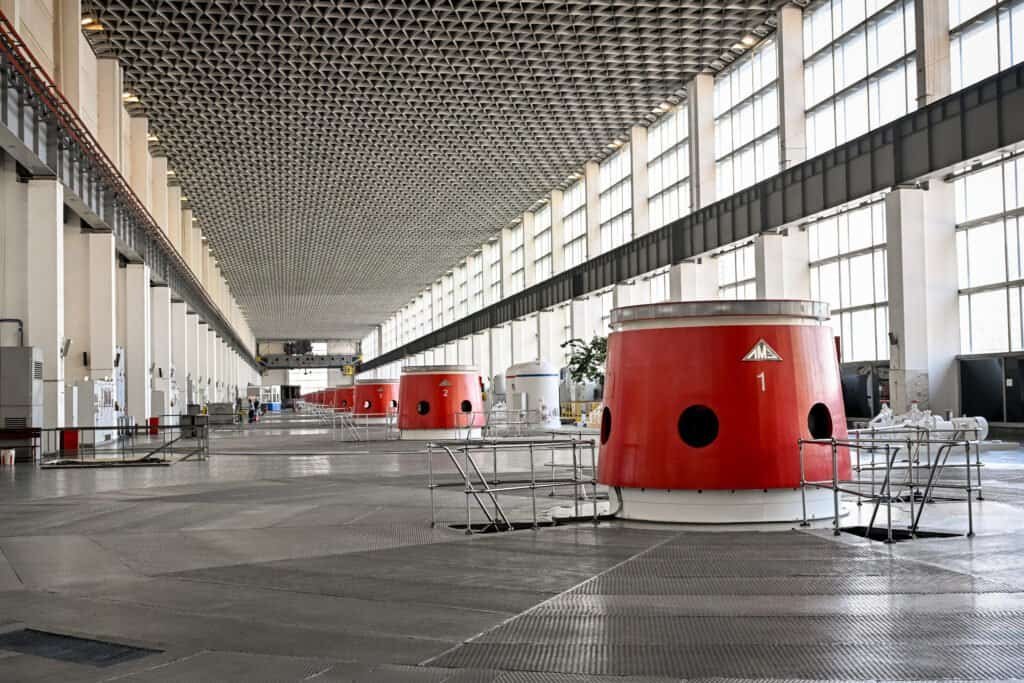
According to the Krasnoyarsk Hydropower Plant’s director, who preferred not to have his name mentioned in the media, each of the plant’s 12 gigantic turbines generates 500 MW, totalling 6,000 MW.
He said the company planned to invest at least 20 billion rubles (approximately $222 million or R5 billion) in refurbishing the plant over the next five years.
“The holding company is currently implementing a large-scale upgrade program at the Angara and Yenisei cascade hydroelectric power plants. Within the framework of the New Energy program, all 12 hydroelectric units at the Krasnoyarsk Hydroelectric Plant will be refurbished, and 15 power transformers will be replaced.”
“Total investments in the project are expected to exceed 20 billion rubles by 2031,” the plant’s director told journalists visiting the facility.
A Global Energy Prize International Award Committee delegation visited the Krasnoyarsk Hydroelectric Power Plant, Russia’s second-largest hydroelectric power station, on July 7.
Led by Rae Kwon Chung, Chairman of the International Award Committee, and Professor Emeritus at the Institute of Convergence Science and Technology of Incheon National University, Republic of Korea, the delegation included Abel Didier Tella, the Director General of the Association of Power Utilities of Africa (APUA) and Dmitri Bessarabov, Professor at the North-West University (NWU) in South Africa and Director of the HySA Infrastructure Centre of Competence under South Africa’s Ministry of Science and Technology.
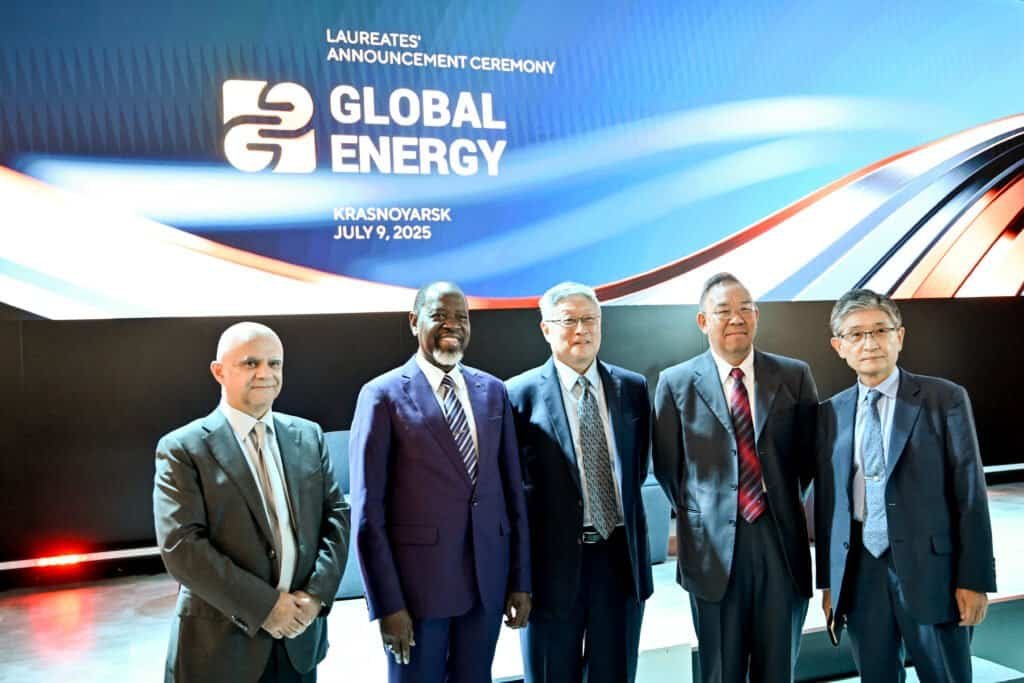
Others were Xiao Li-Ye, Director of the Key Laboratory of Applied Superconductivity at the Institute of Electrical Engineering, Chinese Academy of Sciences, and William Il Young Byun (Singapore), CEO and Managing Director of New ASEAN Energy Inc.
“Today, hydropower accounts for more than 14% of global electricity generation, which makes it the largest source of clean electricity,” said William Il Byun. “Impressive projects like the Krasnoyarsk Dam help accelerate the global energy transition and successfully achieve the global economy’s decarbonization targets.”
Tela, the Ivorian water engineer, said hydroelectricity is a cornerstone of clean and reliable energy.
“Hydro is the kind of energy where you put in major investments, but later on, the energy is free. So hydro electricity is just amazing. From a technical point of view, I got the impression that a plant that is more than 60 years old is still in good condition,” Tela told African Times after touring the Krasnoyarsk Hydroelectricity Power Plant.
The Ivorian engineer revealed that hydro power was a key part of Africa’s energy security.
“We have a new dam in the Western region of Guinea, and we have another in Mozambique. Hydropower is very important. The main source of power, hydro, is not developed yet, Inga. So, when Inga is on the grid, we can get a lot of power in Africa alongside solar, coal, wind and nuclear,” he added.

The Krasnoyarsk hydroelectric plant plays a crucial role in Russia’s energy strategy. It provides energy independence, grid stability, an economic lifeline and a low carbon footprint.
Unlike fossil fuels, hydropower relies on water—a renewable resource—making Siberia’s rivers a perpetual source of electricity. The plant provides baseload power, balancing intermittent sources like wind and solar.
It also powers Siberia’s heavy industries, including aluminium smelters, which consume enormous amounts of electricity.
The Krasnoyarsk Hydroelectric Power Plant is more than just an engineering feat. Unlike traditional straight dams, its curved structure uses the river’s pressure to reinforce stability against the powerful Yenisei current.
The dam’s discharge warms the downstream water, preventing ice formation in winter—a phenomenon that creates a frosty mist visible for miles.