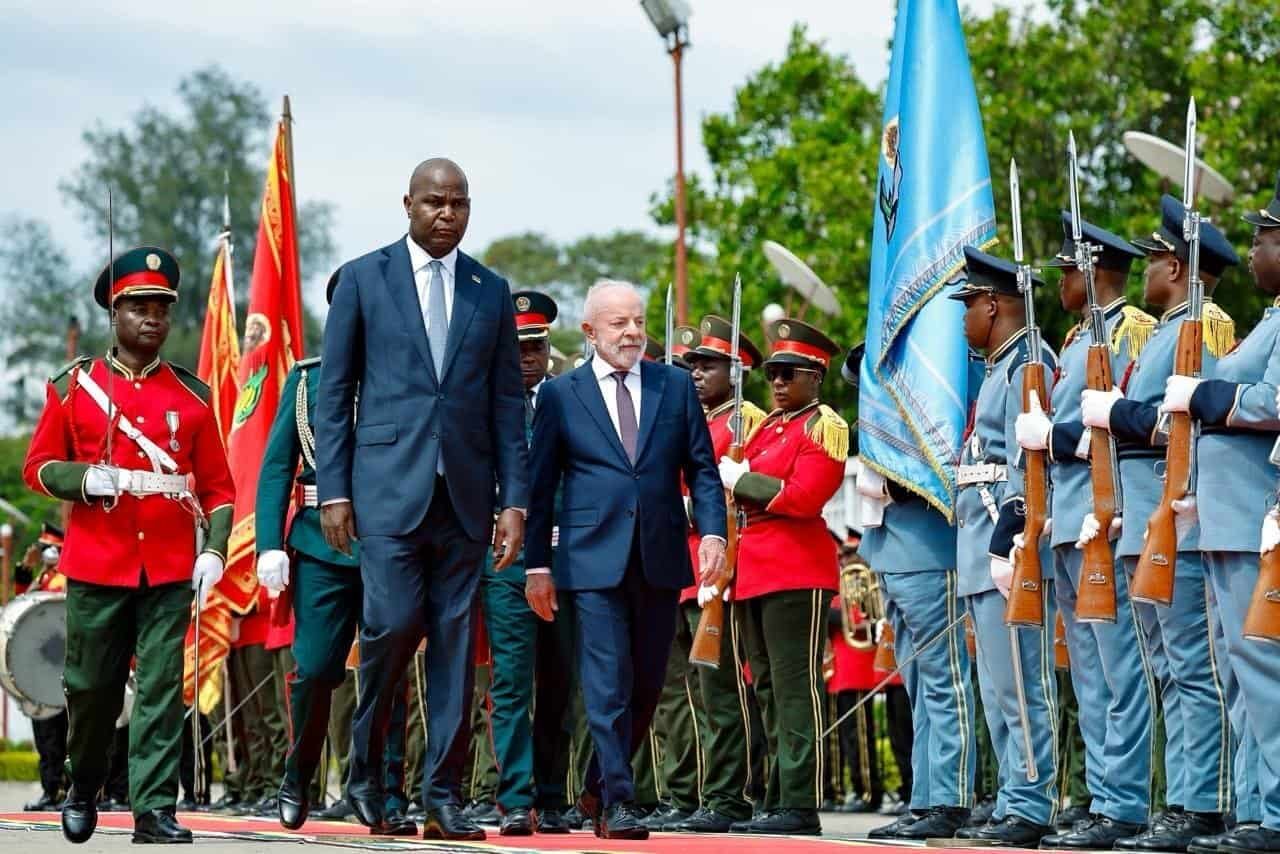
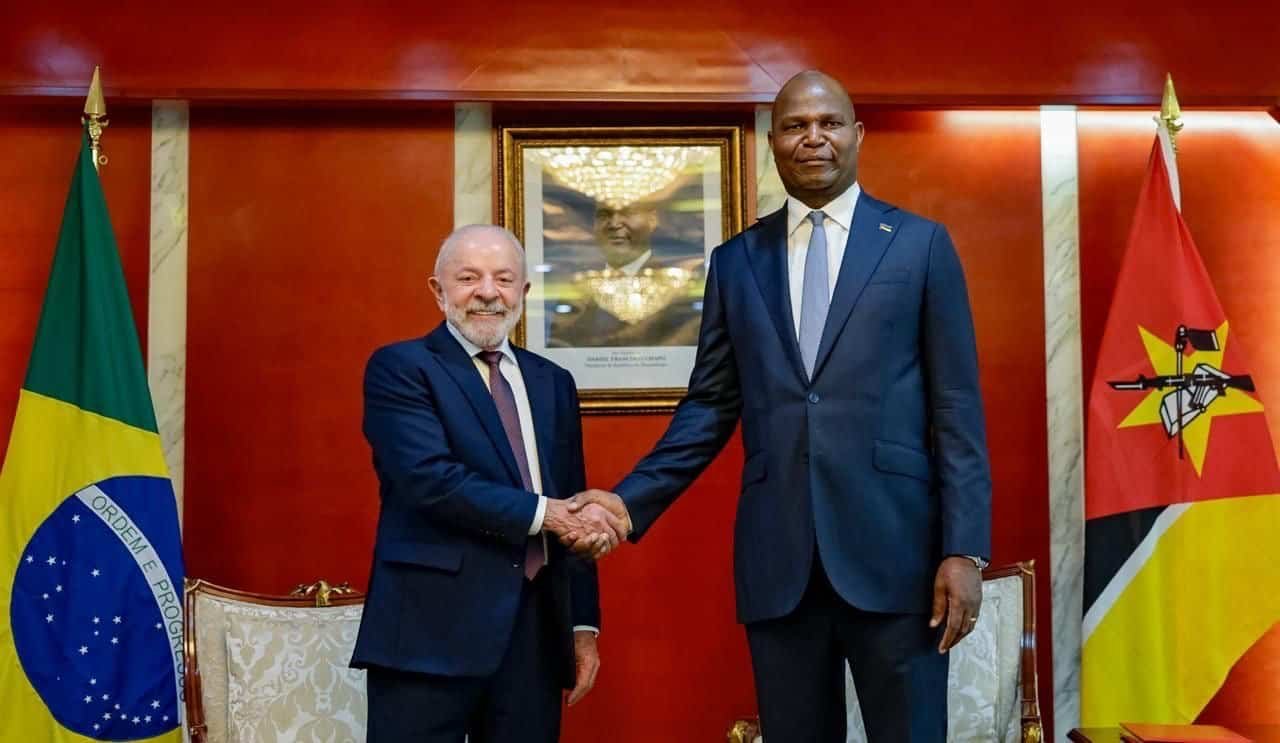
Brazil’s President, Luiz Inácio Lula da Silva, used a state visit to Mozambique today to reaffirm Brazil’s commitment to revitalising its partnership with the country, describing the moment as a “reawakening” of a relationship that has spanned five decades but suffered periods of neglect.
Standing alongside Mozambican President Daniel Chapo in Maputo, Lula said his return marked “the beginning of a story that should never have been interrupted”, coinciding with Mozambique’s 50th anniversary of independence and 50 years of diplomatic relations between the two nations.
“It is with immense satisfaction that I stand once again in this beautiful country,” Lula said. “Mozambique was one of the first African nations to receive a visit from a Brazilian president, and it was one of the first whose independence Brazil recognised. Yet, over time, our friendship wandered, as the great Mozambican writer Mia Couto would say, ‘sonambulant’. We drifted from brotherhood into indifference.”
Lula reflected on moments of intense cooperation – particularly during his first presidency, when Mozambique became Brazil’s largest cooperation partner in Africa – but acknowledged that political turmoil in Brazil had severed ties and stalled promising initiatives.
“Many seeds we planted never had the chance to grow,” he said. “But now is the time to rebuild trust.”
A New Chapter of Cooperation
The two leaders announced the signing of nine cooperation agreements aimed at strengthening Mozambican institutional capacity in fields ranging from health and education to diplomacy, civil aviation, entrepreneurship, agroforestry services and legal assistance.
Lula stressed that the partnership must go further, particularly in infrastructure. “Mozambique’s development depends on ports, roads, power stations and transmission lines,” he said. “Brazil has dynamic companies capable of contributing – but for that, we must untie a fundamental knot. No major country exports services without offering credit.”
He confirmed that Brazil is working to restore the capacity of its development bank, BNDES, to support the internationalisation of Brazilian companies, including in Mozambique.
Trade, he added, remains “unjustifiably low” between two Portuguese-speaking nations with shared cultural familiarity. Renewed industrial capacity in Brazil’s health sector, he said, could once again support pharmaceutical production in Mozambique.
Agriculture featured prominently in Lula’s remarks. He underscored Brazil’s potential to contribute to Mozambique’s food security, highlighting the possibility of boosting productivity in the African savannah “without harming the environment”. A new initiative will offer Mozambican trainees up to 80 places for agricultural science instructor training and 400 technical agriculture training opportunities from 2026. Brazil’s Embrapa will reinforce this through in-person and distance training programmes.
Lula also emphasised Brazil’s wish to include Mozambique in the accelerated implementation phase of the Global Alliance Against Hunger and Poverty.
Climate, Energy and Security
With Mozambique ranked among the 20 countries most vulnerable to climate change, Lula stressed the importance of cooperation on environmental protection and the energy transition.
The two countries, he said, can work together on forest conservation, sharing expertise on fire management and sustainable resource use to protect ecosystems such as the miombo woodlands. On energy, he reaffirmed Brazil’s readiness to support Mozambique in developing biofuels, “creating jobs while reducing dependence on fossil fuels”.
Lula also highlighted organised crime as a shared challenge. Brazil, he noted, has developed internationally recognised capacity in tracking illicit financial flows and combating money laundering, and stands ready to expand cooperation with Mozambique in these areas.
Education and culture, he said, are essential to ensuring that the peoples of both nations “know each other better”. He called for greater student mobility, deeper ties between universities and research institutions, and joint initiatives to promote the Portuguese language through audiovisual and literary production.
“Our cooperation can no longer swing between moments of closeness and distance,” Lula concluded. “As Mia Couto wrote, what makes the road walkable is the dream. As long as we dream together, our shared path will remain alive.”
Chapo: “Your Presence Is a Turning Point for Mozambique–Brazil Relations”
President Daniel Chapo, who repeatedly referred to Lula as his “older brother”, offered an effusive welcome on behalf of the Mozambican people.
He noted the warmth with which ordinary Mozambicans had received Lula – stopping him for photographs during the journey from his hotel to the presidency – as a testament to the affection and admiration the country holds for the Brazilian leader.
Chapo underlined the symbolic importance of Lula’s visit in a year marking both Mozambique’s 50th anniversary of independence and 50 years of diplomatic relations with Brazil. He praised Brazil for its unwavering solidarity, including its presence at the June celebrations of Mozambique’s independence.
“Our meeting today is a turning point,” Chapo said. “We have agreed to reshape our model of cooperation, focusing on concrete projects with tangible results for our peoples.”
He listed priority areas agreed during bilateral talks: agriculture and food security, logistics and development corridors, mineral resources, energy, infrastructure, health and hydrocarbon exploration — an area in which he said Brazil’s Petrobras has valuable experience to share.
Chapo welcomed the presence of Brazilian public and private-sector business leaders, expressing confidence that the Mozambique–Brazil Business Forum would yield fruitful partnerships. He also hailed cooperation between Mozambique’s newly established development bank and Brazil’s BNDES, calling the latter’s 70-plus years of experience “extremely important” for Mozambique’s economic transformation.
The Mozambican president also thanked Brazil for its support during the insurgency in Cabo Delgado, where major gas projects are located, and vowed to continue working to restore lasting peace and stability.
“Brazil Is Back”
In closing, Lula reiterated a message he had delivered privately to Chapo the previous evening: “We do not have time to lament what did not happen. My visit to Mozambique is the restart of a story that should never have been interrupted. Brazil is back, and Brazil wants to cooperate with Mozambique in every area – industry, science and technology, agriculture, energy, and above all in two vital sectors for humanity: health and education. Count on us.”
The visit marks a symbolic renewal of one of Lusophone Africa’s most historic partnerships – one that both leaders now pledge to rekindle for the next 50 years.