The Gauteng Provincial Government has sounded the alarm over worsening overcrowding in public schools, revealing that nearly half of all institutions in the province are operating beyond capacity as rapid population growth continues to outpace infrastructure development.
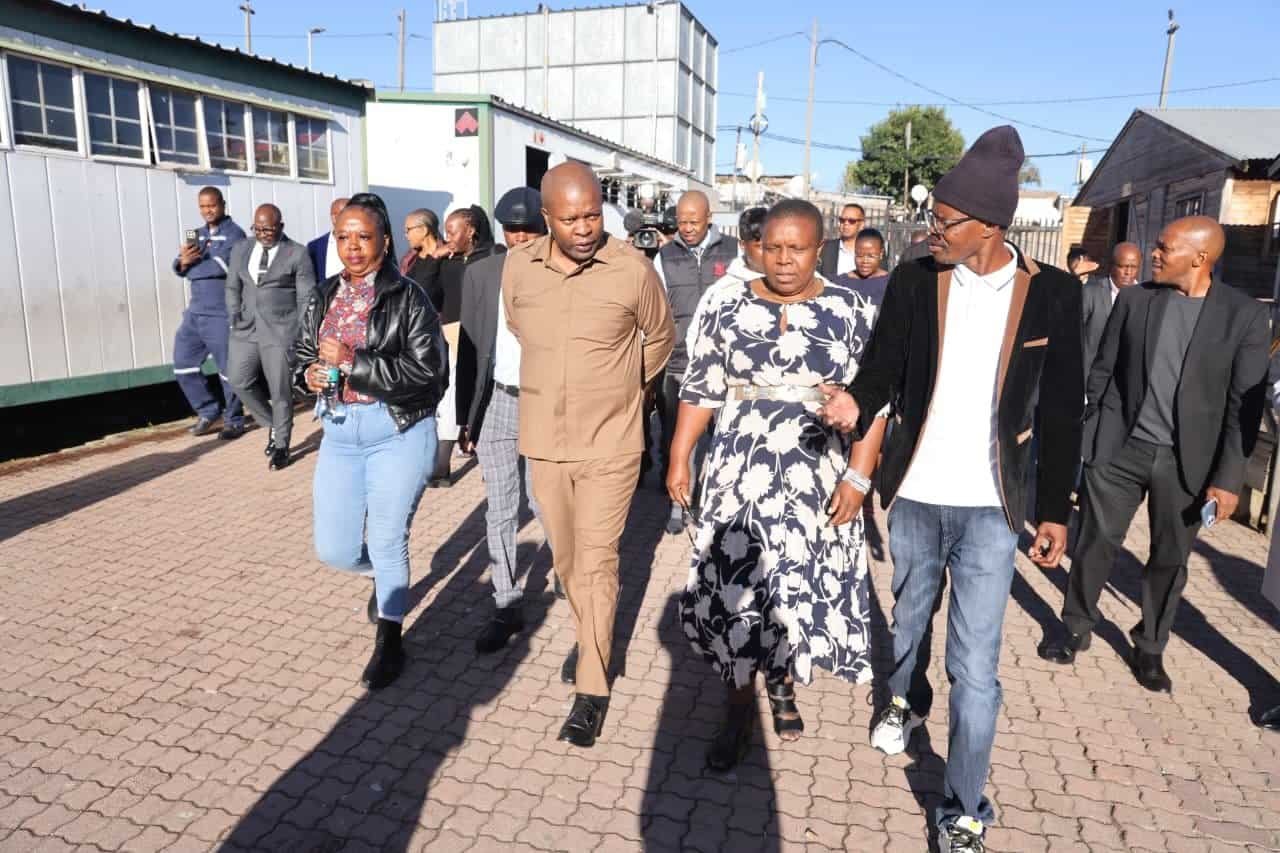
Addressing residents on Tuesday, MEC Lebogang Maile outlined the scale of the crisis, describing the education system as a reflection of broader structural pressures facing Gauteng, including urbanisation, migration and constrained public finances.
Gauteng’s learner population has more than doubled over the past three decades, growing from just over 1.4 million in 1995 to 2.8 million in 2026. The province continues to absorb an average of 50,000 additional learners each year — the fastest growth rate in the country.
“There is a growing mismatch between demand and available school capacity,” Maile said, warning that the system is under severe strain.
Of the province’s 2,111 public schools, 1,021 are now over-subscribed, representing 48% of all institutions. Primary schools account for 579 of these, while 442 secondary schools are operating beyond their limits. The situation is particularly dire in high schools, where the province faces a shortage of more than 88,000 learner spaces.
While some schools still have capacity, the imbalance is widening. Between 2025 and 2026, the number of under-capacity schools dropped by 153, while over-subscribed schools increased by 164 — a trend officials say reflects intensifying pressure in urban and township areas.
District-level data paints a stark picture. In Johannesburg South and Tshwane West, 68% of schools are overcrowded, while Ekurhuleni South sits at 58%. Even top-performing districts such as Johannesburg West are affected, with more than a third of schools exceeding capacity.
The only district not experiencing widespread secondary school overcrowding is Sedibeng East.
Maile attributed the crisis to rapid urbanisation, particularly in metros such as Johannesburg, Tshwane and Ekurhuleni, where population growth and housing developments are driving demand for schooling.
Townships and densely populated urban areas have been identified as “high-pressure zones”, where enrolment demand consistently exceeds available space. The ongoing cost-of-living crisis has further complicated infrastructure planning and delivery.
Officials estimate that Gauteng needs at least 200 new schools to stabilise the system. However, current delivery rates fall far short, with the province typically completing about 10 schools per year — many of which face delays.
Budget constraints remain a key obstacle. Although the education budget has grown to over R68 billion, rising personnel costs consume a significant portion, leaving limited funds for infrastructure, maintenance and learning materials.
The strain is also evident in basic resources. A recent audit found severe shortages in school furniture, including tens of thousands of chairs and desks across both primary and secondary schools. While emergency deliveries have been made, procurement processes are ongoing and funding gaps persist.
A structural imbalance between primary and secondary schools is compounding the crisis. Gauteng has 1,417 primary schools but only 694 secondary schools, creating a bottleneck as learners progress through the system. To address current demand alone, the province would need at least 83 additional high schools.
Infrastructure challenges extend beyond funding. The government cited vandalism, crime, poor contractor performance, and construction delays as major barriers. In some cases, schools are built on unsuitable land, while disruptions by business forums and community groups have further slowed delivery.
In response, the province has introduced a series of interventions aimed at accelerating infrastructure rollout. These include partnerships with the Development Bank of Southern Africa to build new schools in high-demand areas, as well as collaboration with the Gauteng Infrastructure Financing Agency under the Budget Facility for Infrastructure programme.
The government is also exploring public-private partnerships and reopening former mission schools, while expanding the use of prefabricated classrooms as a temporary solution. A self-build programme has been introduced to allow schools to add classrooms more quickly.
Over the medium term, nearly R4 billion has been allocated for new and replacement schools, with 23 projects planned. However, officials acknowledge this will not be enough to eliminate the backlog.
Looking ahead, the province has developed a 20-year infrastructure plan aligned with population growth, spatial development and land availability. There are also plans to expand school infrastructure in inner-city areas and central business districts.
Despite these efforts, concerns remain about the 2027 academic year, with five districts already flagged as high risk for failing to accommodate all learners.
Maile called on communities and the private sector to play a greater role in protecting and supporting schools.
“We must work together to safeguard our education infrastructure and ensure that resources are used effectively,” he said.
As Gauteng’s population continues to grow, the challenge of balancing access to education with limited resources is set to remain one of the province’s most pressing issues.